
Hong Kong might not be the first place that comes to mind when you think about independent watch brands.
Switzerland has its centuries of watchmaking tradition. Japan has established itself as a manufacturing powerhouse. And China, particularly in recent years, has developed an increasingly interesting mechanical watch industry.
But Hong Kong has an enormous amount of watchmaking history of its own.
For decades, it was one of the world's most important centres for watch manufacturing, assembly and trade. That industrial heritage remains, but today's independent brands are doing considerably more than simply assembling watches for other companies.
Some are experimenting with unusual materials. Others are rethinking how watches display the time. A few are exploring the city's distinctive culture and design traditions.
And one is attempting something particularly ambitious: making its own mechanical movements.
Welcome to the Hong Kong edition of Around the World in 80 Microbrands, where we're travelling the world five watch brands at a time, looking for some of the most interesting watches you might never have heard of.
This time, we're starting with a material normally associated with considerably more expensive watches.
1. Earthen Company: Making ceramic affordable
Ceramic is a fascinating material for watchmaking.
It's lightweight, extremely resistant to everyday scratching and doesn't require a surface coating to achieve colours that would be difficult to produce with conventional stainless steel.
It's also something we've become accustomed to seeing on relatively expensive watches.
Consider the Rado Captain Cook High-Tech Ceramic, which can cost around US$4,600, or the Tudor Black Bay Ceramic, which sits comfortably above US$6,000.
Obviously, those watches offer considerably more than a ceramic case, and I'm not suggesting they're directly comparable.
But they've helped establish the perception that ceramic is a premium material.
Earthen Company has a fairly straightforward response to that: why does it need to be so expensive?
Founded in Hong Kong in 2025 by Johnathan Chan, a watch collector and co-founder of the enthusiast community The Horology Club, Earthen set out to make ceramic watches considerably more accessible.
The result is the Summit collection.
The Summit MK II
The Summit MK II is a 38mm automatic watch with a full ceramic case, sapphire crystal and 100 metres of water resistance.
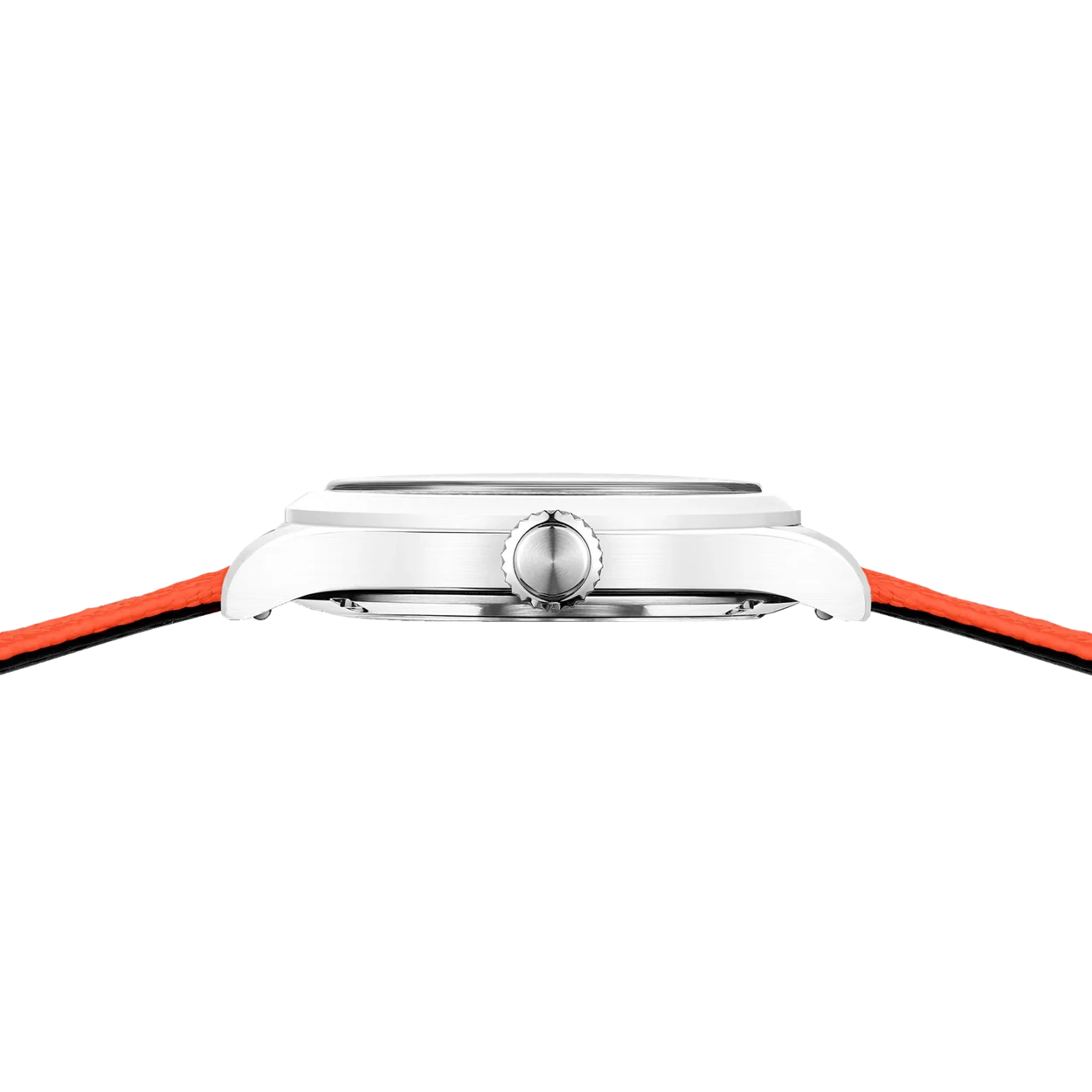
It's powered by the Miyota 9039 automatic movement, with approximately 42 hours of power reserve.
The case is just 10mm thick, including the crystal.
That's a remarkably wearable set of dimensions, particularly when combined with the relatively low weight of ceramic.
The design itself draws on vintage military field and pilot watches, although Earthen has given the concept a rather unusual twist.
It's also inspired by skiing.
The brand describes the Summit as an attempt to create the ultimate ski watch, something robust, legible and comfortable enough to wear from the mountain to the resort.
Even the logo gets involved, with a tiny skier descending a mountain above six o'clock.
It's a nice little detail that gives the collection some personality without overwhelming the dial.
And the price?
US$899.
That's still a meaningful amount of money, but it's substantially less than we've become accustomed to seeing for a fully ceramic automatic watch.
A little more colour
The original Summit collection concentrated on black and white ceramic cases, but Earthen has expanded the range with three particularly interesting colourways.
Après-Bleu combines a deep blue ceramic case with a matching dial for a rather restrained, monochromatic appearance.
Glade takes things in a completely different direction, pairing forest-green ceramic with a mint-green full-lume dial.
And then there's Dune Devil, which combines a sand-coloured ceramic case with a brown dial.
I think Dune Devil might be my favourite of the three.
There's something rather appealing about that warm, desert-inspired palette, particularly when contrasted with the cooler metallic details.
Although Glade has something else going for it: that fully luminous dial.
And full-lume dials are something Earthen seems rather fond of.
The Dawn Til Dusk
One of the most distinctive watches in the range is the Summit MK II Dawn Til Dusk.
This combines a white ceramic case with a salmon-orange dial and a specially developed luminous formulation.
Charge the dial with UV light and the entire face glows a striking orange.
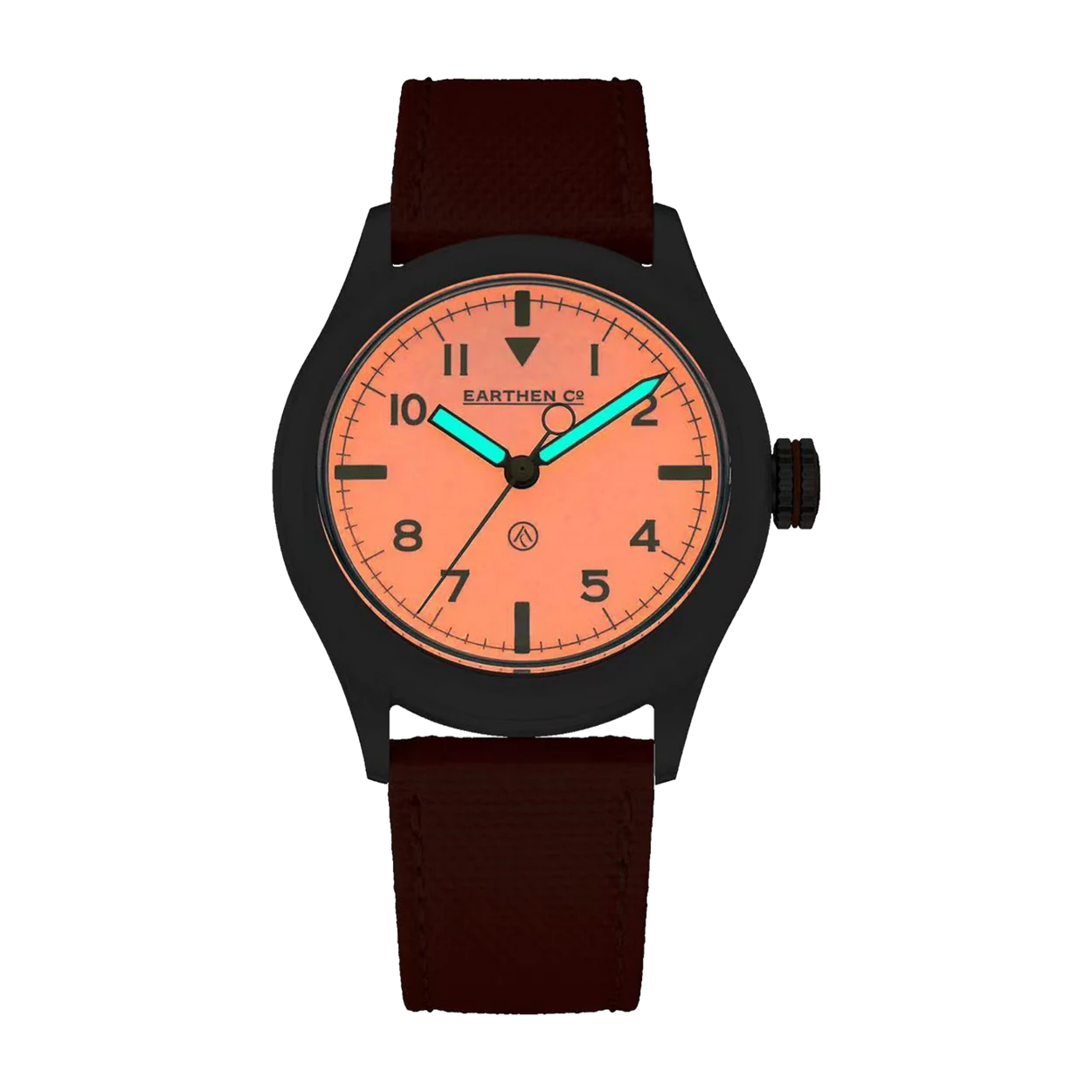
It's an unusual effect, particularly when paired with the clean white case.
Earthen kindly supplied me with a Dawn Til Dusk for review and allowed me to keep it. The brand has had no editorial oversight over my opinions.
I'll be covering that particular watch in a separate hands-on MicroReview, so I'll save my detailed impressions for that.
But as a concept, I think Earthen is doing something rather compelling.
It's taken a material usually associated with luxury watches, combined it with familiar mechanical components and attractive, relatively restrained designs, and brought the resulting watches into a much more accessible price range.
It's a good reminder that interesting microbrands don't necessarily need to invent entirely new complications.
Sometimes they can simply make something traditionally expensive a little easier to experience.
Explore the brand: Earthen Company
Featured collection: Summit MK II
2. Angles Watches: A triangular way to tell the time
From affordable ceramic, we're heading into something considerably stranger.
Because apparently, conventional watch hands going around a conventional circular dial just aren't particularly interesting to Angles Watches.
Founded by Roy Chan, Angles draws on more than two decades of watch-industry experience to develop watches that approach timekeeping from unusual directions.
And you don't need to spend very long looking through its catalogue to understand the appeal.
The Disc One replaces conventional hands with a jumping-hour disc and rotating minute disc.
The Orbitron offers an unusual interpretation of the wandering-hour complication.
And then there's the Cylindrex, which uses two separate automatic movements inside a cylindrical case.
I'm not entirely convinced about how that last one would look on my wrist, but I certainly appreciate the willingness to experiment.
Still, the watch that really caught my attention was Angles' latest creation.
Meet the Triscope
There's something fairly obvious that needs addressing first.
It's a triangle.
Watchmakers have experimented with unusual case shapes for decades, but the Triscope doesn't stop at having a triangular case.
It also changes how you read the time.
On the left-hand side of the dial is a magnified jumping-hour window.
Rather than a conventional hour hand moving continuously around the dial, the displayed hour changes as the movement advances.
But the minutes are where things become particularly interesting.
Instead of sweeping around a circular track, a lever-like indicator moves across a triangular minute scale.
Below it, a large exposed brass gear forms part of the mechanism responsible for making the unusual display work.
The whole thing looks wonderfully mechanical and slightly industrial.
And importantly, this isn't a digital display pretending to be clever.
Underneath is a Miyota 90S5 automatic movement, modified with Angles' own jumping-hour module.
A proper mechanical curiosity
Despite its unusual appearance, the Triscope has reasonably practical specifications.
The stainless-steel case measures 42.5mm across and 12mm thick, with a sapphire crystal, exhibition caseback and 50 metres of water resistance.
It's available in three versions.
Bare Steel has the most straightforward metallic appearance.
Night Out offers a different visual treatment.
And Black Out takes the industrial design in a darker direction with a black-coated case.
Each version is limited to 300 pieces.
The Triscope attracted considerable attention through its Kickstarter campaign, raising more than HK$1.4 million against a substantially smaller original funding target.
And the price is US$980.
Now, almost a thousand dollars isn't exactly cheap.
But for a genuinely unconventional mechanical watch with a dedicated jumping-hour module and a triangular minute display, I don't think it's unreasonable.
Is it the most practical way to tell the time?
Almost certainly not.
But practicality isn't always what makes an interesting watch.
Sometimes the appeal is simply seeing somebody approach a familiar problem in a completely unfamiliar way.
And Angles has certainly managed that.
Explore the brand: Angles Watches
Featured watch: Triscope Bare Steel
3. ANICORN: PlayStation nostalgia and wonderfully ridiculous watches
Our next brand also enjoys experimenting with how we experience time.
But rather than concentrating on mechanical complications, ANICORN approaches watchmaking more like a creative design studio.
And its catalogue is a wonderfully strange place.
ANICORN has collaborated with SEGA on watches inspired by the Mega Drive and Genesis.
It's worked with Kojima Productions on designs connected to Death Stranding.
And it's even collaborated with Richard Danne, the designer associated with NASA's famous worm logo.
There's a clear interest in bringing watches together with gaming, graphic design, architecture and other creative disciplines.
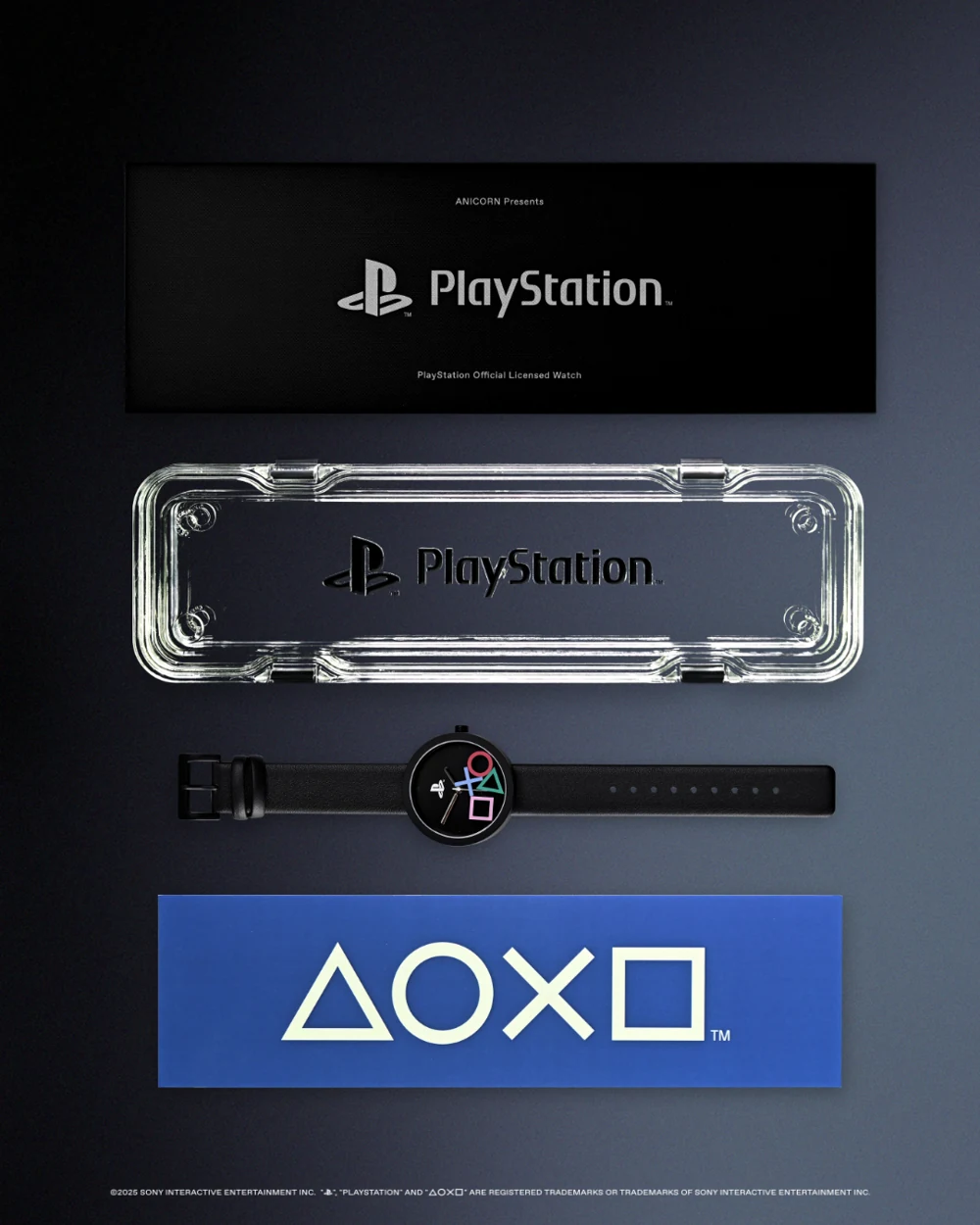
But the watch that immediately caught my attention was the PlayStation Play Symbol.
A PlayStation snow globe for your wrist
For US$250, ANICORN will sell you a quartz watch featuring the four familiar PlayStation controller symbols floating inside an oil-filled display.
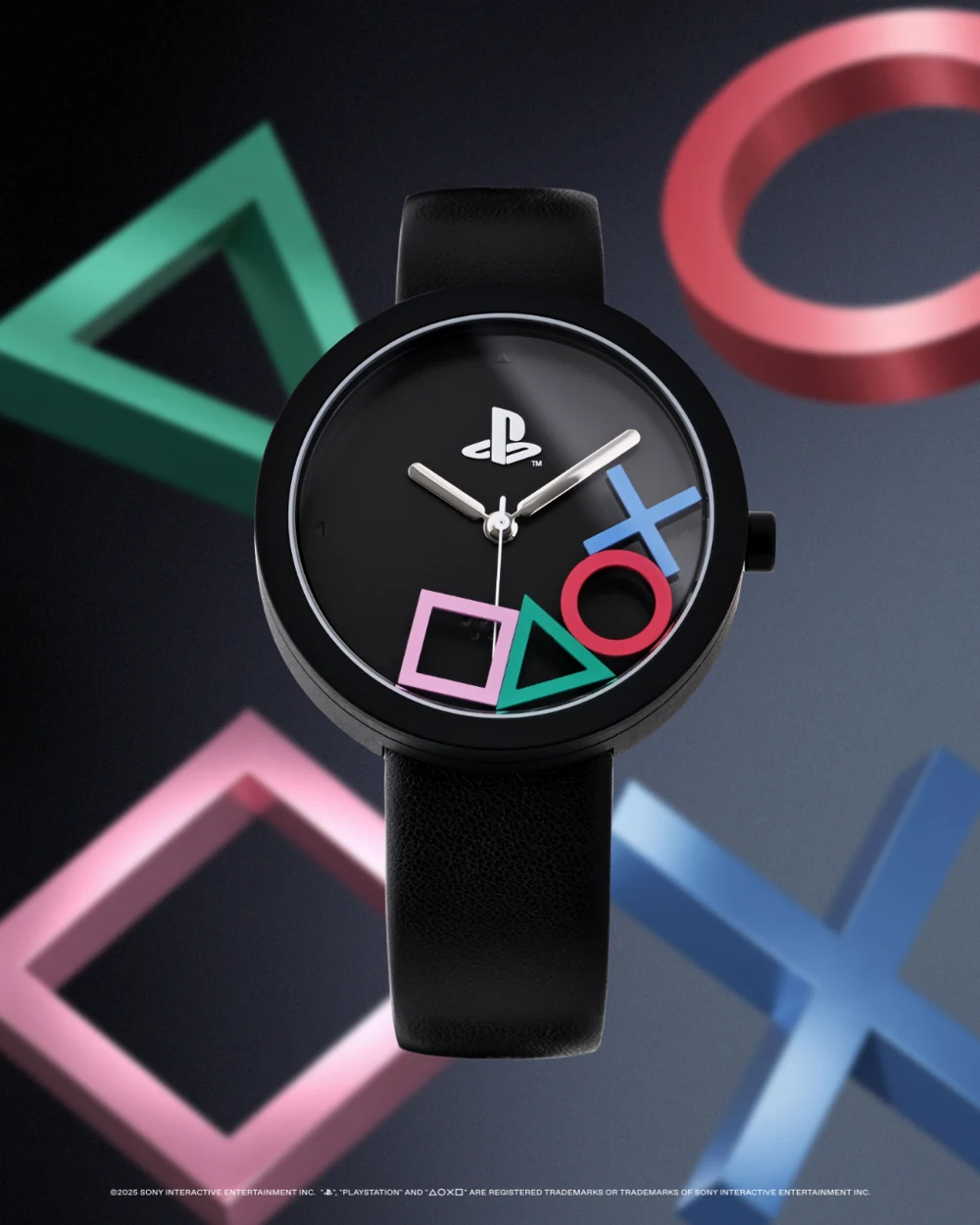
Triangle. Circle. Cross. Square.
They move around within the watch as you move your wrist.
It's essentially a miniature PlayStation snow globe.
And I think that's rather wonderful.
The design is almost entirely about nostalgia.
The PlayStation symbols are instantly recognisable to anyone who grew up with Sony's consoles, and seeing them suspended inside a watch is just a fun idea.
It's not trying to impress anyone with elaborate movement finishing or a prestigious mechanical calibre.
Instead, it takes a familiar cultural reference and turns it into something you can wear.
The Play Symbol Dark Mode uses a 39mm stainless-steel case, mineral crystal and Miyota quartz movement, with 50 metres of water resistance.
It's straightforward hardware built around a very unconventional dial.
Whether you'd want to wear it every day is another question entirely.
But I can absolutely see the appeal.
The Trio of Time
Things get even stranger when you look at ANICORN's Trio of Time collection.
The concept is simple: one city, one designer, one watch.
Each collaboration gives a designer an opportunity to explore a different interpretation of timekeeping.
Some of the results are genuinely ridiculous.
There's the Redundant Watch, where the hands point towards illustrations of other hands.
So you're using hands to point at hands.
Very helpful.
Then there's the Time Traveler, a world-time-inspired collaboration with Nik Bentel Studio that even comes with its own miniature display briefcase.
And one of my favourites is the Spinning Beach Ball.
It's inspired by the colourful loading cursor that Mac users will know all too well.
If there's a Mac user in your life you particularly dislike, you could give them the experience of waiting for their computer to respond every time they look at their wrist.
There's even a watch called Be Late, which takes a rather relaxed approach to punctuality.
Frankly, I respect that.
But behind the humour is a genuinely interesting philosophy.
ANICORN isn't asking how to manufacture a more complicated mechanical movement.
It's asking how designers can use a watch to communicate an idea.
And because many of these watches use relatively straightforward quartz movements, the resulting designs can remain comparatively affordable.
ANICORN kindly supplied me with two watches for review, the PlayStation Play Symbol Dark Mode and the Hidden Time Olive from the Trio of Time collection. Both were provided for me to keep, without editorial oversight.
I'll be exploring them in a separate hands-on review.
For now, I think ANICORN deserves a place on this list because it demonstrates something I increasingly appreciate about smaller watch brands.
A watch doesn't need to take the business of telling time particularly seriously to be interesting.
Sometimes a bit of creativity and a sense of humour are more than enough.
Explore the brand: ANICORN
Featured watch: PlayStation Play Symbol Dark Mode
Explore: The Trio of Time
4. AISION: Preserving Hong Kong's disappearing visual identity
Our fourth brand takes us in a rather different direction.
So far, we've looked at unusual materials, unconventional time displays and playful collaborations.
AISION is another design-focused Hong Kong watch brand, but the watch that earned it a place on this list is concerned with something more personal.
Preserving a small piece of the city's cultural identity.
Founded by Thomas Lee, AISION has developed a varied catalogue with a particular interest in distinctive dial materials and unconventional visual ideas.
Its HANG collection includes watches with integrated bracelets and dials made from materials such as meteorite, charoite and pietersite.
Then there's the CMYK, which I think is a particularly clever little concept.
The three hands use gradients of cyan, magenta and yellow.
As they rotate and overlap, the colours interact, constantly changing the appearance of the dial.
It's a simple idea, but one that uses the passing of time to create a continuously evolving visual effect.
Still, my favourite AISION design is something considerably more traditional.
The KONG
To understand this watch, we need to talk about Hong Kong's old shop signs.
From around the 1940s through to the 1980s, the city became famous for the enormous, colourful, hand-painted signs hanging above its streets.
They advertised restaurants, shops and countless other businesses, frequently projecting out from buildings and filling the streets with elaborate Chinese lettering.
Those signs became an important part of Hong Kong's visual identity.
But over the years, many have disappeared.
Businesses have closed, buildings have been redeveloped and older signs have been removed.
And with those changes, a distinctive form of local craftsmanship has become increasingly difficult to find.
AISION's KONG takes inspiration from that tradition.
Rather than using conventional Arabic numerals or applied geometric markers, the watch features Chinese characters inspired by historic Hong Kong signwriting.
The characters are presented on a classic white sector dial.
And that's what I find so appealing.
The sector dial is a thoroughly familiar part of traditional European watch design.
But the typography is unmistakably connected to Hong Kong.
It's an interesting combination of two very different design traditions, brought together in a surprisingly harmonious way.
A good watch underneath the story
The specifications are respectable, too.
The KONG has a 38.5mm stainless-steel case, sapphire crystal and a Miyota 9039 automatic movement.
It measures just 10.1mm thick, including the crystal, with 50 metres of water resistance.
At the time of the video, the watch was available for pre-order at approximately US$550.
For a slim automatic watch with a distinctive dial and such a strong design concept, I think that's quite reasonable.
But what makes the KONG particularly interesting isn't its movement, finishing or value proposition.
It's the story.
I love the idea of taking something that's slowly disappearing from a city's identity and finding a way to preserve a little piece of it on your wrist.
It's not attempting to recreate a complicated mechanical invention.
It's not relying on a famous collaboration.
And it's not trying to convince anyone that a relatively conventional automatic movement is somehow revolutionary.
Instead, it's using watch design to celebrate something local.
Not every interesting watch needs to reinvent how we tell time. Sometimes it just needs to tell a good story.
Explore the brand: AISION
Featured watch: KONG White Sector Dial
5. EONIQ: A mechanical movement made in Hong Kong
For our final brand, I want to return to Hong Kong's watchmaking history.
Because we've looked at watches designed in Hong Kong, watches inspired by the city's culture and watches using unusual materials or time displays.
But what about a watch that's actually made there?
And I don't just mean a watch assembled from an imported movement.
I mean manufacturing the movement itself.
That's exactly what EONIQ set out to do.
From personalised watches to manufacturing movements
EONIQ was founded in Hong Kong in 2014 by Quinn Lai and his co-founders Jacky and Charles.
Initially, the business concentrated on personalised watches, allowing customers to create designs that reflected their own interests and preferences.
It later expanded into watchmaking workshops, where customers could assemble watches themselves.
Which is already a pretty interesting idea.
But Quinn had a considerably more ambitious goal.
He wanted to develop a mechanical movement that could officially claim Hong Kong as its place of origin.
That might sound like a relatively modest achievement compared with the work of established Swiss or Japanese movement manufacturers.
But there's important context here.
Hong Kong has spent decades as a major centre for watch manufacturing and assembly.
Much of that industry, however, has depended on movements and components sourced from elsewhere.
Developing and manufacturing a locally certified mechanical movement is a different challenge entirely.
And in December 2022, EONIQ introduced its answer.
Calibre 852
The movement is called Calibre 852.
The name itself is a reference to Hong Kong, using the city's international telephone code.
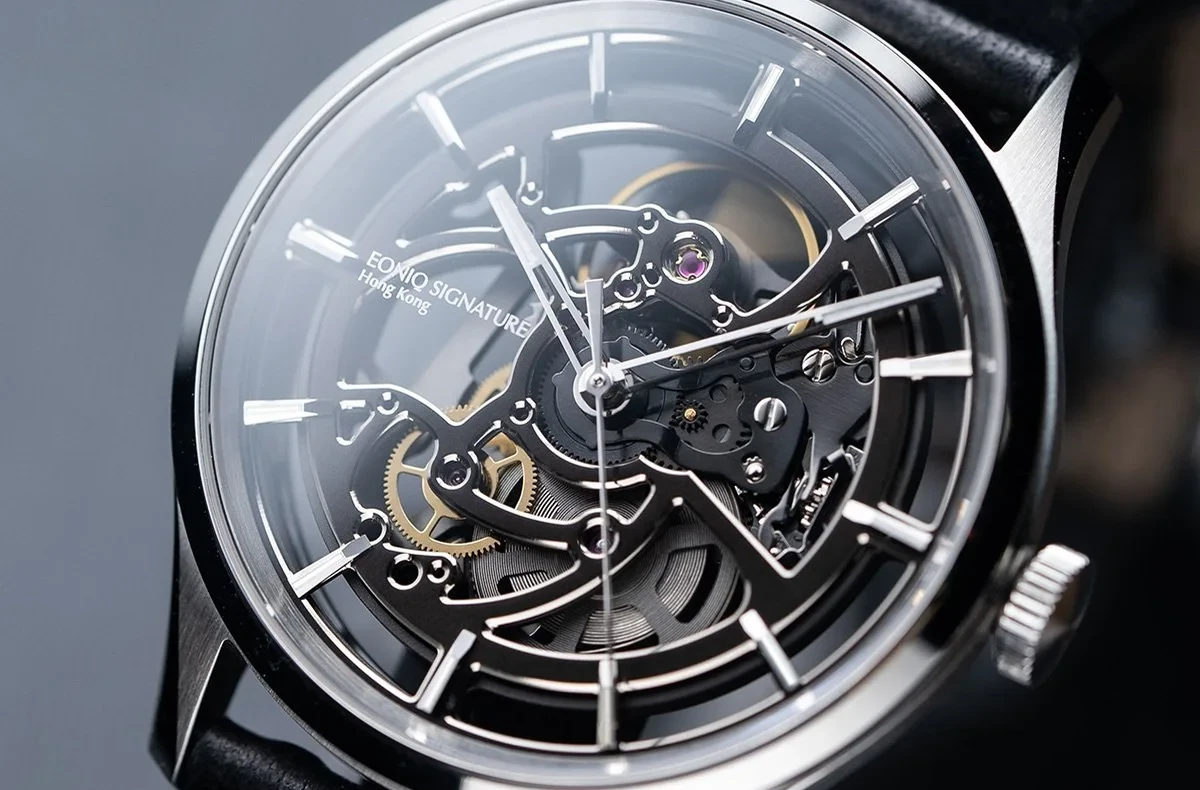
It's a hand-wound, skeletonised mechanical movement with 17 jewels, a 42-hour power reserve and a frequency of 28,800 vibrations per hour.
Those are perfectly respectable specifications.
But they're not really the interesting part.
What's interesting is where and how the movement is made.
According to EONIQ, the skeletonised mainplate is designed in-house and manufactured using precision CNC machining in Hong Kong.
The hairspring is also manufactured locally.
Components are inspected, the movement is assembled, and the balance and hairspring are adjusted in EONIQ's own Hong Kong workshop.
Final regulation and quality control also take place there.
Now, that doesn't mean every single component in the movement is manufactured in Hong Kong.
And I think that distinction is important.
But EONIQ has gone considerably further than simply importing a finished movement and assembling it into a watch.
The company obtained an official Certificate of Hong Kong Origin for Calibre 852, with its production arrangements and component origins assessed as part of that process.
That's a meaningful achievement for a relatively small independent manufacturer.
And the first watch to use the movement was the Braemar.
The Braemar
The Braemar is a skeletonised dress watch with a rather elegant, restrained appearance.
The case measures 38.5mm across and just 8.5mm thick, with sapphire crystal and a view into the movement's architecture.
There's something appealing about how much of the watch is dedicated to displaying the mechanical components.
The skeletonisation doesn't feel like an afterthought.
It's the central feature of the design.
And because Calibre 852 was developed specifically for the brand, EONIQ has been able to approach the overall appearance of the watch and movement as a combined project.
Prices start at US$945 for the version with a closed caseback, with an exhibition-back option costing more.
That's not insignificant money, particularly for a relatively unfamiliar watch brand.
But it's also rather interesting when you consider what's inside.
You're getting a mechanical movement developed and substantially manufactured by the company itself, with officially certified Hong Kong origin.
It's an unusual proposition at this price.
The Cornwall
EONIQ has since expanded the concept with the Cornwall.
This uses the same Calibre 852 movement but places it inside a more contemporary sports-watch design.
The case grows to 40mm and features an integrated stainless-steel bracelet, with 100 metres of water resistance.
It measures just 9.8mm thick.
It's a very different aesthetic from the Braemar, but I rather like the idea of taking a movement originally presented in a delicate skeletonised dress watch and putting it into something a little more versatile.
At US$1,535, the Cornwall is considerably more expensive.
But the attraction remains the same.
It's a watch built around a locally developed mechanical movement, rather than a familiar third-party calibre.
And EONIQ's ambition extends beyond simply producing a handful of interesting watches.
It's attempting to preserve and develop a manufacturing capability.
More than another independent watch brand
Neither the Braemar nor the Cornwall is attempting to compete with the most elaborate pieces coming out of Switzerland.
And I don't think they need to.
What makes EONIQ interesting is the scale of the challenge it has undertaken.
It's one thing to establish a microbrand, commission a case and dial, and fit a movement from Miyota or Sellita.
There's absolutely nothing wrong with that approach. Plenty of excellent watches are made that way.
But developing a movement, arranging local component manufacturing, assembling and regulating it, and obtaining formal certification of origin is an altogether more complicated proposition.
EONIQ is doing something that connects directly with Hong Kong's industrial heritage.
And perhaps more importantly, it's trying to ensure that at least part of that manufacturing knowledge continues to exist locally.
For a city that has played such an important role in the global watch industry, I think that's a rather fitting ambition.
And a fitting place to finish our visit.
Explore EONIQ: EONIQ Signature
Featured watches: Braemar and Cornwall
Learn more: Calibre 852
Five brands, five very different ideas
One of my favourite things about researching this series is discovering just how differently independent brands approach watchmaking.
And Hong Kong has been a particularly good example.
Earthen is making ceramic cases more accessible, without sacrificing the proportions and details that appeal to enthusiasts.
Angles is creating bizarre mechanical displays that ask us to reconsider how a watch should communicate the time.
ANICORN is allowing designers to run a little wild, producing watches that are playful, nostalgic and occasionally completely ridiculous.
AISION is preserving a disappearing piece of Hong Kong's visual identity through its typography and dial design.
And EONIQ is attempting something considerably more ambitious than simply designing another attractive watch.
It's developing and manufacturing mechanical movements in Hong Kong itself.
These brands have very little in common beyond their location.
But that's exactly what makes them worth exploring.
Because the most interesting thing about microbrands isn't necessarily that they're small.
It's that they have the freedom to approach watchmaking differently.
Sometimes that means a ceramic watch for under $1,000.
Sometimes it means an oil-filled PlayStation snow globe.
And sometimes it means setting out to manufacture a mechanical movement in a city where generations of watchmaking history have already taken place.
That's what I love about Around the World in 80 Microbrands.
You really never know what you're going to find.
Next, we're heading to India.
And judging by the brands I've already discovered there, we're in for another interesting trip.
The five brands at a glance
| Brand | Featured watch | Approximate price (USD) | What makes it interesting |
|---|---|---|---|
| Earthen Company | Summit MK II | $899 | Accessible full-ceramic automatic watches |
| Angles Watches | Triscope | $980 | Triangular minute display and jumping hour |
| ANICORN | PlayStation Play Symbol | $250 | Floating PlayStation symbols in oil |
| AISION | KONG | $550 | Dial inspired by Hong Kong's traditional shop signs |
| EONIQ | Braemar | From $945 | Locally manufactured, origin-certified mechanical movement |
Prices are in US dollars and reflect those discussed in the original episode, published on 6 November 2026. Prices, availability and configurations may change.
Watch the video
Watch the original White Tee Watches episode, Around the World in 80 Microbrands: Hong Kong, featuring all five brands and their watches.