
Spend enough time looking at affordable watches and you eventually end up in China.
Homages.
AliExpress bargains.
Mechanical watches offering specifications that would have seemed impossible at their price only a few years ago.
There is no shortage of coverage devoted to the best Chinese watch under US$500.
But that made me wonder about the opposite end of the market.
What happens when price is no longer the point?
What does Chinese watchmaking look like when brands stop trying to build the cheapest good watch and start trying to build the best watch they possibly can?
Or, to put it more provocatively:
Who is the Patek Philippe of China?
It turns out that may be the wrong question.
Because the further you move away from the bargain end of Chinese watchmaking, the more interesting the industry becomes.
CIGA Design: finding an identity
One of the first brands that begins to move beyond the normal value conversation is CIGA Design.
The important change is not simply better movements or more expensive materials.
It is originality.
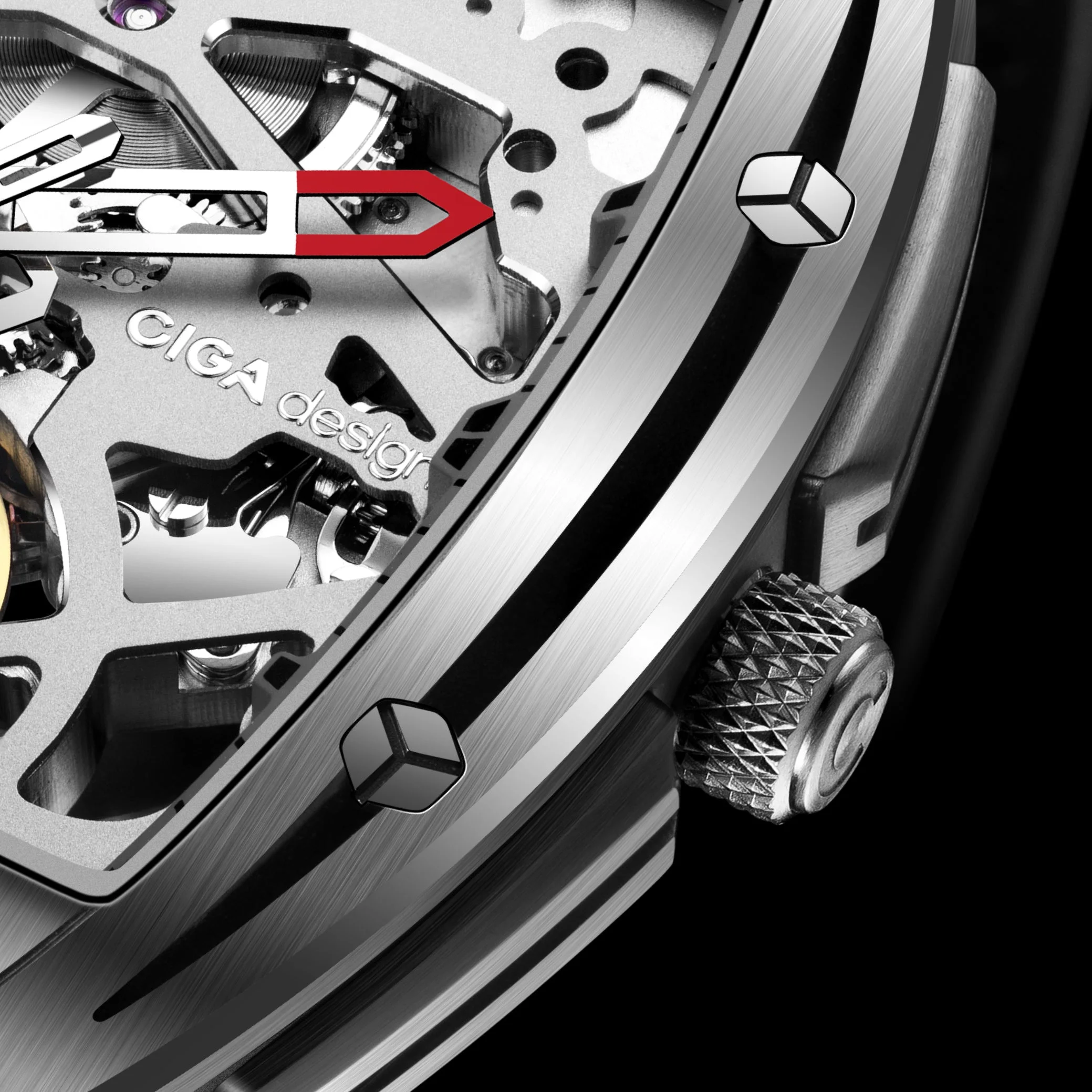
Collections such as the Aventur and Edge demonstrate a company increasingly interested in developing a recognisable design language rather than competing purely on specifications.
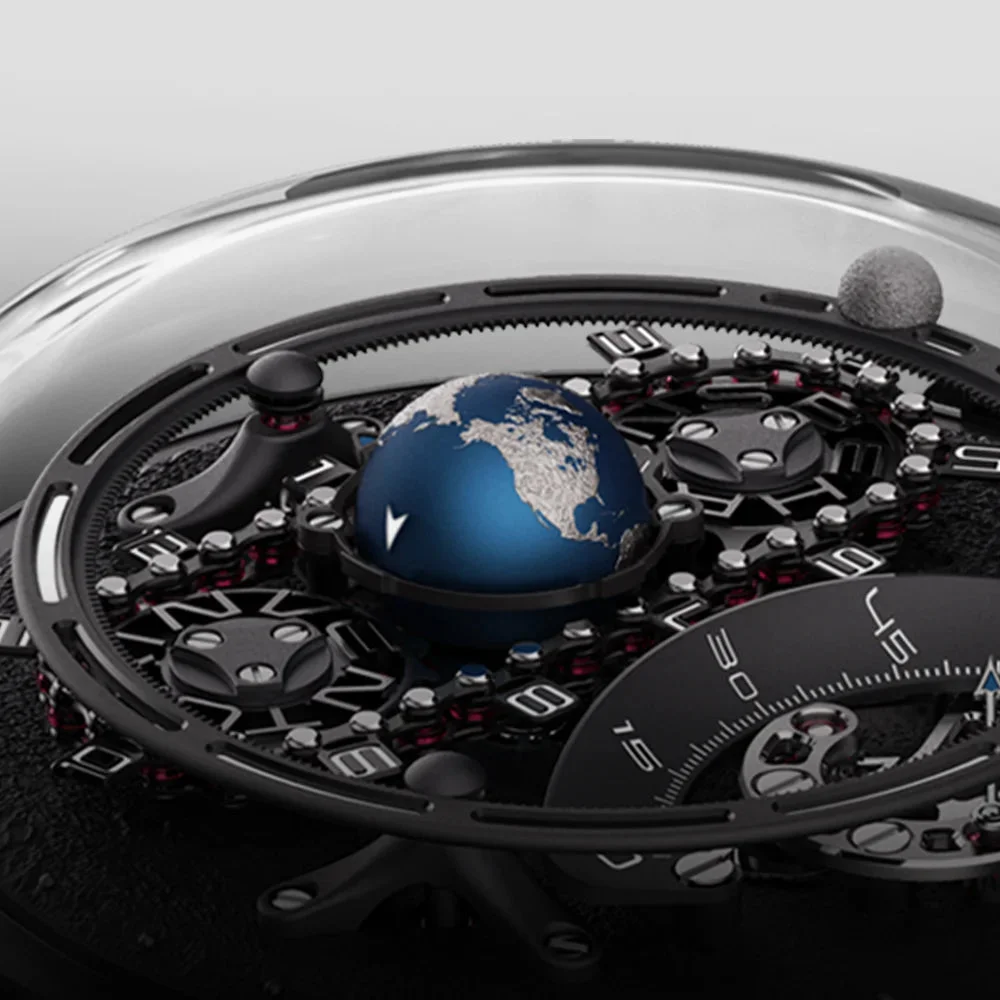
The Aventur became internationally visible after winning the Challenge Prize at the Grand Prix d'Horlogerie de Genève in 2021.
That was a significant moment.
Not simply because a Chinese brand won an award, but because the watch itself looked unlike the conventional Swiss formula.
Rather than traditional hands, the Aventur uses an unusual globe-inspired time display that feels closer to a concept watch than a standard three-hander.
The Edge takes another approach.
Its heavily skeletonised construction allows the movement architecture to become part of the design itself.
Skeleton watches at accessible prices can easily become visually chaotic.
CIGA's more interesting pieces try to make the movement, case and overall structure feel like one object rather than simply exposing gears for the sake of spectacle.
Higher in the range, CIGA has also experimented with hand-wound skeleton tourbillons.
The important thing is not whether CIGA is already competing with the established giants of Switzerland.
It is that the brand appears to have moved beyond asking:
How cheaply can we make this?
and started asking:
What can we make that feels recognisably ours?
That is a much more interesting question.
Agelocer: democratising complications
Agelocer attacks the market from another direction.
Its proposition is less about design originality and more about making complications accessible.
Tourbillons are the obvious example.
At the time of the original research, Agelocer was selling flying-tourbillon watches using its own movements for prices beginning around US$700.
That requires some context.
Nobody should mistake a sub-US$1,000 tourbillon for a watch competing directly with Breguet, Vacheron Constantin or Greubel Forsey.
Those companies operate in an entirely different world of finishing, hand decoration, architecture and labour.
But the appeal of a tourbillon in the modern world is not really its theoretical ability to counteract gravity.
It is mechanical theatre.
A rotating cage.
A balance wheel constantly moving through space.
Something visibly mechanical happening on your wrist.
And Agelocer makes that experience accessible to people who would never normally be able to buy a traditional high-end tourbillon.
The company takes a similar approach with complications such as moonphases.
Its Astronomer collection includes true lunar-cycle displays at prices far below what many established European brands ask for visually similar complications.
Yes, value is still part of the conversation here.
But taking mechanisms once reserved for very expensive watches and making them accessible to a wider audience is still a meaningful contribution to watchmaking.
Atelier Wen: craftsmanship over price
Then we arrive at Atelier Wen.
For me, this is where the conversation around Chinese watchmaking begins to change significantly.
The brand is not primarily competing on cheap complications.
It is competing on craftsmanship.
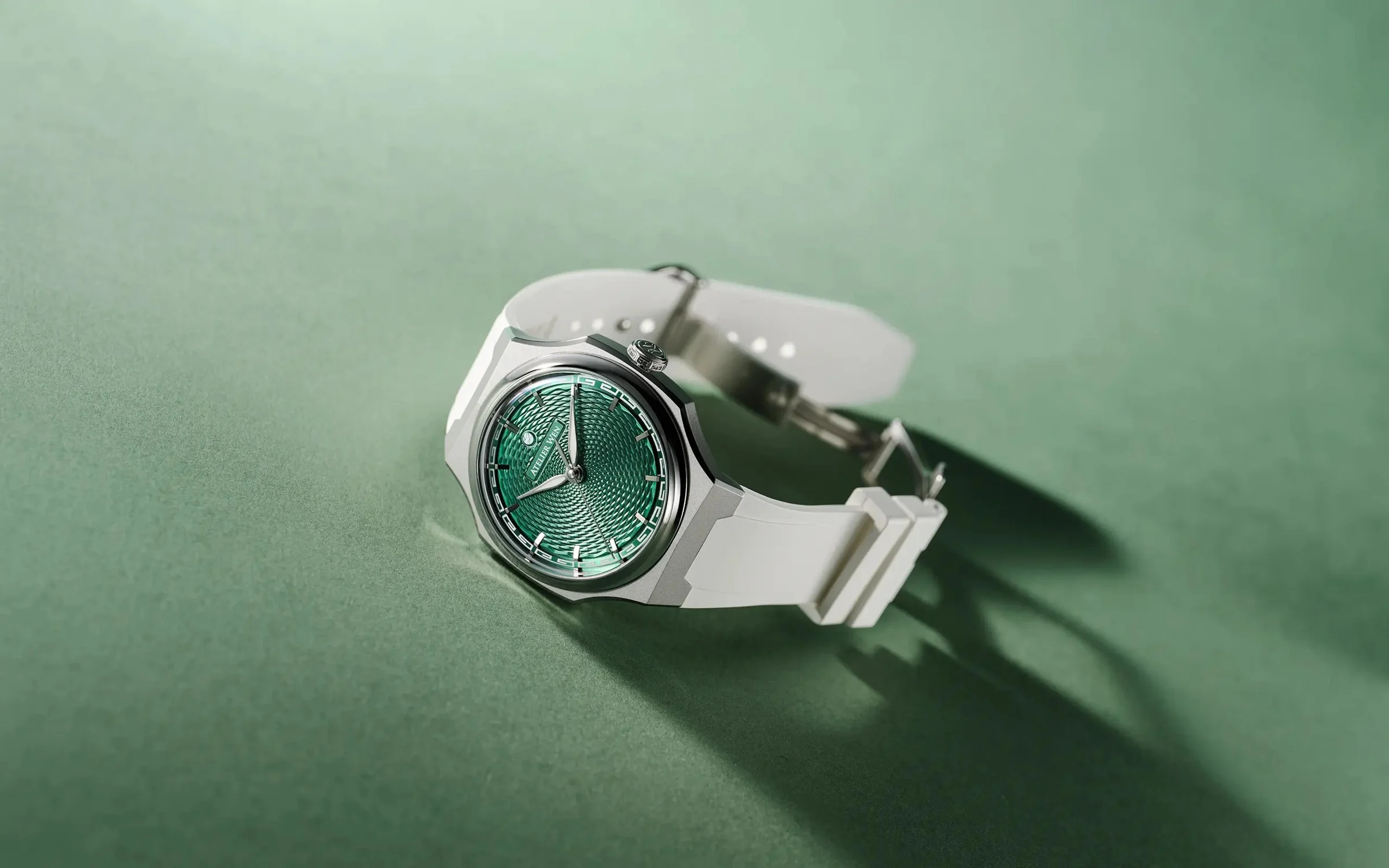
The Perception is the obvious example.
In its more recent iterations, what initially looks like a fairly conventional integrated-bracelet sports watch becomes far more interesting as you look closer.
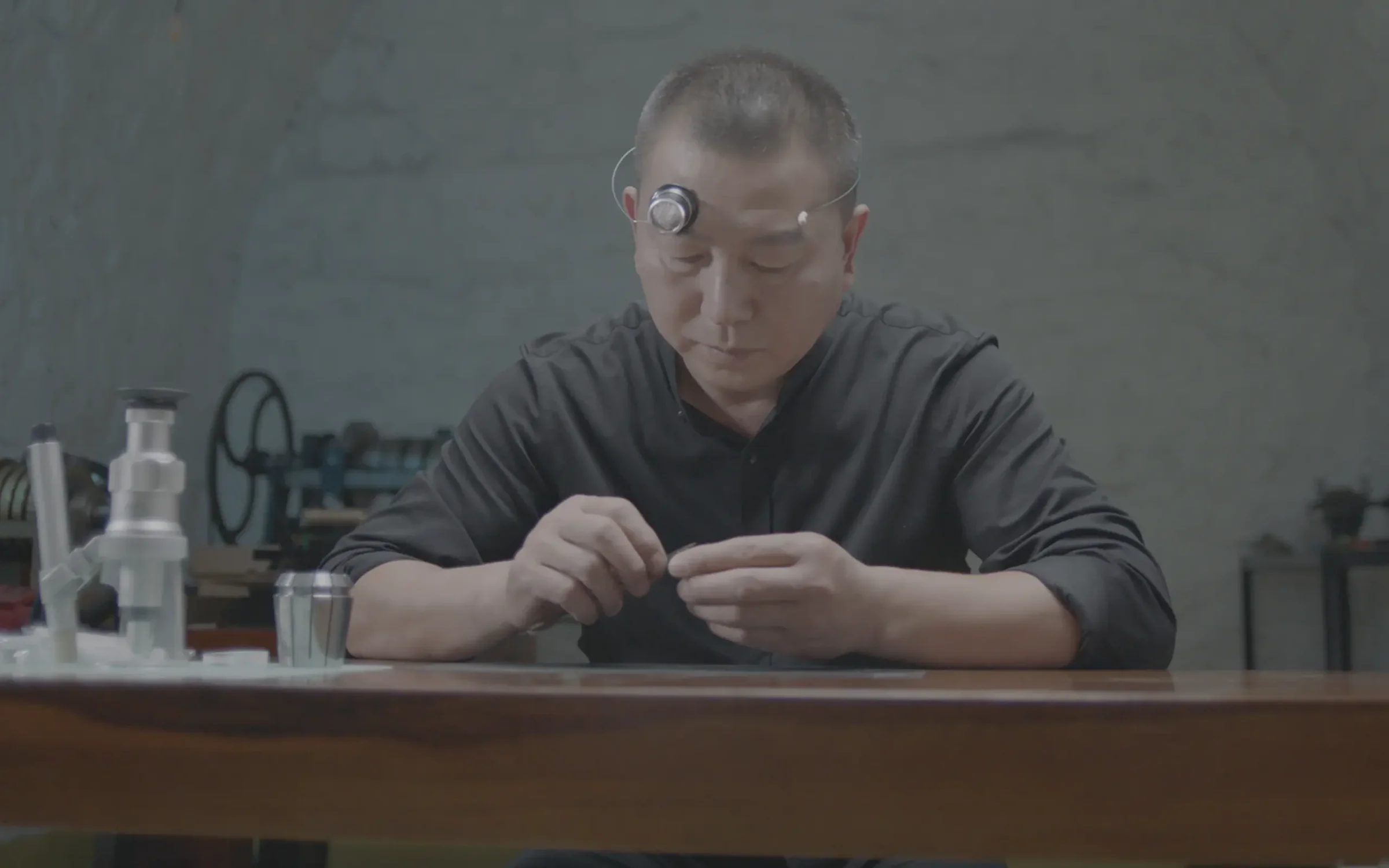
The dial is hand-guilloché by Cheng Yucai, one of China's leading guilloché craftsmen.
Each dial is cut using a traditional rose-engine lathe, producing a depth and texture that industrial stamping cannot really replicate.
Chinese design elements appear throughout the watch without becoming costume.
The chapter ring incorporates a traditional huiwen pattern.
That motif also appears on the crown.
Luminous material is integrated into the design rather than simply applied on top.
Then there is the case finishing.
Rather than relying only on conventional brushing, Atelier Wen uses a micro-frosted surface that gives the steel a softer, almost glowing appearance.
That is contrasted with sharply polished chamfers and bezel surfaces.
It is the sort of finishing philosophy normally associated with established luxury manufacturers obsessed with the way light moves across a case.
At the time of the original piece, the Perception V3 was priced around US$4,850.
That is no longer cheap.
And that is precisely the point.
Atelier Wen is not asking to be judged as a good watch for the money.
It wants to be judged as a good watch.
The brand has also shown ambitions well beyond the Perception.
Projects such as the tantalum Inflection, priced far higher, indicate that Atelier Wen has little interest in remaining permanently boxed into the idea of Chinese value.
Tantalum is famously difficult to machine.
Using it is hardly the obvious choice for a young brand trying to keep costs down.
That suggests Atelier Wen is increasingly interested in seeing how high Chinese watchmaking can go.
Behrens: where things get weird
If Atelier Wen represents refinement, Behrens represents experimentation.
Founded in 2012, Behrens feels less like a traditional luxury-watch company and more like an independent horology laboratory.
The Perigee is a good example.
Rather than placing conventional hands over a dial, Behrens integrates the time display into the movement architecture itself.
The result is one of those watches that immediately prompts the question:
How does that work?
That reaction is central to the appeal.
Across the wider catalogue, Behrens experiments with:
- retrograde displays
- orbital indications
- unusual movement layouts
- suspended structures
- extremely lightweight watches
- unconventional time displays
The Ultra-Light, for example, weighs around 11 grams without its strap while still containing a mechanical movement.
Other models abandon conventional hands almost entirely.
Collaborations with established independent watchmakers have also given Behrens increasing credibility outside China.
This is not a company trying to build something everyone will like.
That is arguably what makes it important.
Experimental independent watchmaking only moves forward when somebody is willing to make something odd.
Behrens is very willing.
Celadon: making Chinese watches look Chinese
At the opposite end of the aesthetic spectrum sits Celadon.
Rather than futuristic displays and mechanical experimentation, Celadon's strongest work draws heavily on Chinese art and craft.
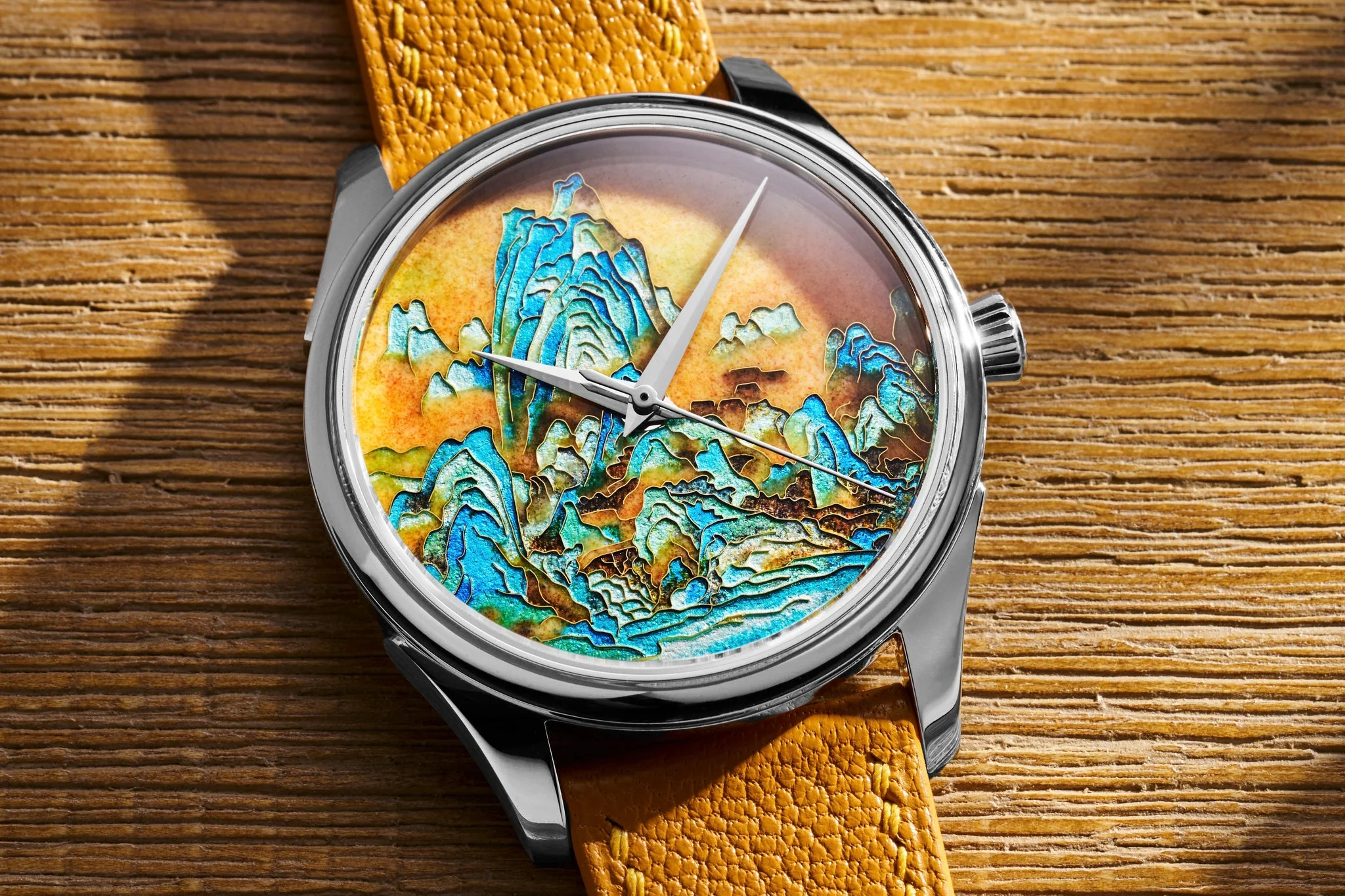
The Century Cloisonné Boundless Realm II captures that approach particularly well.
Its dial recreates imagery from A Thousand Li of Rivers and Mountains, one of China's great classical artworks.
The image is rendered using cloisonné enamel.
This is not a printed approximation.
The process involves extremely fine gold wire forming the boundaries of the design before multiple layers of enamel are applied and fired.
According to the original research, each dial requires more than 50 hours of work and approximately 25 firings.
Many do not survive the process.
The result is not a Swiss watch with a Chinese brand name.
It is very deliberately Chinese.
That becomes even more interesting when paired with the work of independent watchmaker Lin Yong Hua.
His CH5 Phoenix movement takes the same approach to the mechanics.
Hand finishing.
Black polishing.
Gold chatons.
Hand-bevelled internal angles.
A Breguet overcoil.
Bridge architecture inspired by the tail feathers of the Chinese phoenix.
It is technical watchmaking expressed through a distinctly Chinese visual language.
And that may be one of the most important developments in the country's high-end watch scene.
Maybe brands are only half the story
The deeper I went into Chinese high-end watchmaking, the more often individual names began appearing.
Not companies.
Watchmakers.
That makes sense.
China's modern high-end watch industry is still extremely young compared with Switzerland, Germany or even Japan.
Expecting a brand to immediately possess the reputation of Patek Philippe, Vacheron Constantin or A. Lange & Söhne is unreasonable.
Those reputations took generations to build.
So perhaps looking for the "Patek Philippe of China" is the wrong approach.
Maybe the better question is:
Who are China's Antoni Patek and Adrien Philippe?
Who are the individual craftsmen, designers and inventors building the foundations of what may eventually become a much larger high-end watch industry?
There are already several compelling candidates.
Qin Gan: the craftsman
Qin Gan, based in Chongqing, began his career restoring vintage watches.
That background matters.
Restoration exposes a watchmaker to the construction methods, finishing techniques and architecture that shaped historical mechanical watchmaking.
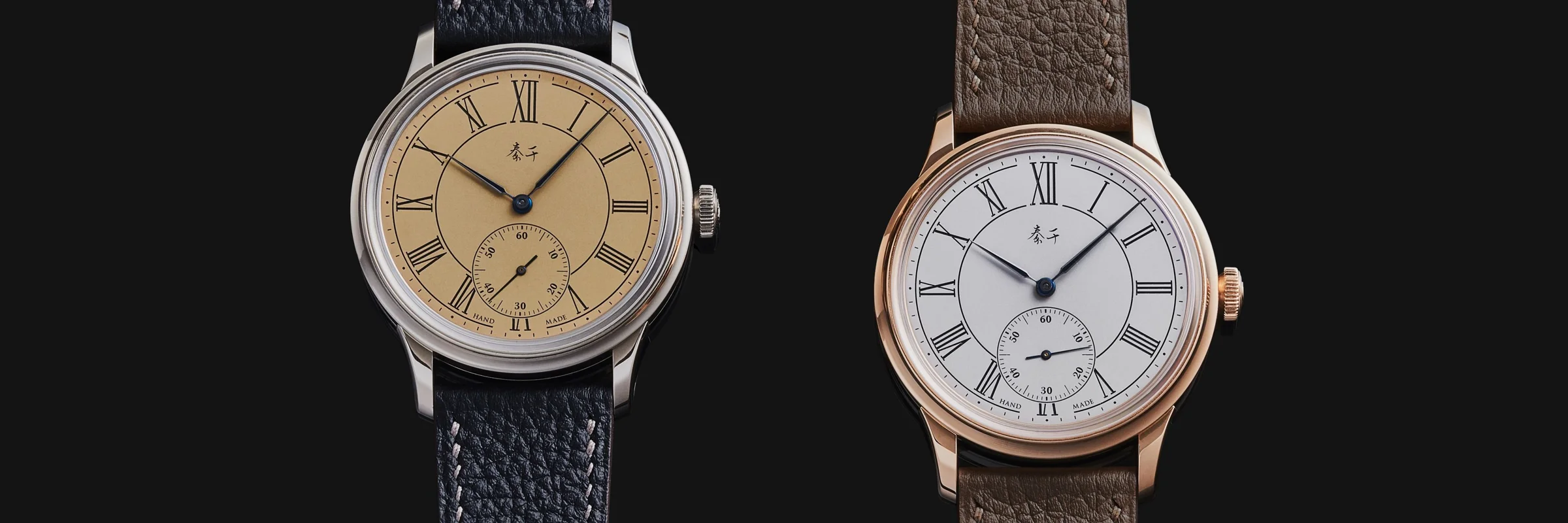
Qin's Pastorale II takes a heavily reworked vintage Longines movement and transforms it into something far closer to contemporary independent haute horlogerie.
Production is tiny.
Around 15 pieces per year according to the original research.
The price was around US$46,000.
There is no affordable-Chinese-watch argument to hide behind at that level.
The watch has to stand on craftsmanship.
Hand-finished bridges.
Internal angles.
Classical enamel dial work.
Precious-metal cases.
The philosophy feels closer to a traditional independent watchmaker such as Philippe Dufour than to industrial mass production.
It is one person obsessively refining one watch.
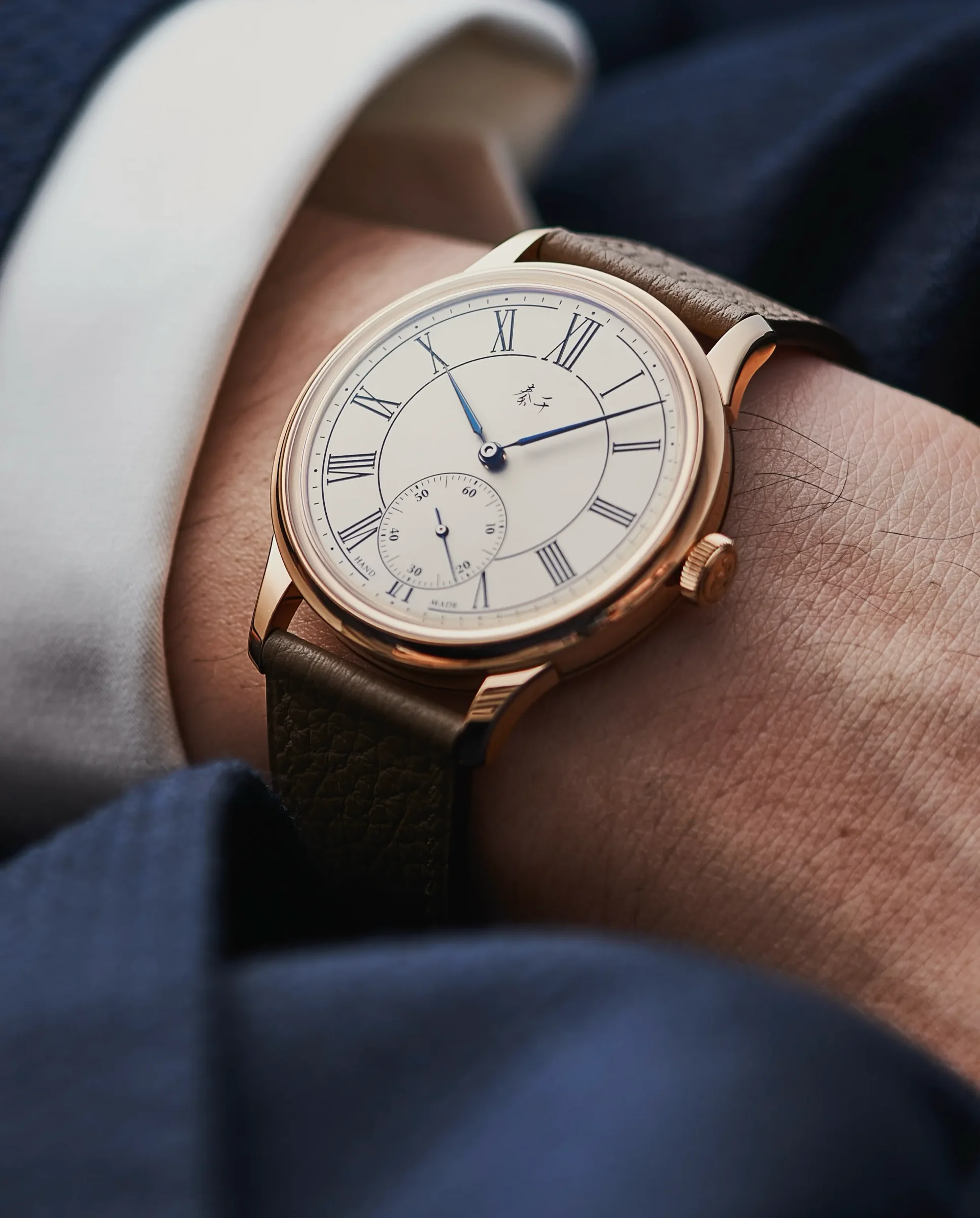
That is about as far removed from the stereotype of Chinese mass manufacturing as it is possible to get.
Lin Yong Hua: the enabler
Then there is Lin Yong Hua.
Lin is particularly interesting because his influence extends beyond watches carrying his own name.
His work with Celadon shows how an independent watchmaker can raise the technical ambitions of an entire brand.
Lin is also one of the relatively small number of Chinese watchmakers associated with the AHCI, the international academy of independent watchmakers.
His personal work ranges widely.
There are comparatively approachable watches such as the LYH Voyager, with its unusual sea-turtle-inspired case.
At the opposite extreme are far more complicated pieces such as the Wirepuller, with its highly unconventional mechanical architecture.
But perhaps Lin's greatest significance is not any individual watch.
It is the role he plays within the wider ecosystem.
Every mature high-end watch industry needs specialist watchmakers who can design, develop, finish and enable ambitious projects.
Lin appears to be becoming one of those figures for China.
Logan Kuan Rao: the innovator
Then there is Logan Kuan Rao.
He may be the most intriguing name of the group.
Originally trained as an engineer, Logan built working watch prototypes while still extremely young.
Before turning thirty, he had already patented his own Equal-Push escapement, developing an alternative approach inspired partly by the principles of the co-axial system.
That matters.
Beautiful finishing is one thing.
Developing new mechanisms is another.
Logan also reportedly manufactures the majority of his own watch components, outsourcing only highly specialised elements such as hairsprings, jewels, mainsprings and shock absorbers.
His Orca attracted attention with a whale-shaped bridge incorporating traditional high-end finishing techniques.
The later Wuwei became considerably stranger.
Its sculptural movement architecture resembles mechanical art more than conventional watchmaking.
And that is exactly why Logan is worth watching.
He is not merely reproducing existing Swiss ideas to a high standard.
He is experimenting with the mechanics of timekeeping itself.
Those are the people who can eventually change an industry.
Reputations have to start somewhere
Modern collectors sometimes talk about established independent watchmakers as if their status had always existed.
It did not.
F.P. Journe built his reputation within living memory.
Philippe Dufour spent decades becoming Philippe Dufour.
Independent watchmaking history is still being written.
That matters when looking at China.
A young high-end watch industry does not need to immediately produce its own Patek Philippe.
It needs craftsmen.
Engineers.
Designers.
Movement specialists.
Brands willing to experiment.
Collectors willing to take them seriously.
And time.
So who is the Patek Philippe of China?
I started looking into this expecting to find an answer.
I did not.
There is no obvious Chinese equivalent of Patek Philippe.
And perhaps there should not be.
What I found instead was far more interesting.
CIGA Design is exploring originality.
Agelocer is making complicated watchmaking more accessible.
Atelier Wen is pushing Chinese finishing and craftsmanship upmarket.
Behrens is experimenting with how mechanical watches can display time.
Celadon is combining serious horology with traditional Chinese art and design.
And behind those brands sit individual watchmakers such as Qin Gan, Lin Yong Hua and Logan Kuan Rao, each pushing the industry in a different direction.
Maybe none of these names becomes globally important.
Maybe several do.
Watchmaking reputations are built over decades, not YouTube videos.
But one thing already seems clear.
If your entire picture of Chinese watchmaking is cheap homages and AliExpress bargains, you are looking at only a tiny part of the industry.
Chinese watchmaking is beginning to produce watches that are original, technically ambitious, beautifully finished and, increasingly, proudly Chinese.
The interesting question is no longer whether China can make a good watch.
We already know it can.
The question is what Chinese watchmaking will look like once it no longer feels the need to prove that.