
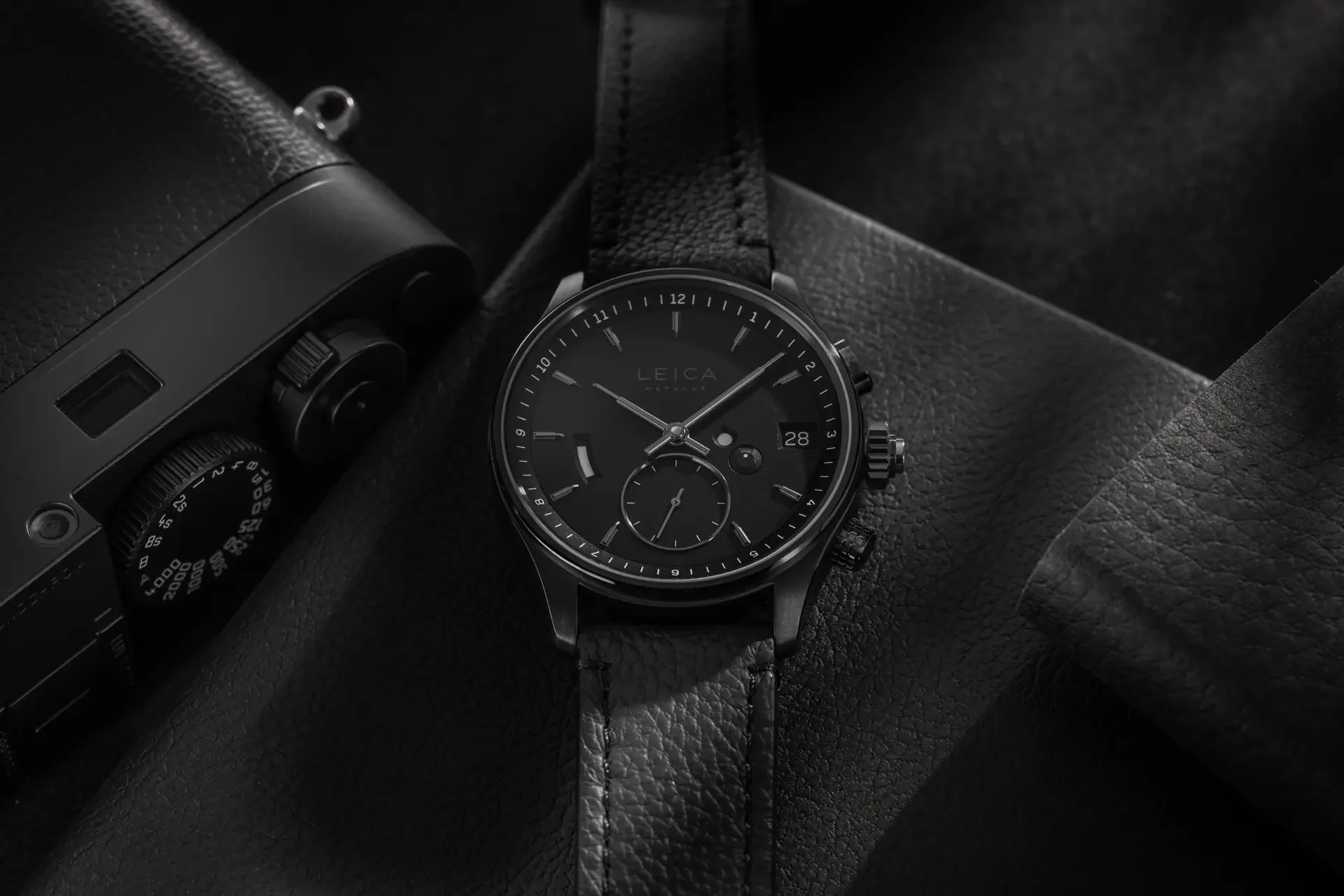
I recently discovered something I genuinely did not know existed.
Leica makes watches.
Not promotional watches with a camera company's logo stamped onto an inexpensive dial.
Proper mechanical luxury watches.
Expensive ones.
And the deeper I went down that particular rabbit hole, the stranger part became not that Leica makes watches at all.
It was how seriously Leica appears to take making them.
Maybe it isn't as strange as it sounds
If you have never spent much time around Leica, the obvious question is why a German camera company would decide to make mechanical watches.
But the more you think about the brand itself, the less ridiculous the idea becomes.
Leica has built its reputation around precision engineering, restrained industrial design and extremely expensive products bought by enthusiasts who care about the physical object as much as its basic function.
Its cameras are not simply tools for capturing images.
They are objects people obsess over.
Materials.
Controls.
Machining.
Tactility.
Design.
Heritage.
Longevity.
That sounds remarkably familiar.
If Jaeger-LeCoultre is the watchmaker's watchmaker, perhaps Leica is the watchmaker's camera maker.
Once you stop thinking of Leica purely as a camera manufacturer and start thinking of it as a luxury engineering company, a mechanical watch begins to make considerably more sense.
What surprised me was just how much effort it put into the idea.
The original Leica watches
Leica's watch range is built around four core model families:
the ZM 1,
ZM 2,
ZM 11,
and ZM 12.
ZM stands for Zeitmesser, the German word for timekeeper.
The ZM 1 and ZM 2 were Leica's first serious entries into watchmaking and established much of the early design language.
Clean dials.
Machined cases.
Restrained colour.
An industrial aesthetic with obvious German-watchmaking influences.
But the most interesting feature is the crown.
Most mechanical watches are set by pulling the crown outward.
On the Leica, you push it.
Pressing the crown stops the movement and resets the seconds hand to zero, allowing the time to be set precisely before another press starts the movement again.
It is designed to create the same deliberate, tactile feeling as operating a camera shutter.
I have had the opportunity to handle these watches in person, and this is one of those mechanisms that makes considerably more sense once you actually use it.
It is immensely satisfying.
Probably unnecessarily satisfying.
It is the sort of feature you could find yourself pressing far more often than any sensible owner should.
And that is exactly the kind of detail that makes the watches feel like Leica products rather than generic mechanical watches carrying a Leica logo.
Camera details everywhere
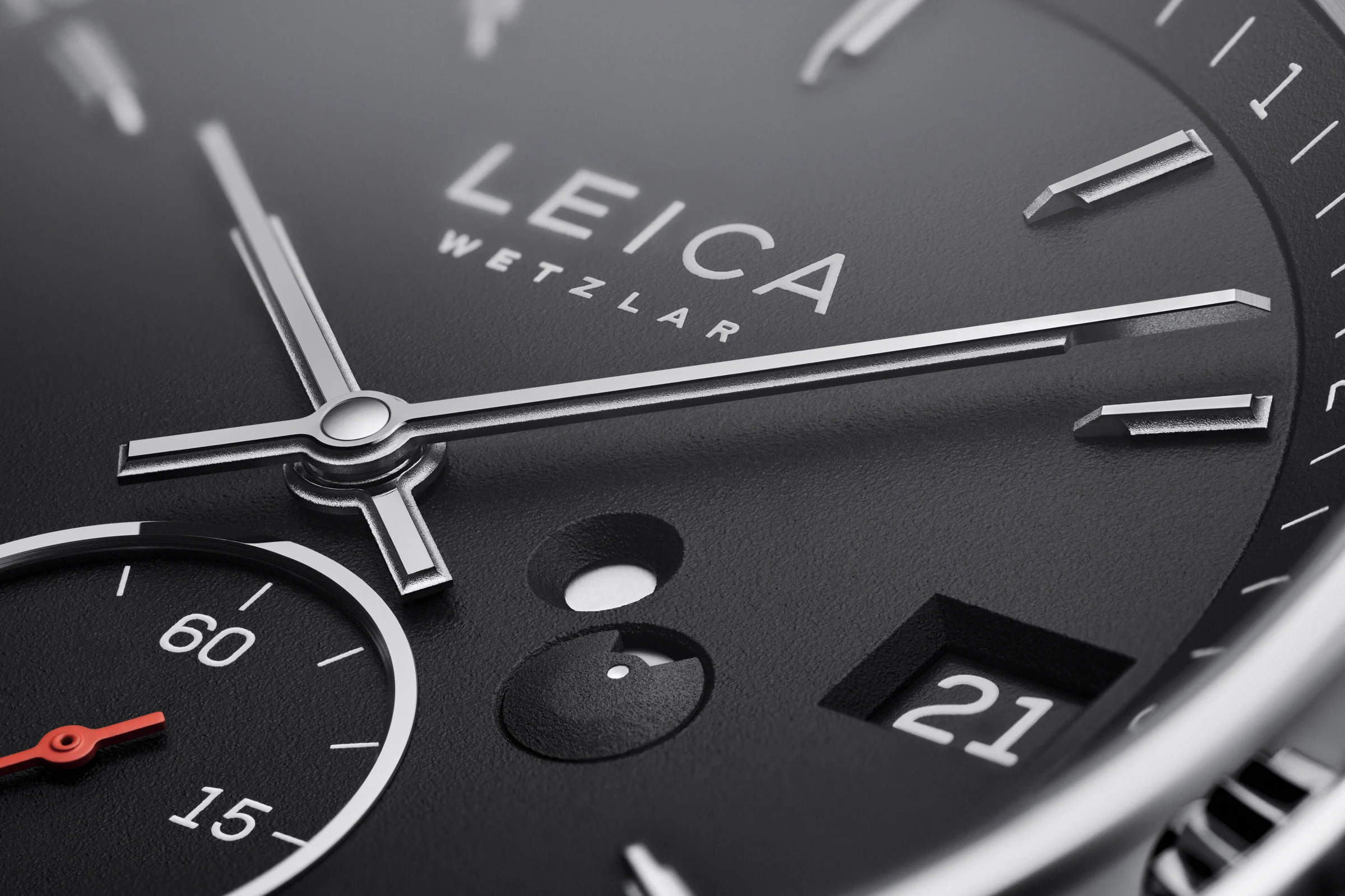
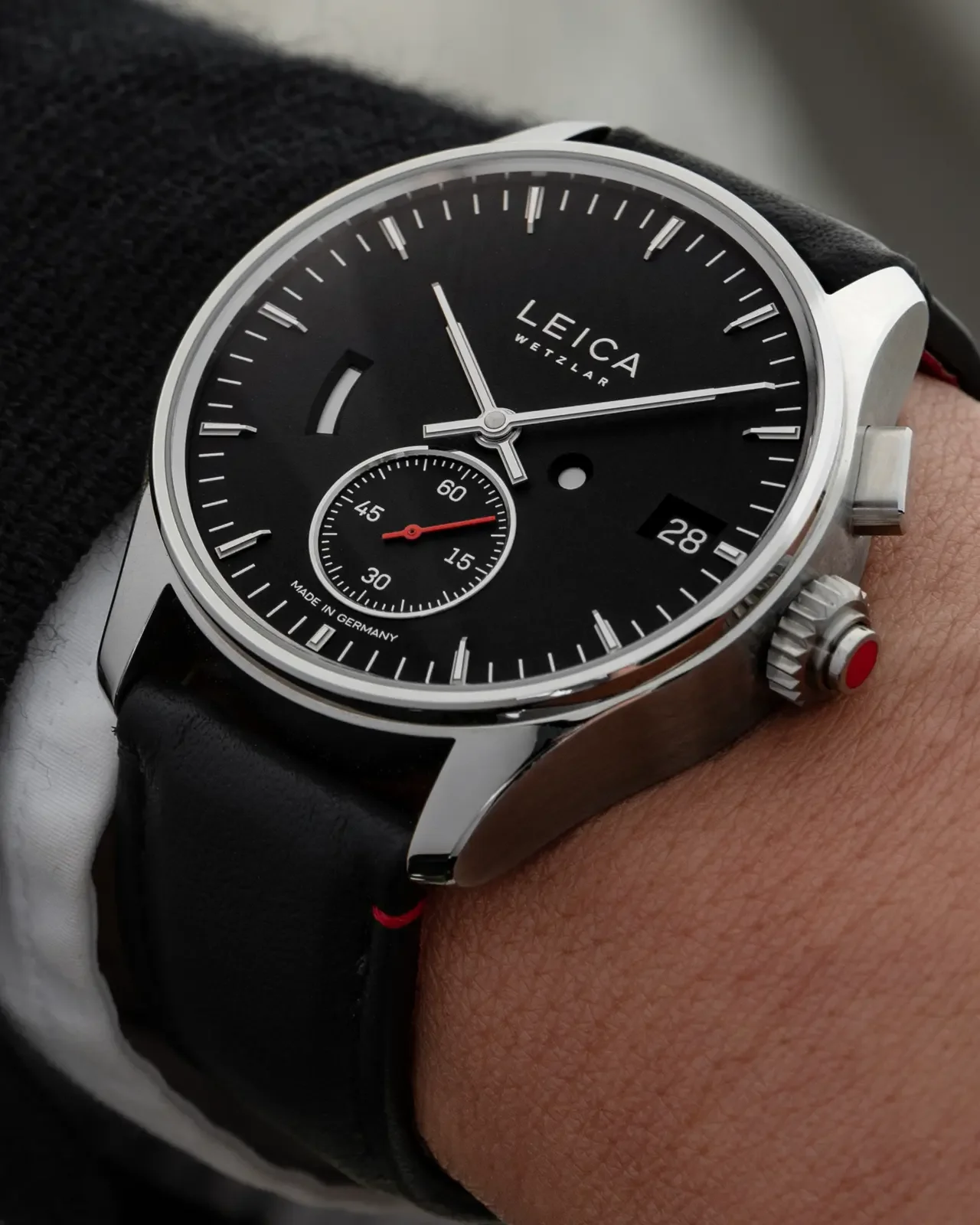
The ZM 1 adds a date at three o'clock, small seconds at six and a power-reserve display at nine.
Beside the date is a small running indicator.
When the watch is operating it appears white.
Stop the movement and it turns Leica red.
The power-reserve display contains another camera reference, expanding from the centre in a way intended to mimic the movement of a physical camera shutter.
The ZM 2 then adds GMT functionality through a rotating bezel controlled by an additional crown at four o'clock, along with a day-night indicator.
Even the overall shape contains camera references.
The domed sapphire crystal is intended to evoke the convex form of a lens, while elements of the case profile reference the shape of a camera viewed from above.
None of these touches is necessary.
That is precisely why they matter.
Leica could have made a perfectly competent German-looking watch and stopped there.
Instead, it built small mechanical interactions connecting the watch back to the products that made the company famous.
The ZM 11 and ZM 12 are more conventional
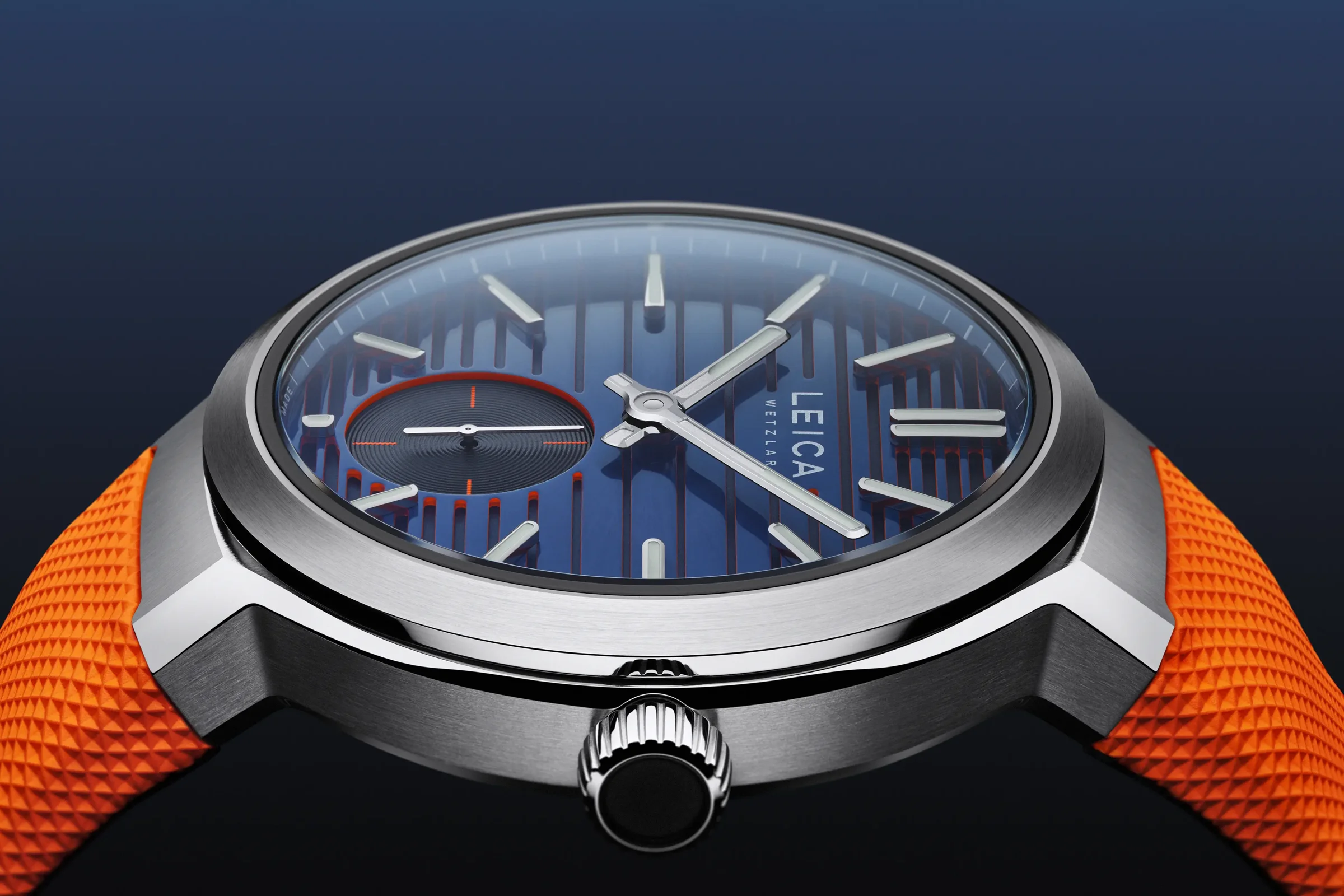
More recently came the ZM 11 and ZM 12.
These are arguably the easier watches to wear.
The ZM 11 is the larger and sportier option at around 41 mm.
The ZM 12 brings the size down to approximately 39 mm and replaces the central seconds hand with small seconds at six.
Both are clean, restrained and modern.
Interestingly, remove the logos and these newer watches might actually feel more recognisably Leica in a broad design sense.
They have the clean industrial aesthetic you might expect from the company.
But they also lose some of the eccentricity of the ZM 1 and 2.
There is no push crown.
No dramatic running indicator.
No shutter-style power reserve.
The overt camera references are quieter.
There are still some clever details.
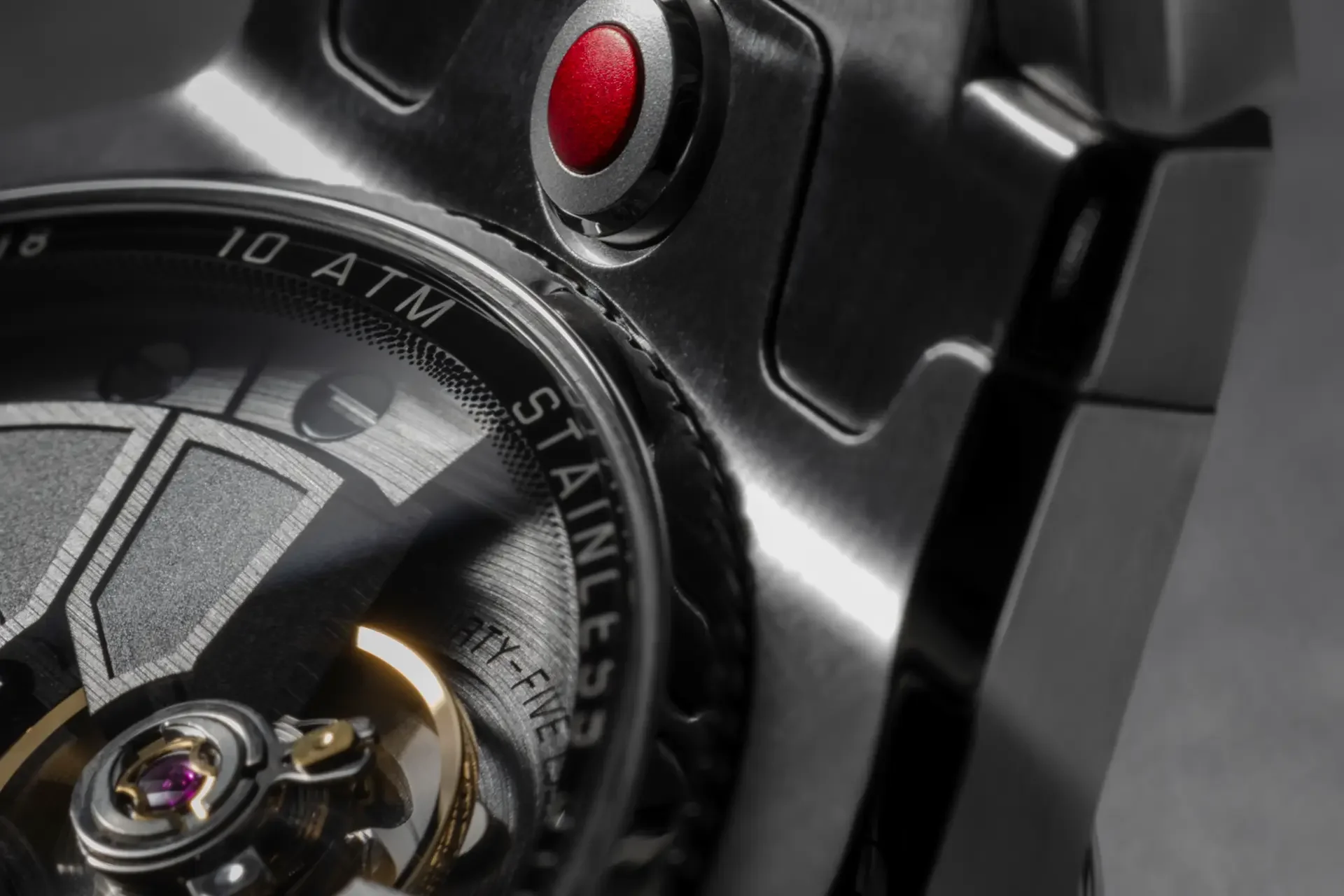
The quick-change strap system uses a small red button incorporated into the lugs, referencing the lens-release button on a Leica camera.
The dials use layered construction, subtle textures and small flashes of colour that change as light moves across them.
That feels appropriate for a company whose entire business has been built around manipulating light.
But overall, the ZM 11 and ZM 12 feel less like Leica attempting to reinvent the mechanical watch in its own image.
They feel more like Leica making a refined modern luxury sports watch.
That probably makes them easier to wear.
Probably easier to sell too.
But perhaps slightly less interesting.
For a brand like Leica, I think the quirks are part of the appeal.
The movements are where things get serious
This is the point where I expected the whole project to fall apart.
Luxury brands outside traditional watchmaking have produced plenty of watches over the years.
Often the formula is straightforward.
Buy an existing movement.
Decorate it.
Add a branded rotor.
Put a famous logo on the dial.
Charge accordingly.
Leica did not take that route.
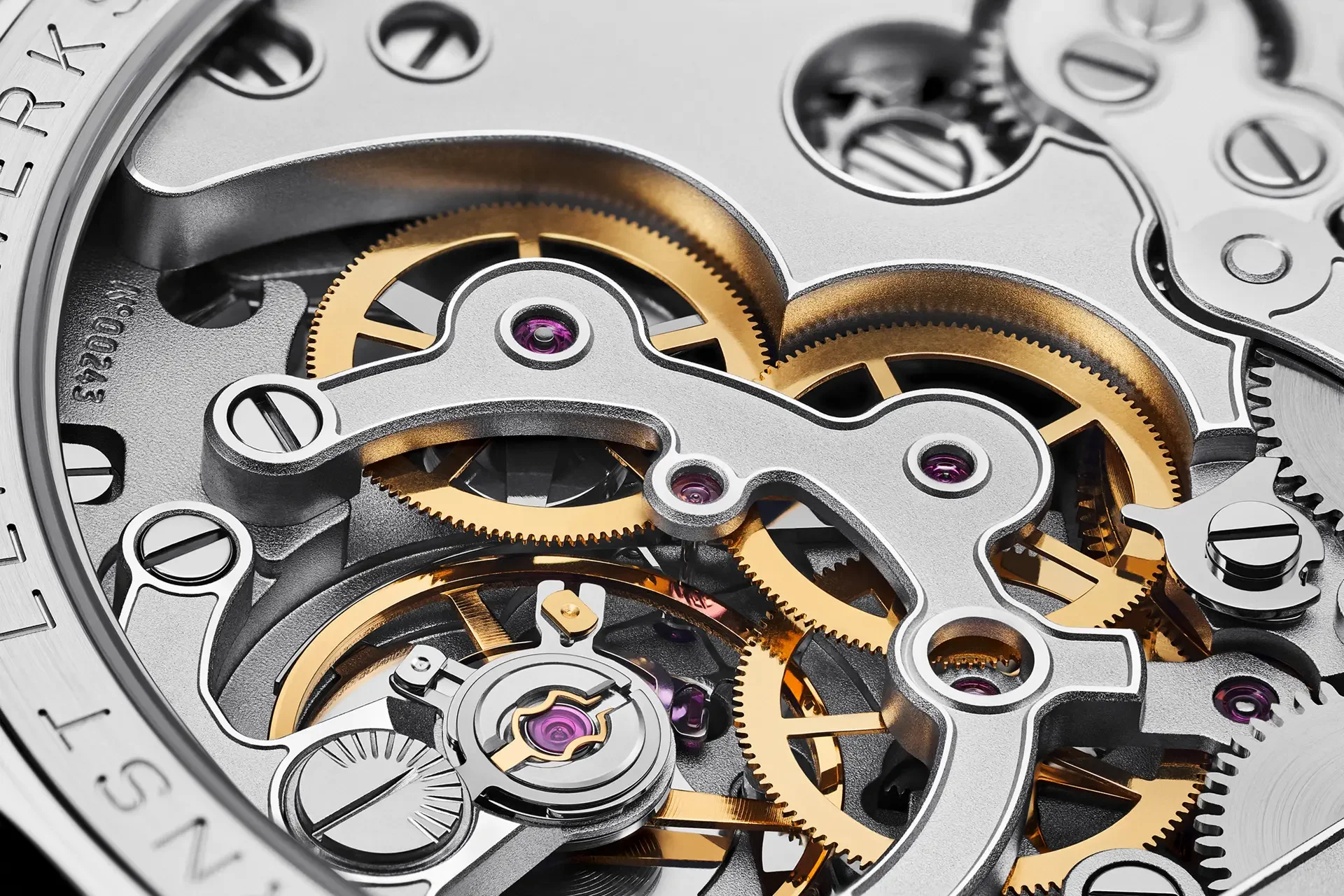
The original ZM 1 and ZM 2 use the LH-10 and LH-20 movements.
According to Leica's development story, they were conceived with former A. Lange & Söhne development chief Reinhard Meis, refined with independent watchmaker Andreas Strehler and manufactured by German engineering company Lehmann Präzision.
That is not a casual collection of names.
More importantly, the movements were designed around the watches themselves.
That allowed Leica to implement features such as the push crown, zero-reset seconds and running indicator in a way that would have been difficult to achieve by simply dropping in a standard movement.
The calibres run at 3 Hz and offer approximately 60 hours of power reserve.
The broader watches are also heavily German-made, reinforcing the feeling that the ZM 1 and ZM 2 are genuine engineering projects rather than outsourced watches dressed in Leica branding.
Then Leica went to Switzerland
The ZM 11 and ZM 12 take a different route.
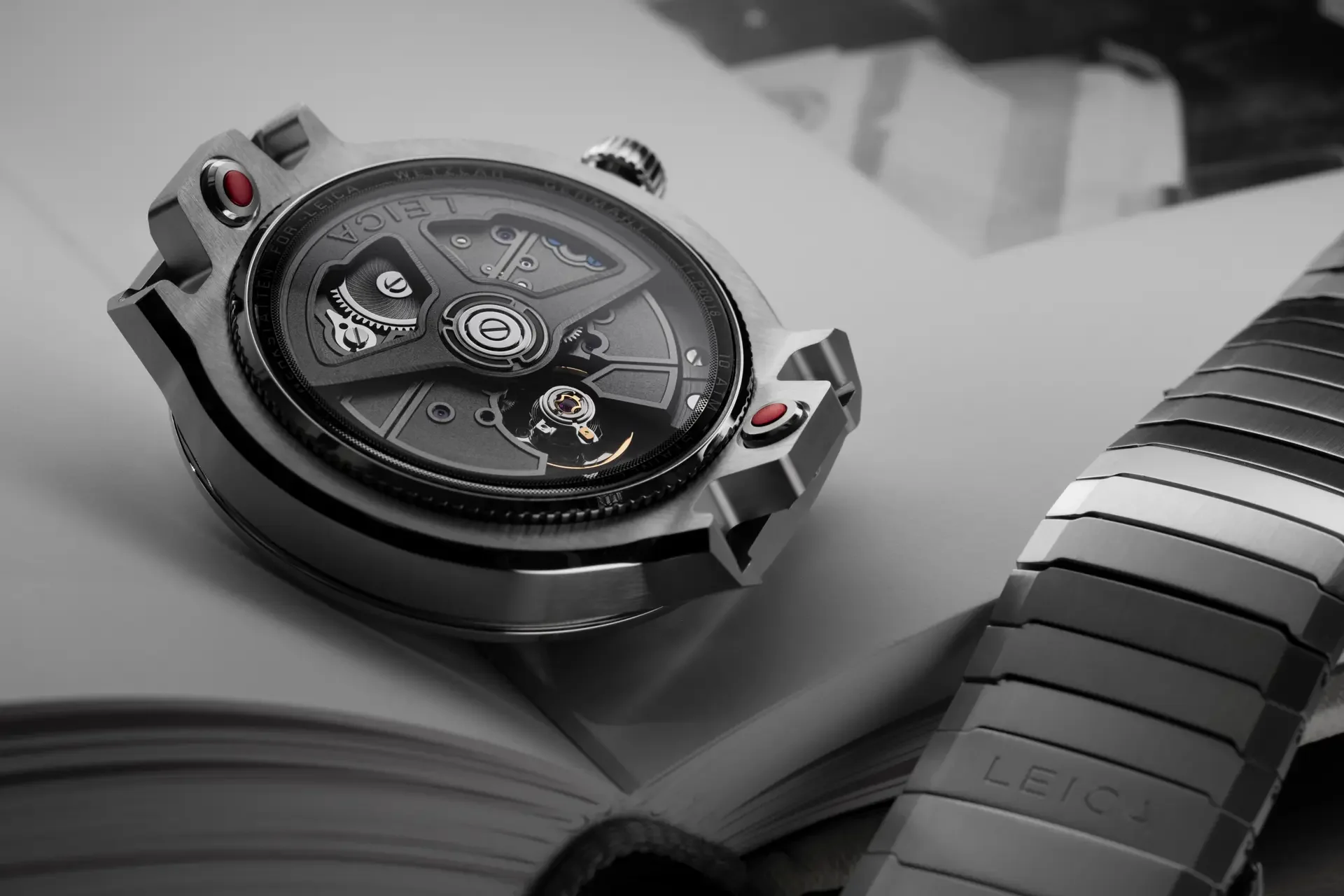
For these watches, Leica partnered with Chronode in Switzerland to create the automatic LA-3001 and LA-3002 movements.
Chronode is a specialist movement-development house founded by Jean-François Mojon, whose work has been connected with serious names across independent and high-end watchmaking.
Again, Leica could have chosen something much easier.
Instead, the resulting calibres are exclusive to the watches.
They run at 4 Hz and provide approximately 60 hours of power reserve.
Even their decoration is deliberately different from the traditional Swiss formula.
Rather than leaning heavily on familiar Geneva stripes and bright classical finishing, Leica uses bead blasting, straight brushing and darker industrial surfaces.
They look engineered.
Which is exactly how a Leica movement probably should look.
Are these movements necessarily going toe-to-toe with the very best calibres from the world's largest established manufactures?
That is an extremely high bar.
What matters more is that Leica clearly resisted the easy option.
These do not feel like generic watches that happen to have Leica written on them.
They feel like watches conceived as Leica products.
That may be the biggest surprise of all.
Then we get to the price
Unfortunately, taking watchmaking seriously is not inexpensive.
And Leica is not positioning these watches anywhere near the affordable end of the market.
In Australia, the ZM 11 and ZM 12 were sitting around the A$10,000 to A$12,000 range when the original piece was produced.
That is serious territory.
At those prices, buyers can look at watches such as:
- the Rolex Oyster Perpetual
- Omega Aqua Terra
- major Cartier models
- numerous Grand Seiko Spring Drive pieces
This is an extraordinarily competitive section of the market.
Nobody casually wanders into a boutique and spends twelve thousand dollars without comparing alternatives.
Leica therefore has to compete against companies with decades, and sometimes centuries, of dedicated watchmaking credibility.
The ZM 1 pushes considerably higher, beginning closer to A$16,000 at the time.
The ZM 2 can climb toward A$25,000 depending on configuration.
At that point you are discussing icons from some of the most established names in watchmaking.
That is a serious ask.
The range makes more sense when split in two
I tend to think of Leica's watches as two distinct propositions.
The ZM 11 and ZM 12 are expensive, but easier to rationalise.
You are getting:
- an exclusive movement
- distinctive industrial design
- relatively unusual watches
- low-volume appeal
- extremely strong brand identity
Depending on your priorities, they can at least be compared reasonably with other watches around their price point.
The ZM 1 and ZM 2 are harder to justify rationally.
But they are also the watches I find more interesting.
They contain the features that could only really have come from Leica.
The push crown.
The shutter-style power reserve.
The running indicator.
The tactile mechanical theatre.
Would I like to own one?
Absolutely.
Would it be the first watch I bought if somebody handed me A$20,000?
Probably not.
There are too many established watches with decades of history behind them that I would want first.
But once those obvious boxes had been ticked?
A Leica starts to become very appealing.
Maybe the obvious choice is not the point
That may be where Leica watches make the most sense.
They are probably not the first serious luxury watch for most people.
They are probably not the obvious alternative to buying a Rolex or an Omega.
They make considerably more sense for somebody who already loves Leica.
Or for the collector who has spent years looking at the same established choices and wants something genuinely different.
Because Leica has not made the greatest watch in the world.
It has not suddenly replaced centuries of specialist watchmaking experience.
But it has done something much more interesting than I expected.
It has made watches that feel coherent with everything the Leica name already represents.
Precision engineering.
Industrial design.
Mechanical interaction.
Tactility.
Attention to detail.
And an almost stubborn willingness to build an expensive product for enthusiasts who care deeply about things most people will never notice.
Maybe a camera company had more business making watches than I initially thought.
And considering Leica will also happily sell you a single camera lens costing more than some of these watches, perhaps watch collectors are not even the most financially irresponsible enthusiasts after all.
Camera people, we need to talk.