
The quartz crisis needs little introduction.
During the 1970s, increasingly affordable quartz watches offered something mechanical watches simply could not match.
They were cheaper.
More accurate.
More practical.
And for a huge number of people, they were simply better at the basic job of being a watch.
The Swiss industry was forced through years of collapse, consolidation and reinvention before eventually arriving at something resembling a truce.
Quartz became the obvious choice for practicality.
Mechanical watches survived by becoming something else.
Objects for enthusiasts.
Objects for romantics.
Objects people chose because they wanted them rather than because they objectively needed them.
For a while, that balance worked.
Then the smartwatch arrived.
And this time, the problem was not accuracy.
Quartz had already won that fight decades earlier.
The new threat was functionality.
A mechanical watch can perform extraordinary feats. It can track the phases of the Moon through tiny gears and springs, calculate a perpetual calendar or display several time zones entirely mechanically.
An Apple Watch can show your messages, calls, maps, exercise, music, credit cards and notifications while monitoring your heart rate.
And, just to make the point particularly cruel, it can also display the phase of the Moon more accurately.
Welcome to what I like to call the Connected Crisis.
The smartwatch did not take long to become enormous
The Apple Watch went on sale in April 2015.
It did not take long for smartwatches to move from interesting technology product to serious wristwear.
By the final quarter of that year, global smartwatch shipments had already reached roughly 8.1 million units, according to figures cited in the original research.
Swiss watch shipments during the same period were around 7.9 million.
Within months of Apple entering the market, smartwatches were already moving in comparable, and then greater, volumes than the entire Swiss watch industry.
By 2019, Apple alone was shipping around 30.7 million watches annually.
Switzerland shipped roughly 21.1 million.
One technology company was moving more watches than an entire country synonymous with watchmaking.
By 2025, the wider smartwatch market was shipping tens of millions of units in a single quarter.
Whether you consider them “real watches” becomes largely irrelevant at that point.
They occupy the same wrist.
And if you are a traditional watchmaker, that creates an uncomfortable question.
Why would somebody deliberately choose a watch that does less?

The obvious response: make a smarter watch
Several traditional watch companies tried to answer that question directly.
If consumers wanted more functionality, perhaps Swiss brands could simply give it to them.
And so the luxury smartwatch emerged.
This is a strange category where traditional watch companies, technology firms, fashion houses and fitness brands all arrived at roughly the same product from completely different directions.
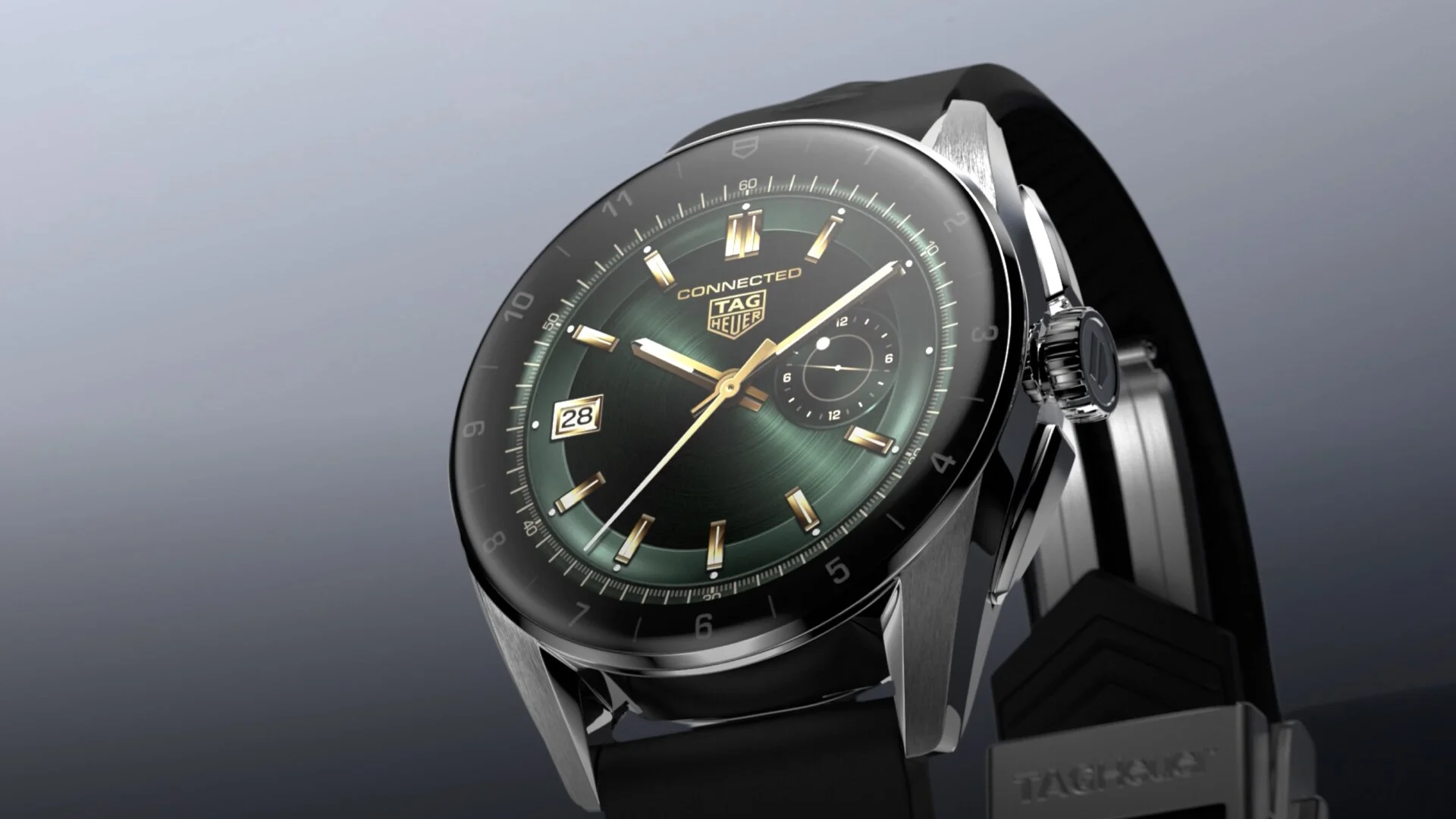
Among traditional Swiss brands, TAG Heuer has probably made the most sustained attempt.
Its Connected range takes familiar luxury-watch ingredients and combines them with smartwatch technology.
Traditional case shapes.
Premium materials.
TAG Heuer design language.
Fitness tracking.
GPS.
Voice features.
Golf functionality.
Connected services.
On paper, it makes sense.
If any large Swiss watch company was going to take the connected category seriously, TAG was probably one of the most natural candidates.
It has always existed closer to sport, technology, modernity and lifestyle than many more conservative Swiss manufactures.
But Connected also exposes the fundamental difficulty facing any traditional watch company entering this market.
The moment you make a smartwatch, you stop competing exclusively against other watch companies.
You start competing against technology companies.
And that is a very different fight.
Watchmakers are suddenly software companies
There is a useful comparison in the automotive industry.
Traditional car manufacturers are extremely good at building cars.
Engines.
Suspension.
Seats.
Steering.
Chassis.
Materials.
All the physical things accumulated through decades of manufacturing expertise.
Then you arrive at the infotainment system.
And suddenly many consumers just want Apple CarPlay or Android Auto.
The technology companies are better at designing the software people actually interact with.
Luxury smartwatches face the same problem.
A Swiss watch company can make a beautiful case.
It can use titanium, ceramic, sapphire and beautifully finished metal.
It can create an excellent strap and make the physical object feel expensive.
But the part you actually interact with every day is software.
The interface.
The apps.
Phone integration.
Updates.
Charging behaviour.
Sensors.
Connectivity.
At that point, the company is no longer merely making a watch.
It is making consumer electronics.
And Apple, Google and Samsung have rather more experience in that particular field.
Then Garmin attacks from the other direction
The everyday smartwatch is only part of the competitive problem.
Brands such as Garmin approached the wrist from the other direction entirely.
Garmin did not try to make the smartwatch resemble a traditional watch.
It made the smartwatch more useful.
GPS.
Mapping.
Training metrics.
Health tracking.
Aviation functions.
Diving.
Serious battery life.
Garmin effectively took the old idea of the tool watch and dragged it into the twenty-first century.
A mechanical dive watch may offer hundreds or thousands of metres of water resistance.
A Garmin designed for diving can actually tell you useful information while you are underwater.
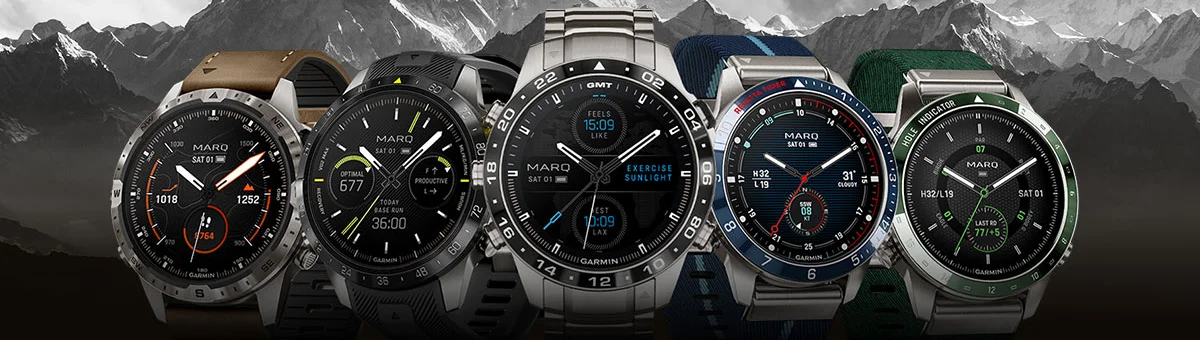
Higher-end collections such as MARQ also pushed Garmin into pricing that began approaching traditional luxury-watch territory.
So a company such as TAG Heuer finds itself squeezed between two extremely difficult competitors.
Apple owns much of the mainstream connected experience.
Garmin owns a significant part of the high-performance tool-watch space.
The luxury smartwatch has to explain what it uniquely contributes in between.
Hermès may have found the cleanest solution
Fashion houses experimented with the connected wrist too.
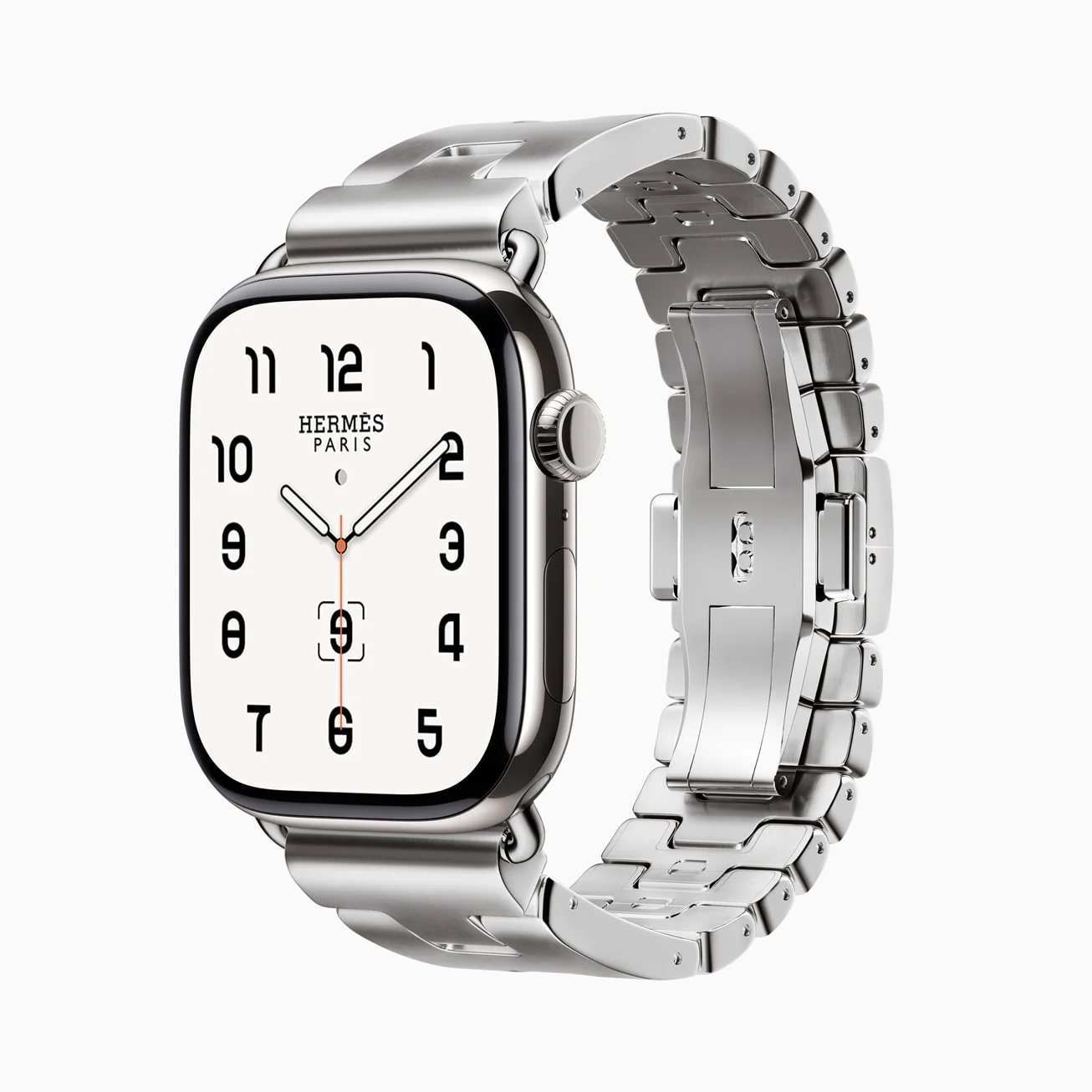
Hermès arguably found one of the most convincing solutions by partnering with Apple.
Apple makes the technology.
Hermès makes it feel like Hermès.
The software, processors and ecosystem come from Silicon Valley.
The straps, design language and luxury positioning come from Paris.
Nobody needs to pretend Hermès suddenly became a software company.
Other luxury houses tried their own approaches.
Louis Vuitton treated connected watches more like luxury fashion accessories.
Hublot translated the Big Bang aesthetic into a connected product, which, whether you like the result or not, certainly made sense visually.
TAG Heuer, Louis Vuitton and Hublot all sit within LVMH.
So these were not isolated experiments.
One of the world's largest luxury groups spent years testing different approaches to the connected wrist.
Other traditional names, including Montblanc, Tissot, Alpina and Frederique Constant, explored similar territory.
Different watches.
Different strategies.
The same basic problem.
How do you make luxury technology when technology ages much faster than luxury?
Luxury and technology want opposite things
This may be the biggest problem with the luxury smartwatch.
The category is trying to combine two ideas that naturally pull in opposite directions.
Luxury is built around permanence.
Technology is built around progress.
Buy a mechanical watch and, theoretically, the basic object can remain functional for decades.
It will need servicing.
It will collect scratches.
It may fall in and out of fashion.
But with care, the thing itself can survive.
It can be passed down.
A smartwatch is fundamentally different.
Its value is deeply connected to:
- its screen
- battery
- sensors
- processor
- software
- applications
- compatibility with other devices
All of those things age quickly.
That does not make smartwatches bad products.
It simply means they behave like technology rather than heirlooms.
And technology expects replacement.
Luxury traditionally promises continuity.
Fortunately, humans are irrational
The good news for traditional watches is that people do not always buy the objectively superior product.
Vinyl records remain popular despite streaming being dramatically more convenient.
Classic cars remain desirable despite modern cars outperforming them in almost every measurable way.
Mechanical watches already lost the practicality argument to quartz half a century ago.
They survived anyway.
Why?
Because consumers do not buy everything based on maximum performance.
We buy ritual.
Feeling.
Identity.
Design.
History.
Nostalgia.
We sometimes deliberately choose the less practical object because it means more to us.
That is where mechanical watches remain extraordinarily powerful.
A mechanical watch can be objectively worse at telling the time and still be far more desirable.
The luxury smartwatch struggles with that proposition because the luxury part asks you to regard the object as permanent and meaningful.
The smart part is quietly waiting for the next model.
The Swiss industry already adapted
The effect of the connected era becomes particularly interesting when you look at the Swiss watch industry over a longer period.
In 2015, Switzerland exported just over 28 million watches.
A decade later, that figure had fallen to roughly 14.6 million.
That is an enormous decline in volume.
But the value story looks very different.
Swiss watch exports were worth roughly CHF 20.2 billion in 2015.
By 2025, they were worth approximately CHF 24.4 billion.
In other words, Switzerland was exporting roughly half as many watches while generating more money.
That tells us something important.
Traditional watches did not disappear.
They moved upmarket.
High-end companies such as Rolex, Patek Philippe and Audemars Piguet were never competing directly against Apple Watches on practicality in the first place.
Their customers were buying something else entirely.
The part of the traditional industry most exposed to smartwatches was lower down.
The inexpensive, practical everyday watch.
The exact segment where utility used to matter most.
The danger is losing the entry point
There is clearly a future for traditional watches.
The more concerning question is whether everyone gets to participate in it.
If the industry's answer to declining volume is simply moving further and further upmarket, watch collecting risks becoming increasingly inaccessible.
That makes companies such as Timex, Casio, Seiko, Tissot and Swatch enormously important.
The future of watches cannot consist entirely of six-figure prices and tiny production numbers.
New enthusiasts need somewhere to begin.
The problem is that affordable brands can no longer rely on being the obvious inexpensive way to put something useful on your wrist.
The smartwatch owns too much of that territory.
Affordable watch companies increasingly need to give people another reason to care.
And several already are.
Timex is selling desire instead of necessity
Timex may be one of the clearest examples.
For decades, it was one of the default practical-watch brands.
Affordable.
Reliable.
Available almost everywhere.
But the person who simply needs a cheap, practical timekeeping device is increasingly likely to buy a smartwatch or simply use their phone.
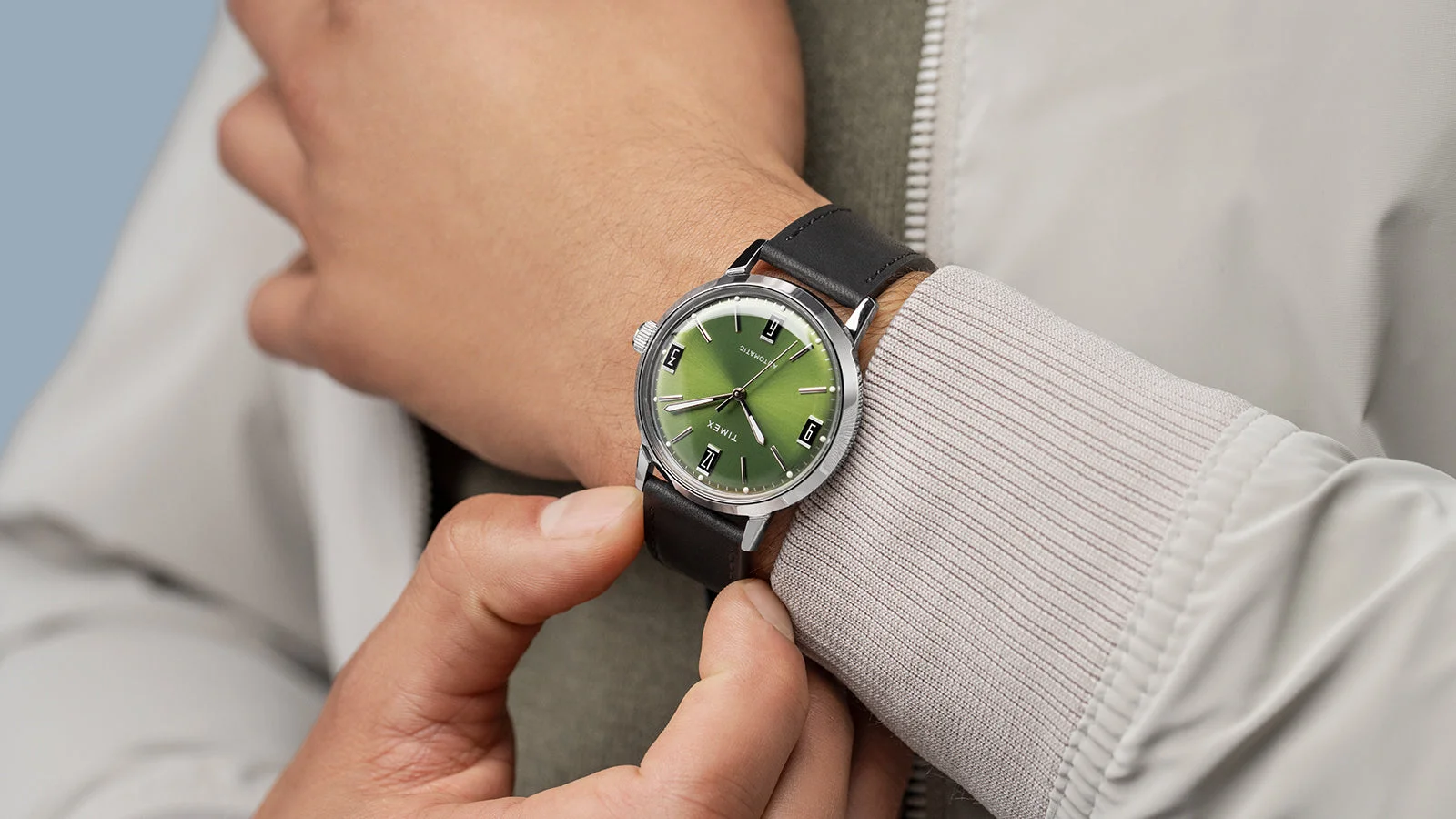
Timex has responded by leaning much harder into heritage, mechanical watches, archive designs and enthusiast-focused releases.
It is giving people reasons to buy Timex because they want a Timex.
Not because they merely need something to tell the time.
That distinction may define the future of affordable traditional watches.
Casio is weaponising its icons
Casio has taken another path.
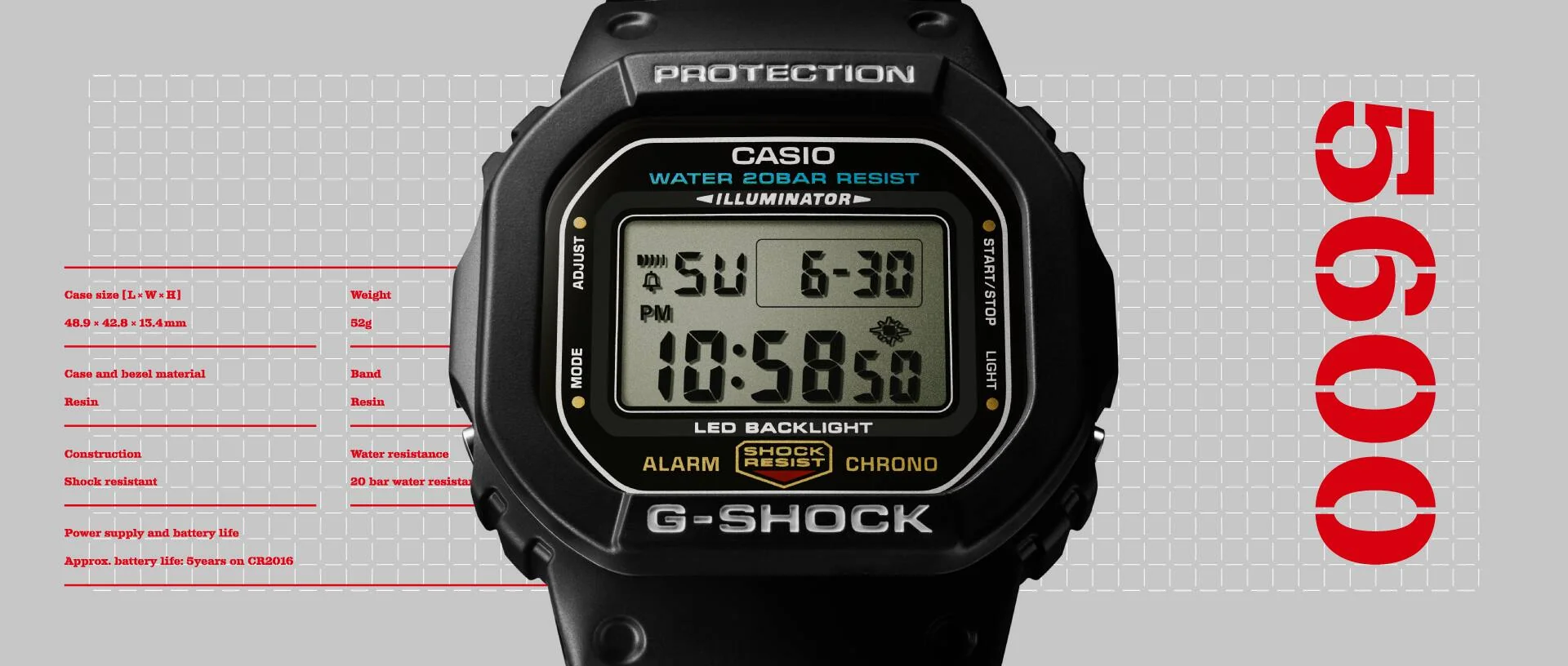
Rather than completely reinvent itself, it has leaned heavily into watches that already have cultural meaning.
The F-91W.
Calculator watches.
G-Shock.
The CasiOak.
These are affordable products, but they are also icons.
They are nostalgic.
Recognisable.
Fun.
Durable.
Distinctive.
Casio can then add connected features gradually.
Bluetooth.
App synchronisation.
Fitness functions.
Notifications.
The technology is wrapped inside something that still looks and feels unmistakably Casio.
Rather than building a generic smartwatch, Casio is attempting to keep its existing icons relevant in a connected world.
Swatch is selling culture
Swatch may be in the most familiar position of all.
After the original quartz crisis, Swatch helped make Swiss watches affordable, colourful and culturally relevant again.
It did not survive by pretending to be traditional high horology.
It made watches fun.
Collectible.
Accessible.
Loud.
During the connected era, Swatch appears to be using parts of the same playbook.
The MoonSwatch gave customers access to some of the mythology surrounding the Omega Speedmaster.
The Scuba Fifty Fathoms did the same with Blancpain.
Rather than competing against the Apple Watch on functionality, Swatch competes on culture.
It gives people something fun to collect, wear, discuss and recognise.
In a world where connected devices own practicality, that may be exactly where traditional watches need to compete.
Maybe the real crisis is disconnection
Perhaps that is the real Connected Crisis.
Not simply that watches became connected.
But that parts of the traditional watch industry became disconnected from the reason people would choose a watch when necessity disappeared.
The smartwatch did not make the wrist irrelevant.
Quite the opposite.
It probably put something on millions of wrists that may otherwise have remained empty.
But it also made that wrist extremely valuable real estate.
A traditional watch now has to earn its place there.
It probably cannot do that by being more useful.
It will lose that fight.
Instead, it has to be:
more personal,
more distinctive,
more expressive,
more interesting.
Telling the time is no longer enough.
That sounds like a crisis.
But perhaps it is also exactly the pressure traditional watches needed.
Because once practicality stops being the reason to buy a watch, brands have to give us something better.
A reason to actually care.