
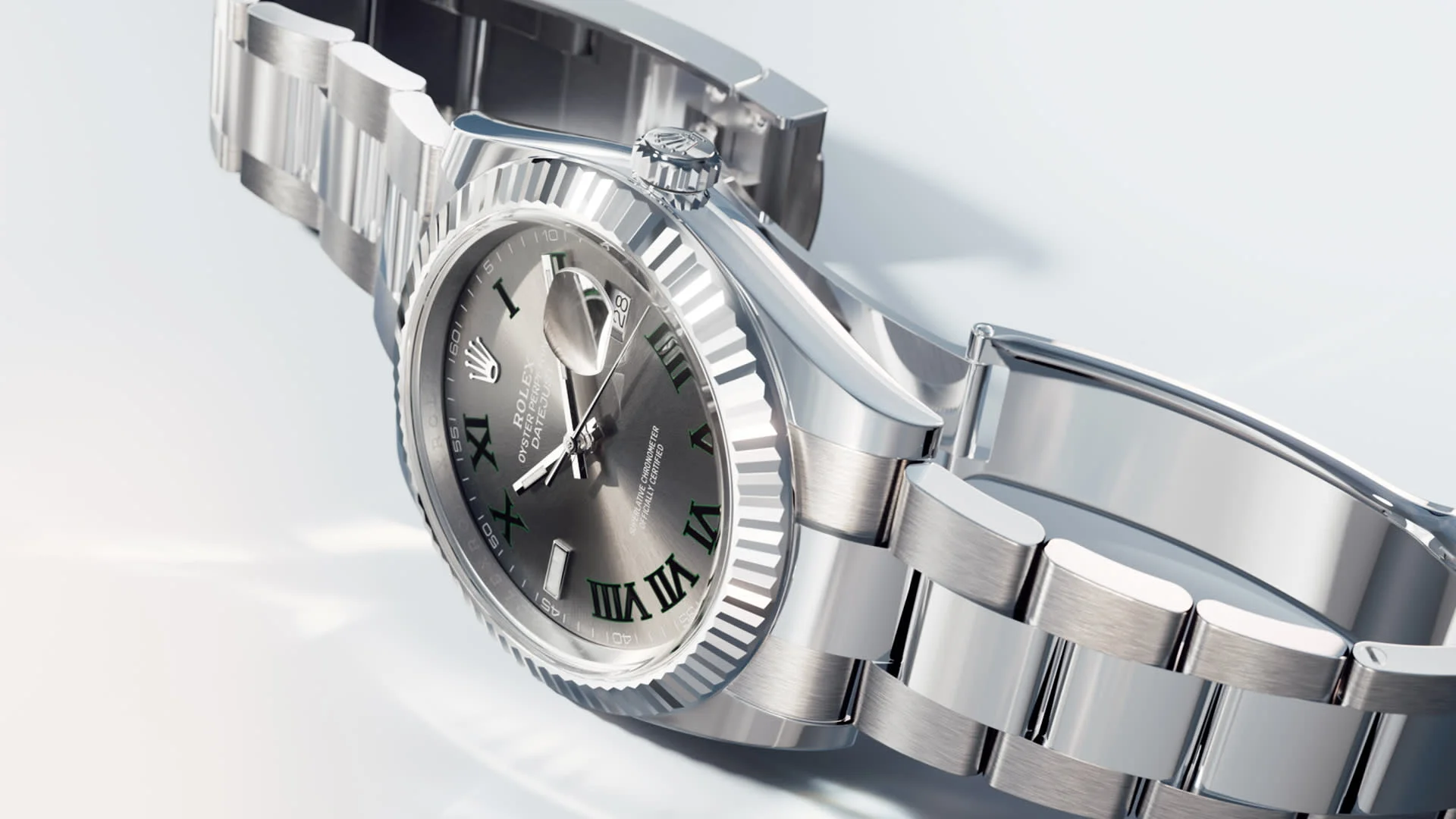
For something so simple, the date has inspired an extraordinary amount of watchmaking.
Most of us probably think of the complication as a tiny window somewhere on the dial.
A number appears.
Tomorrow, another number replaces it.
Job done.
But over the decades, watchmakers have found countless ways to answer exactly the same question:
What date is it?
Some solutions are practical.
Some are elegant.
Some are absurdly complicated.
And some seem to exist primarily because watchmakers looked at a perfectly functional date window and decided it simply wasn't difficult enough.
The humble date window
The most familiar solution is still the simplest.
A numbered disc sits underneath the dial, generally carrying the numbers 1 through 31. Once every 24 hours, the movement advances the disc and brings the next date into view through a small aperture.
Simple.
Reliable.
Immediately understandable.
The three o'clock position became particularly common, allowing the date to remain visible near the edge of a shirt cuff when the watch is worn on the left wrist.
Rolex famously went a step further by placing the Cyclops magnifier over the date.
That solved one problem and created another.
The date became easier to read, while watch enthusiasts gained something new to argue about.
Date windows are surprisingly controversial for such a practical feature.
Three o'clock?
Fine.
Six?
Often fine.
Four-thirty?
Entire corners of the internet may suddenly become hostile.
Brands have tried everything from colour-matched date wheels to framed windows and dates incorporated into hour markers.
But fundamentally the solution remains the same.
Cut a hole in the dial and show the number underneath.
It works brilliantly.
It just does not always look beautiful.
The pointer date
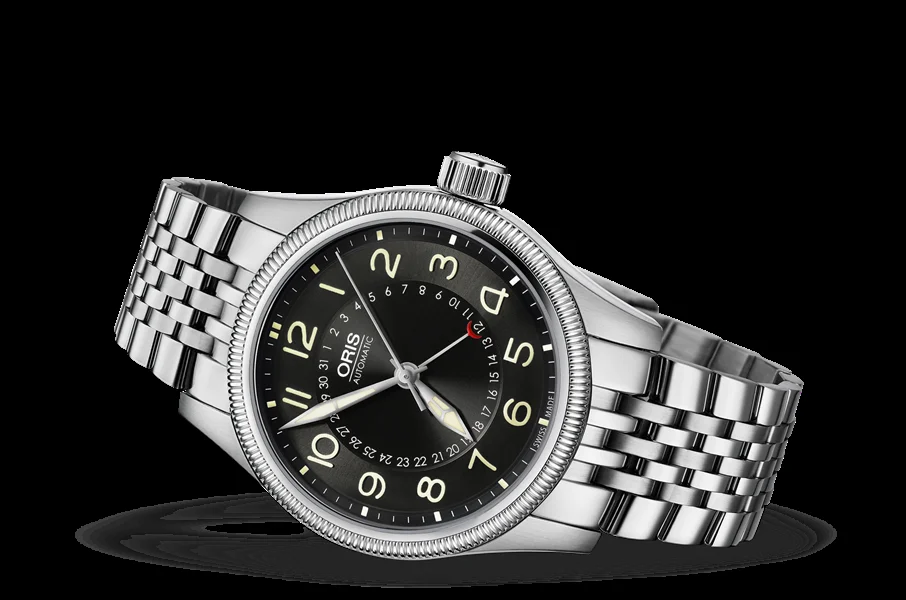
The pointer date avoids cutting a window into the dial entirely.
Instead, all 31 dates are printed around its perimeter, with a dedicated hand pointing to the current day.
The best-known modern example is probably the Oris Big Crown Pointer Date, where the complication has become part of the collection's identity.
There is something satisfying about making the date an active element of the design rather than hiding it underneath.
It also keeps the dial visually balanced.
The compromise is readability.
Once the pointer is competing with hour, minute and seconds hands, finding the date can take slightly longer than glancing at a simple window.
But perhaps that is missing the point.
The pointer date makes a mundane function feel like watchmaking.
The big date
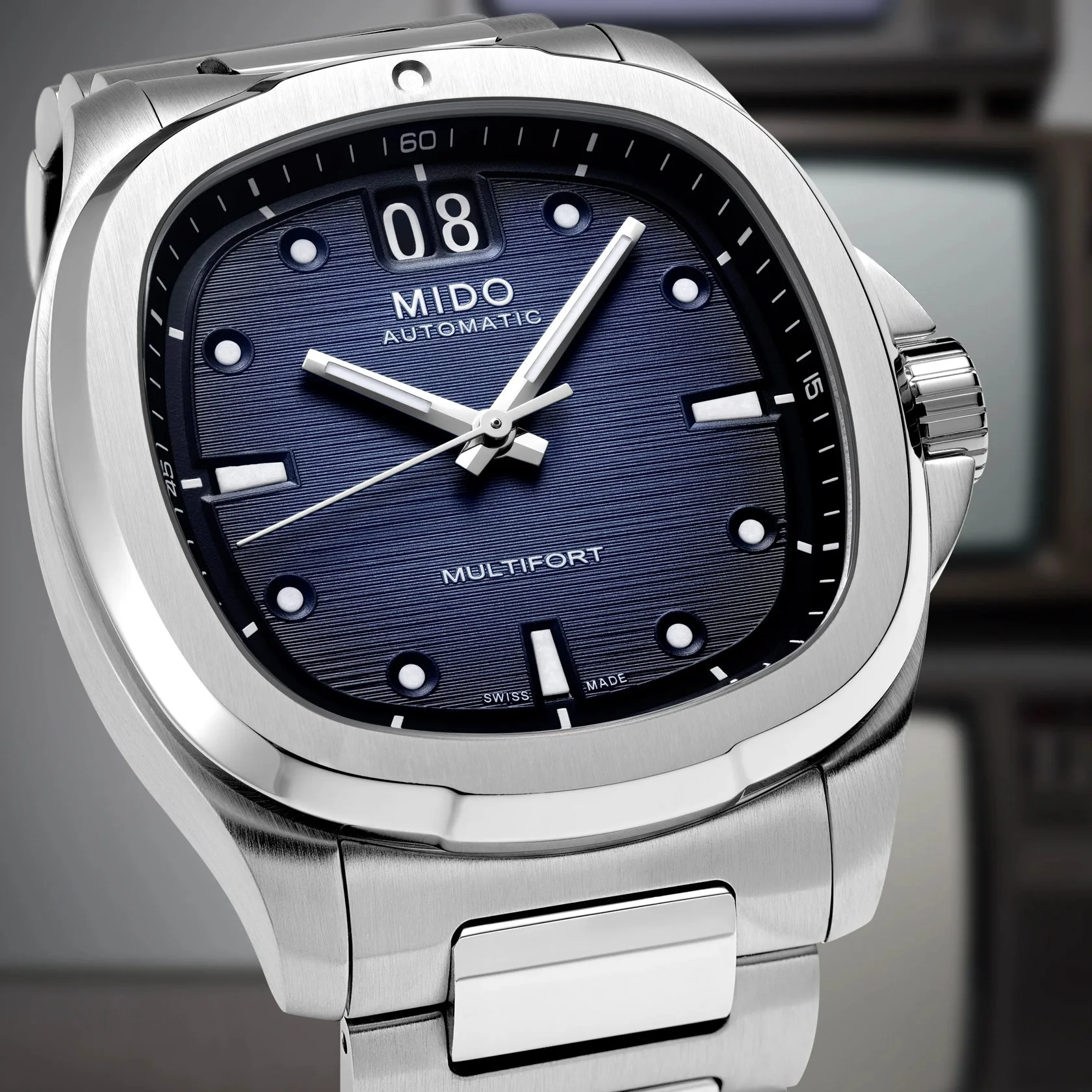
Then there is the big date.
Rather than placing all 31 numbers on a single disc, these systems generally divide the display into separate elements for the tens and units.
That allows manufacturers to make the date dramatically larger.
The Mido Multifort TV Big Date is a good example, displaying the complication prominently at 12 o'clock.
And that prominence matters.
With a conventional date window, the complication is often a supporting character.
With a big date, it becomes part of the watch's identity.
The trade-off is complexity.
You need more components, more space and more engineering to display exactly the same information.
Which is a recurring theme in watchmaking.
Day-Date
Sometimes knowing the date is apparently not enough.
A day-date adds the day of the week.
The obvious example is the Rolex Day-Date, which places the numerical date at three o'clock and spells the day out in full across the top of the dial.
It is genuinely useful information.
It also demonstrates just how significant a calendar complication can become to a watch's identity.
Nobody calls the Day-Date the "Rolex with the extra window."
The complication became the model.
Complete calendars
Keep going and you eventually arrive at the complete, or triple, calendar.
Now the watch displays:
- day
- date
- month
Examples such as the Jaeger-LeCoultre Master Control Calendar and various Longines Master Collection pieces turn the dial into a miniature calendar.
These watches can look wonderfully traditional.
They also reveal one of the strange boundaries between different levels of calendar complication.
A conventional complete calendar knows the day, date and month.
What it does not necessarily know is how many days the current month actually contains.
So when a shorter month arrives, the owner still needs to intervene.
The annual calendar
The annual calendar takes the next step.
It understands the difference between 30-day and 31-day months.
Assuming the watch keeps running, you generally only need to correct it once each year.
February remains the problem.
Patek Philippe introduced the first annual-calendar wristwatch in 1996, and the complication remains strongly associated with the brand.
Which raises the obvious high-horology question.
If you are already spending that much money, surely we can solve February too?
The perpetual calendar
We can.
The answer is the perpetual calendar.
Confusingly, perpetual calendars actually pre-date annual-calendar wristwatches.
The perpetual calendar understands not only 30- and 31-day months, but also February and the leap-year cycle.
In theory, keep a modern perpetual calendar running and it can display the correct date for decades without manual correction.
The next major problem arrives in 2100, when the Gregorian calendar skips what would otherwise be a leap year.
It is an extraordinary amount of mechanical engineering devoted to saving the owner a few seconds with the crown.
Which is precisely why watch enthusiasts find them fascinating.
At this point, the date complication has gone from displaying a number to mechanically modelling the calendar itself.
Retrograde dates
Complexity is not the only way to make a date interesting.
You can also change how it moves.
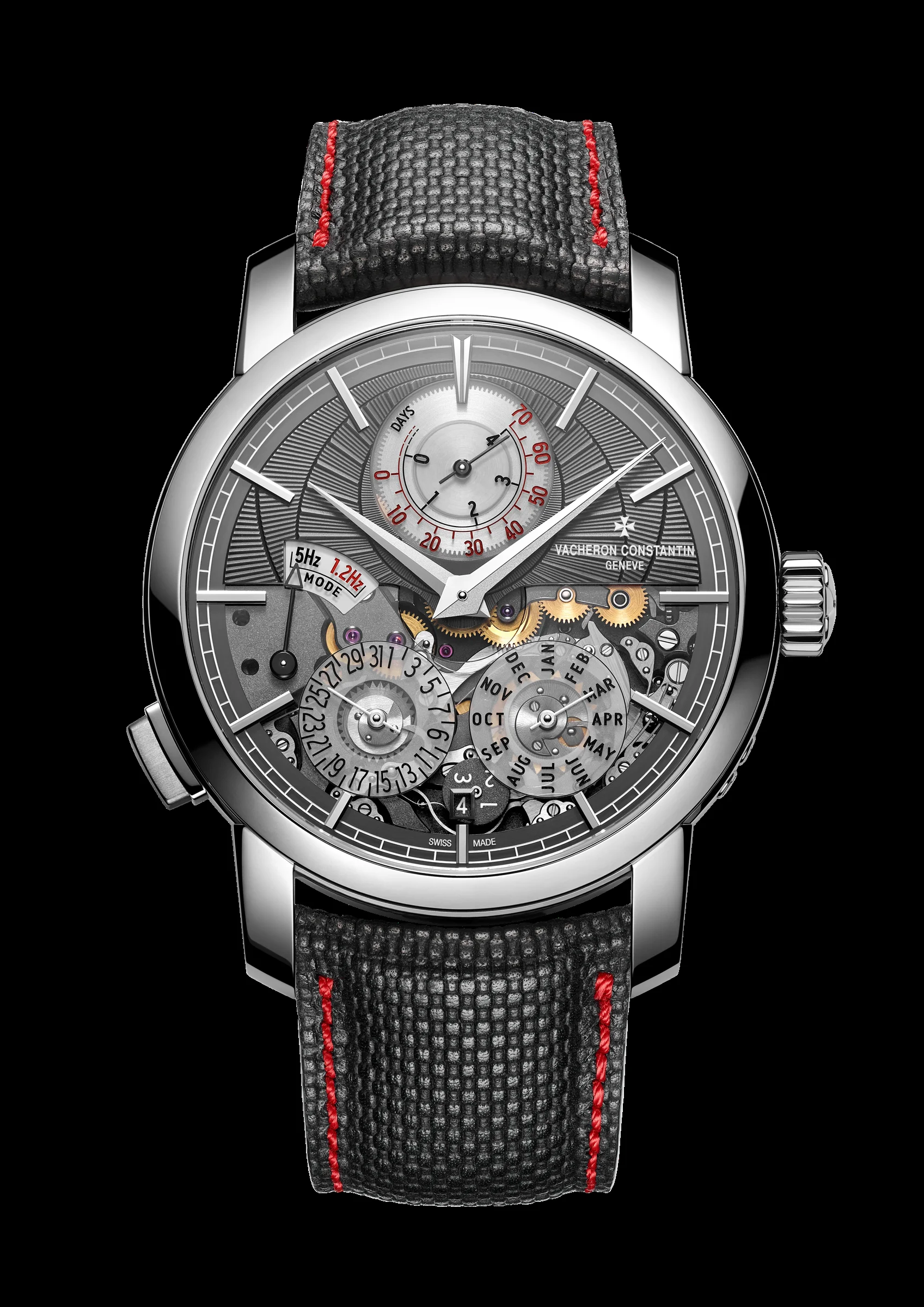
A retrograde date normally places the dates across an arc.
The hand progresses through the month and, after reaching the end, snaps back instantly to the beginning.
Vacheron Constantin has made particularly elegant use of retrograde displays over the years.
Functionally, it does the same basic job as a date window.
Visually, it adds theatre.
The date does not merely change.
It performs.
Peripheral dates
Another solution is to move the date away from the centre of the dial altogether.
A peripheral date places the scale around the outside.
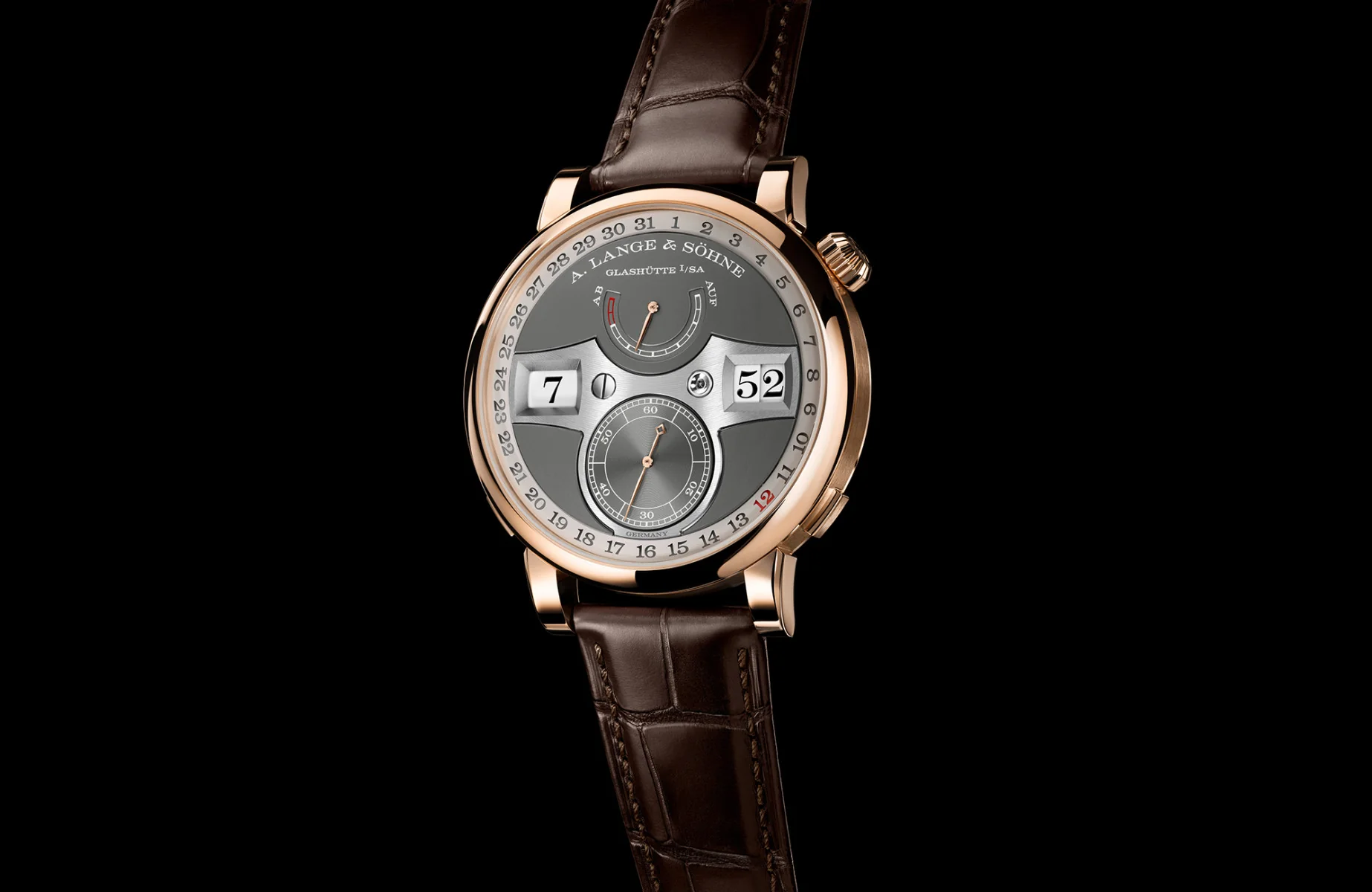
One of my favourite examples comes from A. Lange & Söhne.
The Zeitwerk Date prints the numbers 1 through 31 around a glass ring encircling the dial.
A red segment moves beneath the scale, highlighting the current date.
It is clever because the complication does not interfere with the Zeitwerk's defining feature: its jumping digital time display.
The date becomes part of the overall composition rather than something awkwardly squeezed into whatever space remained.
And that brings us to a much more affordable watch that uses a surprisingly similar bit of design thinking.
The a.b.art 265 Jump Date
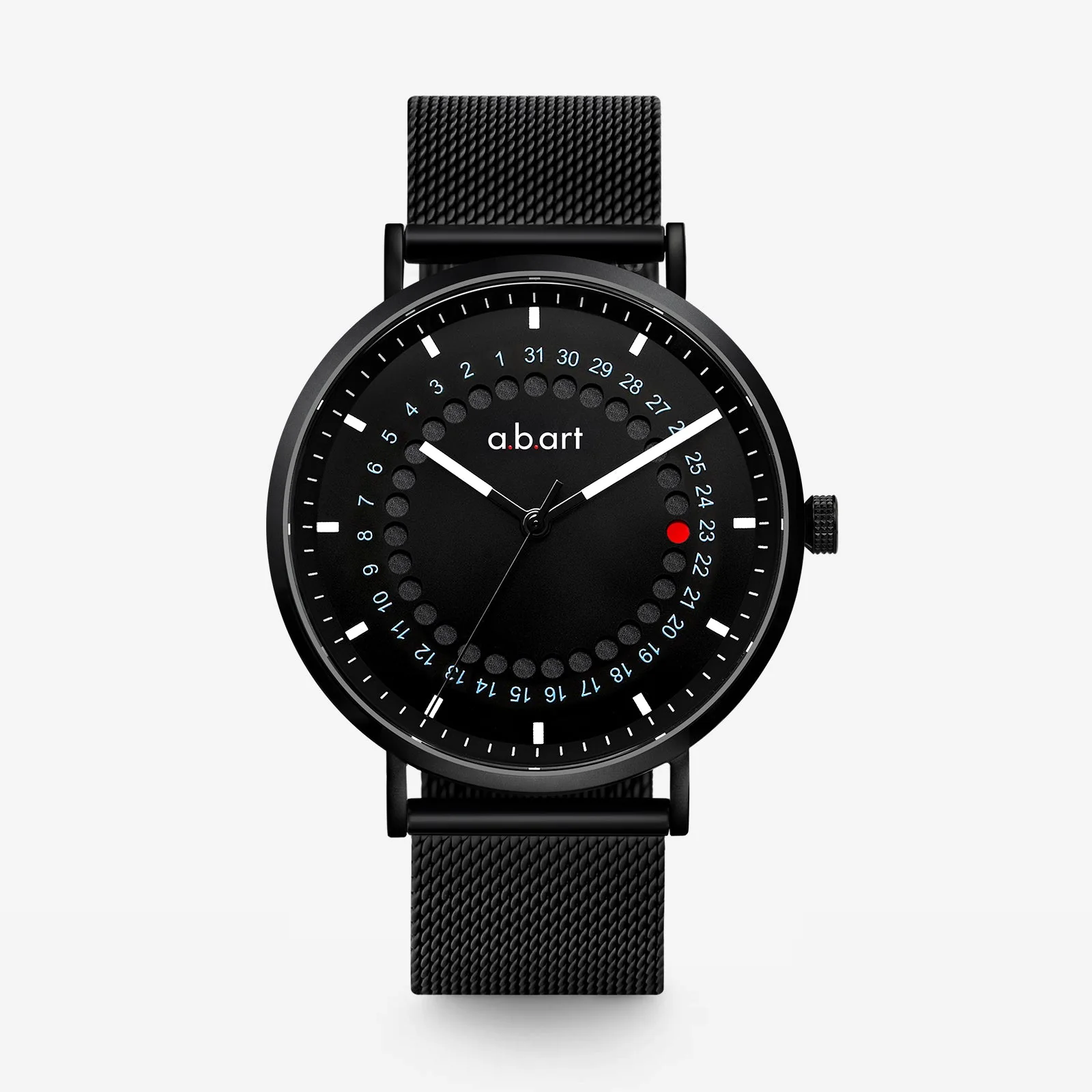
The watch that originally inspired this exploration was the a.b.art Freiburg 265 Jump Date.
No, I am not suggesting it belongs in the same universe as a Zeitwerk.
But the underlying design philosophy is interesting.
Instead of cutting a conventional date window into the dial, a.b.art builds the entire month into the visual structure of the watch.
The dates form a complete ring, with a small red indicator jumping from one day to the next.
That changes the way you read the complication.
A standard date window gives you one isolated number.
The 265 shows where that number sits within the month.
You are not simply being told today's date.
You can see the month progressing around the dial.
That feels particularly appropriate for a watch drawing heavily on Bauhaus and Ulm School design principles, where clarity, proportion and function are meant to work together rather than compete for attention.
The rest of the watch follows the same restrained philosophy.
The case measures 41 mm and is only around 6 mm thick, helped by its quartz movement.
There is sapphire crystal, a Milanese bracelet and 20 mm lugs if you prefer leather.
It is far more design object than rugged tool watch, with modest water resistance, but that is hardly the point.
The interesting part remains the date.
One number, endless solutions
The date is one of those complications that perfectly captures what makes mechanical watchmaking interesting.
The problem itself is incredibly simple.
Tell me today's date.
A cheap digital watch can do that instantly and accurately.
Yet traditional watchmaking has turned that one basic requirement into:
- date windows
- pointer dates
- big dates
- day-dates
- complete calendars
- annual calendars
- perpetual calendars
- retrograde displays
- peripheral displays
- jumping indicators
All to show us essentially the same number.
Some are more practical.
Some are more beautiful.
Some are enormously more expensive.
But each demonstrates that watchmaking is rarely satisfied with solving a problem once.
There is always another way to do it.
And sometimes the most interesting part of a complication is not what information it gives you.
It is how the watch chooses to tell you.
The a.b.art Freiburg 265 Jump Date featured in the original White Tee Watches video was supplied by a.b.art.