
For a long time, the attainable luxury end of Swiss watchmaking had a fairly obvious hierarchy.
Rolex was the name brand. Omega was the serious all-rounder. TAG Heuer was the sporty one. Breitling was, well, Breitling.
Longines existed slightly below that conversation.
It was respected. Historical. Dependable. But for many enthusiasts it was a brand you appreciated more than one you actively lusted after. Longines made the sort of watch you could confidently recommend to someone who wanted a good Swiss watch without necessarily expecting them to become obsessed with it.
There are much worse things for a watch company to be than sensible, reliable and quietly handsome.
But something has changed.
Over the past decade, Longines has gradually built one of the most convincing catalogues in its part of the Swiss watch industry. At the same time, Omega has been moving steadily in the opposite direction, chasing Rolex further upmarket and asking considerably more money for the privilege of joining the club.
The result is an increasingly interesting question.
Is Longines starting to become the brand Omega used to be?
Longines stopped being the sensible option
The transformation did not happen with a single watch.
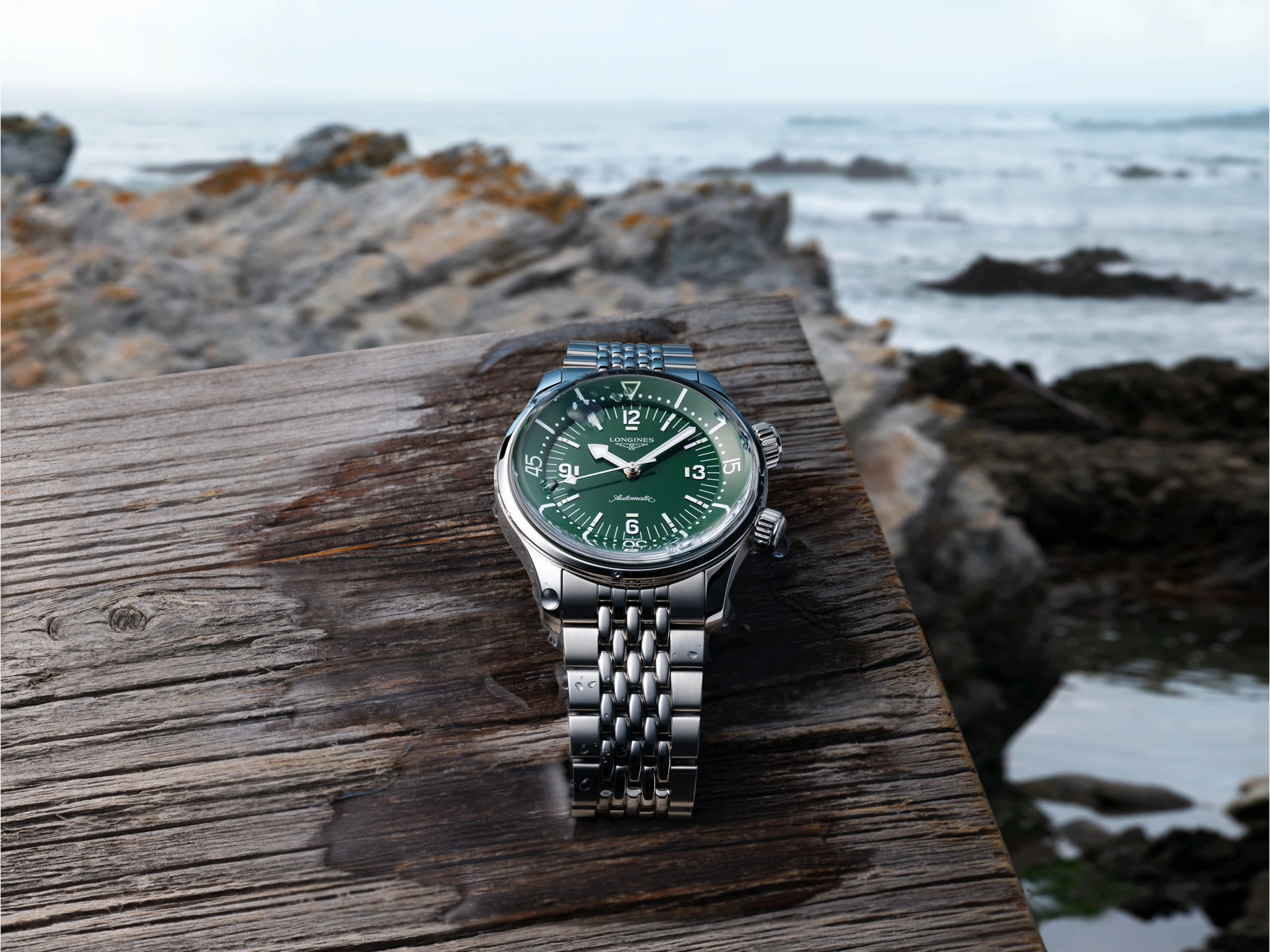
The Legend Diver was an early indication that Longines understood the potential of its archive. It brought the brand's diving history back into a modern catalogue without turning the result into a caricature of a vintage watch.
Then came the Spirit collection.
This was important because Longines did not simply need another heritage reissue. It needed a modern identity.
The Spirit gave it one. It was clean, versatile and connected to Longines' aviation history without looking like someone had simply recreated a watch from an old advertisement.
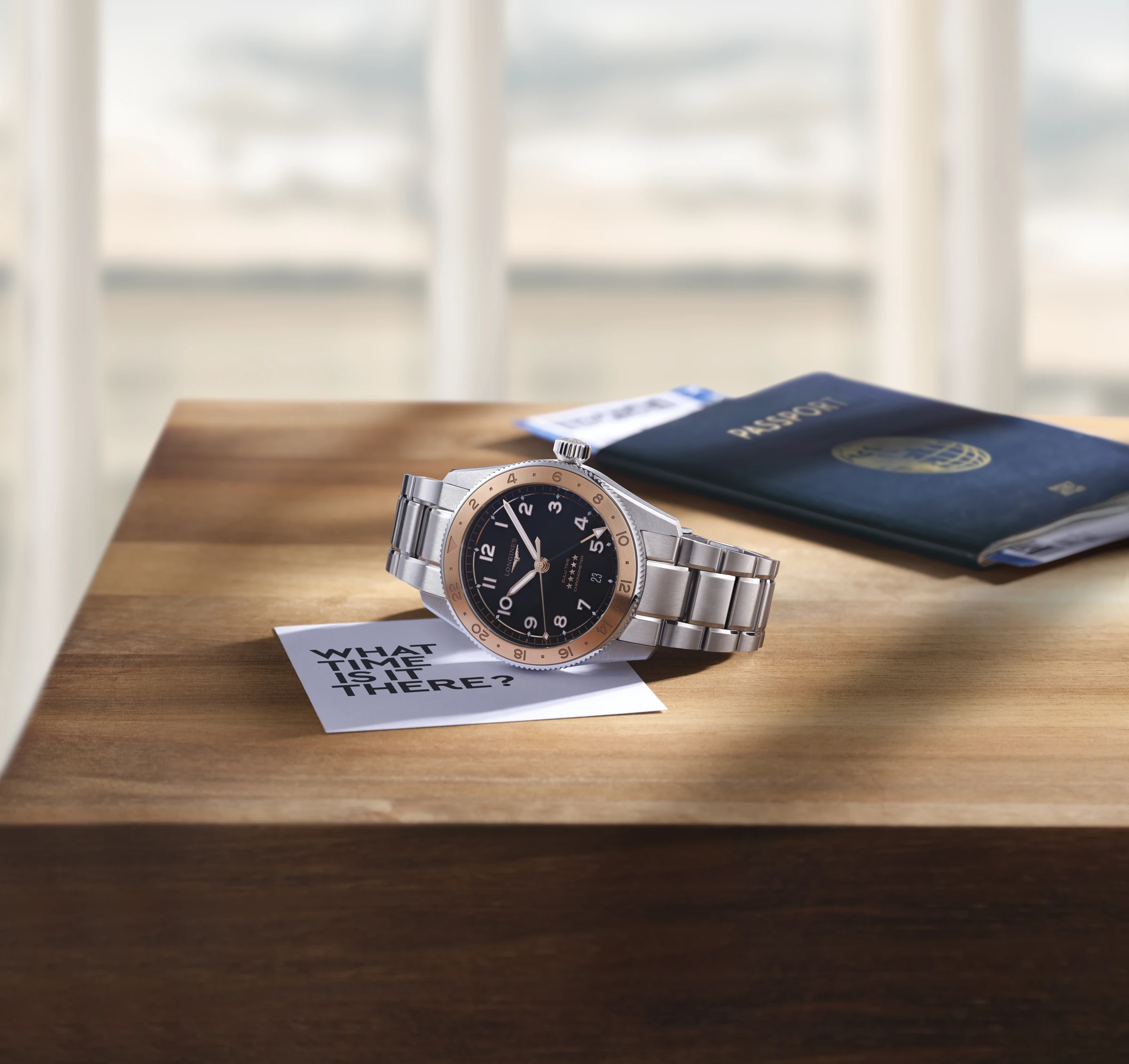
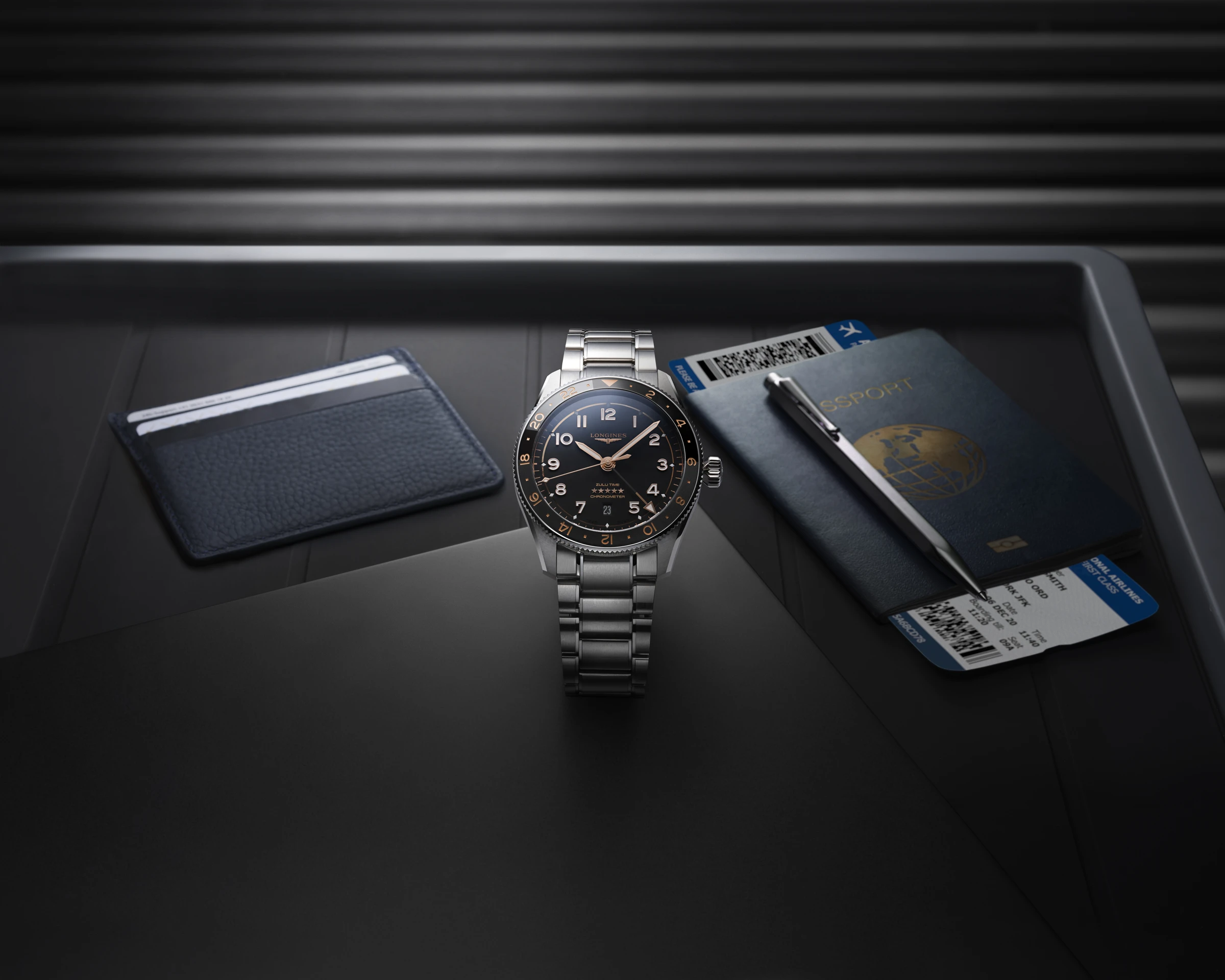
The Spirit Zulu Time pushed that idea further. Here was a genuine traveller's GMT with enough historical credibility to satisfy enthusiasts but a design that could just as easily appeal to someone who had never spent an evening arguing about movements on a watch forum.
That balance matters.
The best version of Longines today is not making watches exclusively for enthusiasts. It is making watches that enthusiasts can appreciate without requiring everyone else to understand why they should.
The Ultra-Chron demonstrated another side of the company. A high-beat mechanical dive watch based on genuine technical history is exactly the sort of slightly nerdy project that gives an old Swiss brand some personality.
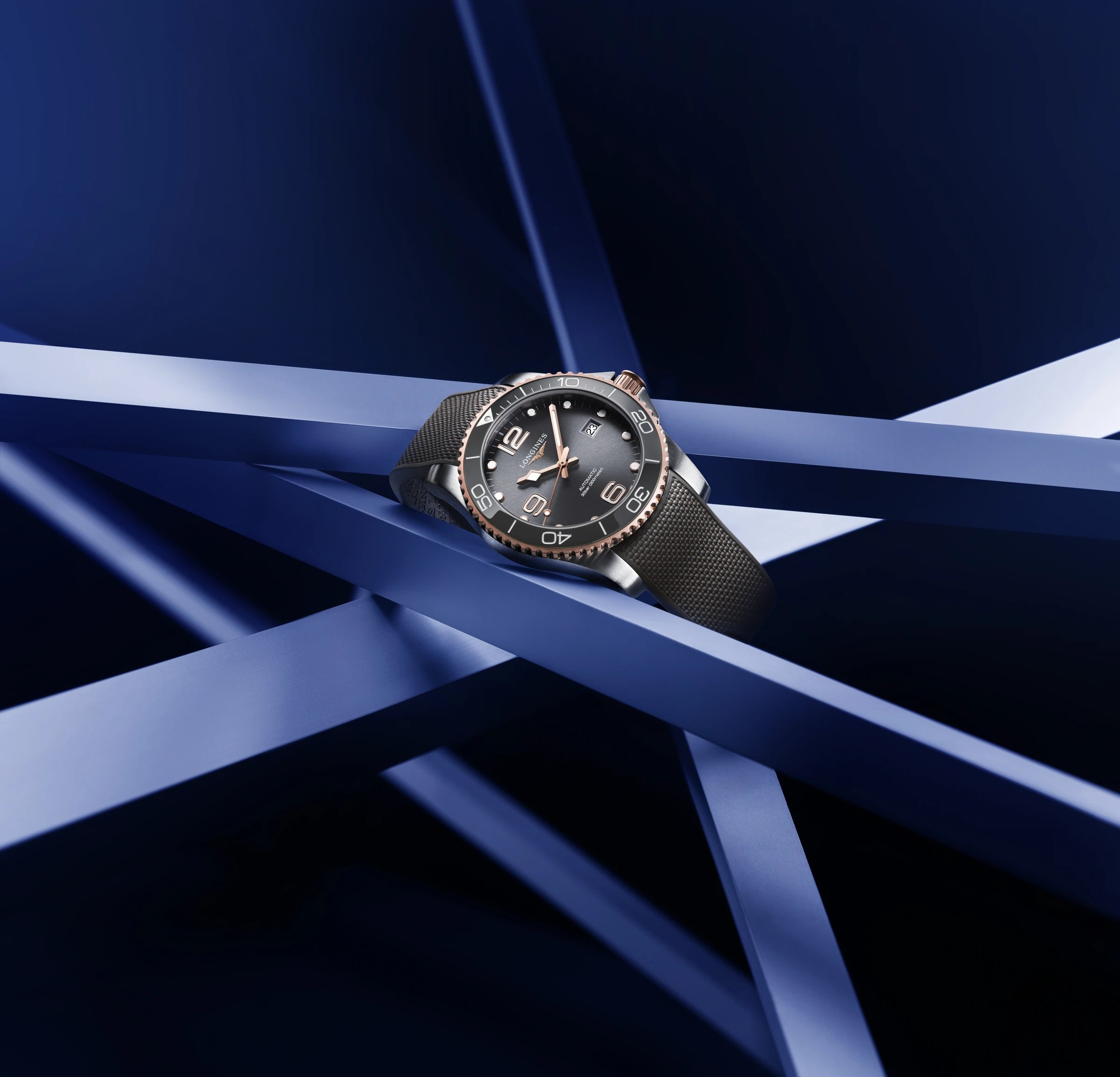
And then there is the HydroConquest.
The collection has progressively moved away from some of the visual baggage of older Longines sports watches and towards something cleaner and more contemporary. It now looks much more comfortable competing with the modern Swiss sports-watch establishment.
Across all of these watches, a pattern starts to emerge.
Longines is sporty. It is historically credible. It has mechanical substance. Its watches remain relatively easy to understand, and crucially, their prices have not completely detached themselves from reality.
That combination sounds familiar.
Because for years, it was one of Omega's greatest strengths.
What Omega used to represent
Omega has never existed purely as an enthusiast brand.
That was part of its appeal.
It was technically serious enough for watch enthusiasts, famous enough that people outside the watch world recognised the name, and attainable enough that owning one did not seem completely absurd.
A Seamaster or Speedmaster could be somebody's first serious luxury watch and, quite plausibly, their last.
Omega occupied an extremely valuable middle ground between specialist watchmaking credibility and mainstream recognition.
It still possesses both.
The problem is that the price of entry has changed.
Omega has spent years positioning itself closer to Rolex. There are obvious reasons for doing that. Omega has extraordinary history, serious movement technology, enormous brand recognition and two of the strongest model names in the industry.
But positioning is not determined by price alone.
When the price rises faster than the emotional case for the product, the calculation changes for the buyer.
Omega increasingly has to explain why the jump from Longines to Omega is worth it.
For enthusiasts, there are answers.
Co-Axial movements. METAS certification. More sophisticated finishing. Greater prestige. Enormous cultural significance. The Moonwatch. James Bond. Olympic timing. Decades of accumulated mythology.
Those things are real.
They can also be surprisingly difficult to explain to somebody who simply walks into a watch boutique and likes the blue one.
If Longines can offer that customer a handsome, capable, historically credible Swiss watch for substantially less money, Omega's job becomes harder.
Omega's other problem: too much of a good thing
Pricing is only part of the issue.
Omega's catalogue has developed a strange contradiction.
Its identity is incredibly focused, yet its actual range can feel enormous.
Ask almost anyone to name the watches that define Omega and the answer will revolve around two families: the Speedmaster and Seamaster.
There is nothing wrong with that. Most great watch brands would love to possess two names with that much recognition.
The difficulty comes from stretching those icons in seemingly every possible direction.
Different sizes. Different metals. Different dials. Different complications. Special editions. Anniversary editions. Variations within variations.
Omega's mythology is focused.
Its catalogue often isn't.
More choice sounds inherently positive, but luxury watches do not work like supermarket shelves. Part of building a desirable product is making the buyer understand exactly what it represents.
When an icon becomes an entire ecosystem, some of that clarity can disappear.
Longines is hardly operating a minimalist catalogue itself, but its stronger collections generally remain easier to understand. A Spirit Zulu Time has an obvious identity. A Legend Diver has an obvious identity. An Ultra-Chron has an obvious identity.
There are different executions, but the central idea remains visible.
The awkward part is that they live in the same house
The comparison becomes particularly interesting because Omega and Longines are not independent rivals.
Both belong to the Swatch Group.
Within that portfolio, their positions are deliberately different.
Omega sits higher. It is the prestige sports-luxury brand and the group's most obvious answer to Rolex.
Longines occupies the territory below it, built around heritage, elegance and comparatively accessible luxury.
That hierarchy makes sense.
It also creates a problem when the less expensive brand becomes extremely good.
Longines cannot simply keep improving indefinitely without eventually putting pressure on the argument for buying the product above it.
That does not mean a Spirit Zulu Time suddenly becomes an Omega on a technical level. Nor does it erase the enormous difference in cultural weight between the brands.
But luxury purchases are rarely made by technical specification alone.
If a customer looks at two watches and concludes that the less expensive one delivers most of what they actually want, the theoretically superior watch still has a problem.
And Longines is becoming very good at making that comparison uncomfortable.
Where Omega could change
None of this means Omega is broken.
Far from it.
Omega remains one of the great names of Swiss watchmaking. Very few companies possess anything comparable to its history, recognition or catalogue of genuine icons.
That is precisely why its current position is interesting.
The ingredients are already there.
The first opportunity is catalogue discipline.
The Speedmaster and Seamaster do not need help becoming important. They already are. Fewer overlapping variations could make those collections easier to understand and make individual releases feel more significant.
Sometimes less really is more.
The second is pricing discipline.
Luxury-watch prices have risen enormously across the industry, and Omega is hardly alone in that. But Omega historically held a particularly appealing position as the clever, serious alternative to the most obvious luxury choice.
The further it moves away from attainability, the more space it leaves underneath.
Longines is occupying that space.
The third opportunity is perhaps the most interesting: take more swings.
Not another version of an existing icon. Something genuinely new.
The danger for Omega is not that the Speedmaster or Seamaster suddenly stop being great watches. They won't.
The danger is becoming too dependent on them.
Great brands need to give themselves opportunities to create tomorrow's icon rather than asking yesterday's icons to do all of the work.
Not every attempt needs to succeed.
In fact, most probably won't.
But the attempt itself matters.
So, is Longines really the new Omega?
No.
Omega is still Omega.
It is more famous, more technically ambitious, more culturally significant and positioned considerably higher in the luxury-watch hierarchy.
Longines is not about to replace it.
But that is not really the interesting part of the comparison.
The interesting part is that Longines is increasingly doing what Omega once did exceptionally well.
It is offering historically credible Swiss watches that appeal to enthusiasts without being designed exclusively for them. Its best models feel luxurious without becoming inaccessible. Its catalogue contains recognisable families with clear purposes. And it is increasingly willing to make watches that give people a reason to pay attention.
Longines does not need to become Omega.
It simply needs to keep occupying the space Omega has gradually vacated.
And if it does, the biggest problem for Omega may not be the competitor above it.
It may be the one sitting just below.