
Southeast Asia presented an unusual problem for the second stop on Around the World in 80 Microbrands.
There were too many interesting brands.
More specifically, there were too many in Singapore, which has somehow crammed an absurd number of worthwhile watchmakers into one city-state. Rather than arbitrarily pick one and move on, Singapore gets its own stop.
That leaves the rest of Southeast Asia.
And what I found was a region where the term microbrand stretches from a roughly $230 quartz watch with no hands at all, through strange industrial design and 3D-printed titanium, all the way to highly limited watches with individually placed pieces of abalone.
These are not necessarily the five biggest brands in the region. They are five that made me stop and look twice.
Prices, availability and product ranges in this article reflect the position when the original piece was published in September 2026.
Thailand: SIMPL and the watch with no hands
SIMPL was founded in Thailand in 2013 by Tanachpak Warrnissorn and Alisa Kittipong, with a catalogue built heavily around minimalist design.
And I have to be slightly careful here, because I am generally not in the business of putting down small watch brands.
But most of SIMPL's catalogue probably would not have got them into this article.
Collections like Timeless and Compass, and even the more interesting One with its single-hand display, sit a little closer to minimalist mall-watch territory than the sort of thing that normally gets me particularly excited.
Then, for some reason, SIMPL made the Reverse.
And suddenly we might have something here.
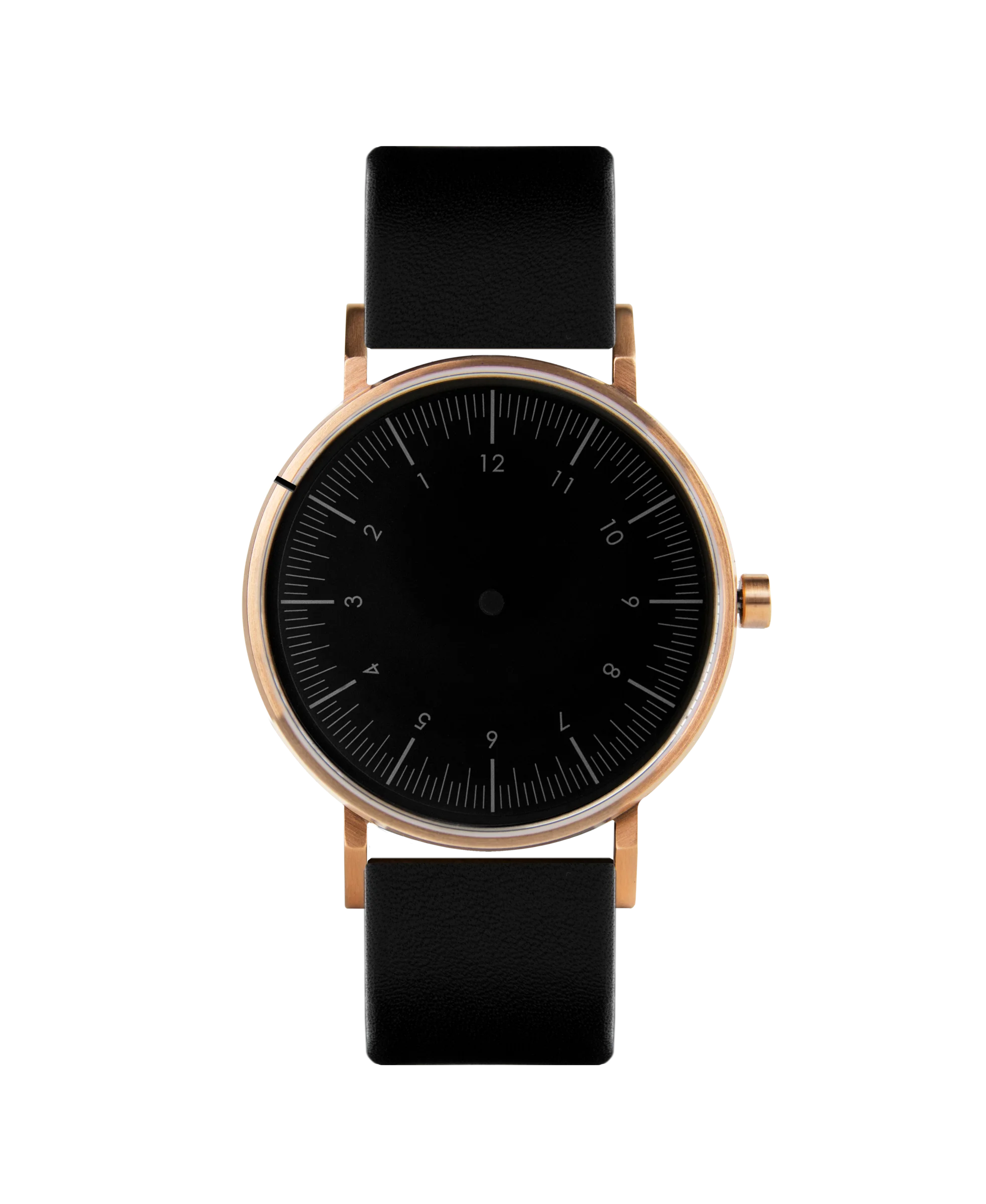
Or, more accurately, we might have nothing, because the Reverse doesn't have any hands.
On a conventional watch, the dial remains stationary while the hands rotate around it. SIMPL simply flips that relationship around.
There is a fixed indicator built into the case. Underneath it, the entire numbered dial rotates.
As the numbers slowly move past that fixed point, you read the time.
Is it necessary? Absolutely not.
Is it more intuitive than a normal watch? Definitely not.
Is it particularly legible? Not really.
But I love a weird watch, and this unquestionably qualifies.
This isn't haute horlogerie. At the time of publication, the Reverse was selling for 5,550 Thai baht, roughly $230 Australian, which feels about right for something this strange.
SIMPL have essentially made one genuinely weird watch.
That was enough to justify a stop in Thailand.
Official website: SIMPL Watches
https://www.simplwatch.com/
Indonesia: Lima Watch and the Kronosprinter
From Thailand, we head south to Indonesia and Lima Watch.
Founded in 2014 by Herman Tantriady, Lima feels less like a conventional watch company and more like a design studio that happens to make watches.
The early catalogue experimented with materials including wood and concrete. Over time, that evolved into a much more distinctive retro-industrial design language.
There are three collections that particularly demonstrate what Lima is doing.
The GMT Transit is a 37.5mm automatic GMT powered by the Seiko NH34. The Palette version makes Lima's design influences particularly obvious, taking its inspiration from the Dieter Rams era at Braun.
Big numerals, brightly coloured accents, heavily brushed surfaces and that compact case give the watch a genuine 1960s or 1970s industrial-design feel without turning it into straightforward nostalgia.
Then there is the Meca, Lima's take on the dive watch.
The particularly fun part is the interchangeable fixed bezel system. You can remove one bezel and replace it with another, significantly changing the personality of the watch.
Lima even collaborated with seconde/seconde/ on one based around Marlon Brando's famously bezel-less Rolex GMT in Apocalypse Now.
Their version simply tells you:
If you ain't Marlon, put a damn bezel on.
Which is exactly the sort of stupid watch Easter egg I appreciate.
But the Lima I kept coming back to was the Kronosprinter.
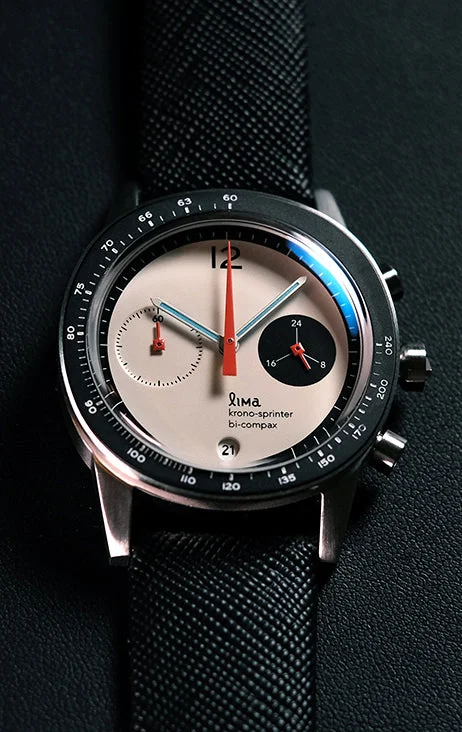
Lima calls its 37mm case shape a "squircle", and that description is pretty much perfect. It mixes the proportions of a vintage racing chronograph with a softer, almost graphic-design approach to the case itself.
There is a tachymeter around the outside, an oversized 12, asymmetric subdials and a date tucked away at six.
Then Lima starts throwing colour at it.
Different coloured hands, pushers, rings and subdial accents turn something traditionally quite serious into something much more playful.
There is a little Studio Underd0g energy to the whole thing. Not because the watches particularly resemble one another, but because both brands seem comfortable taking familiar watchmaking ingredients and refusing to treat them too seriously.
Inside is the Seiko VK64 meca-quartz, so quartz handles the basic timekeeping while a mechanical chronograph module provides the more satisfying sweep and snap-back reset.
At US$290, I am completely fine with that compromise.
There was just one problem when this article was originally written.
Almost everything was sold out.
That initially made me wonder whether Lima was still operating at all, but the brand remained active. Buying the exact Kronosprinter you wanted simply required rather more patience than buying most watches.
Which is unfortunate, because I really want one.
Official website: Lima Watch
https://us.limawatch.com/
The Philippines: Makina's industrial alternative
Our next stop is the Philippines and Makina.
Makina was founded by Danilo Villanueva, who came from advertising and wanted somewhere he could exercise complete creative control.
Even the name fits.
Makina means machine, derived from the Spanish máquina, and in the Philippines it is also used to describe the movement inside a watch.
That industrial character runs throughout the catalogue.
The watch that originally caught my attention was the Andras, because there is clearly a hint of Cartier Tank in its basic proportions.
If the Cartier Tank received a cyberpunk makeover.
The case becomes much more angular and architectural, the dial is heavily layered and an unusual small-seconds display turns what could have been a dress watch into something significantly more mechanical and aggressive.
But the Andras is not an outlier.
The Uriel wraps the same design language around a curving cushion case.
The Azazel takes it into proper tool-watch territory.
The Cassiel II turns the very traditional ETA 7750 chronograph into an industrial landscape of rotating discs and cut-outs.
But the one I kept returning to was the Mephisto III.
The original Mephisto was among Makina's earliest designs, and this third-generation version takes that idea somewhere considerably more refined.
It is technically a fairly simple three-hand watch.
Visually, there is almost nothing simple about it.
The brass dial is built across multiple levels, with long faceted sections radiating from the centre. Tall applied indices sit above them, joined by matching faceted hands.
Move the watch around and every one of those surfaces reacts differently to the light.
The cream version is particularly good.
There is an almost champagne character to the dial that softens the cold brushed and polished steel surrounding it. A design that could have looked overly aggressive suddenly feels much more balanced.
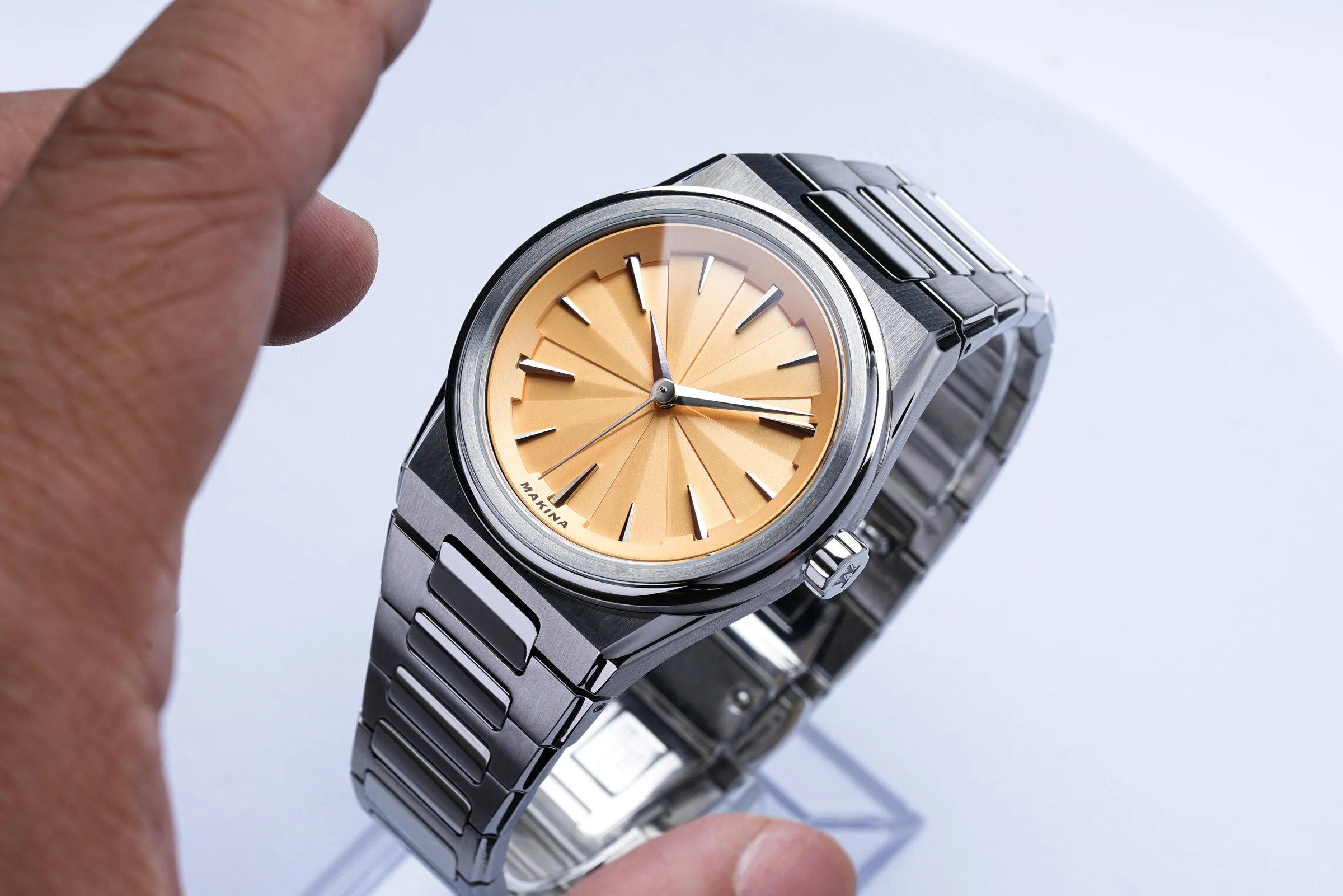
It is also Makina's first integrated-bracelet watch, and the brand has resisted simply attaching a generic bracelet to an unusual case.
Those polished concave surfaces continue from the case directly through the bracelet.
Inside is a Swiss Sellita SW200 automatic, visible through the caseback and fitted with a custom gold-electroplated rotor.
At US$950, I think that is pretty reasonable.
I arrived at Makina because of its strange interpretation of the Tank.
I stayed for the Mephisto.
Official website: Makina Watches
https://www.makinawatches.com/
Malaysia: When does MING stop being a microbrand?
Malaysia gives us probably the least surprising name in this article.
If you spend much time around independent and microbrand watches, you have probably already encountered MING.
The company was founded in Kuala Lumpur in 2017 by a group of enthusiasts led by photographer and designer Ming Thein.
Its first watch, the 17.01, arrived that same year.
Two years later, the 17.06 Copper won the Horological Revelation Prize at the Grand Prix d'Horlogerie de Genève. In 2024, the 37.09 Bluefin followed it with the GPHG Sports Watch Prize.
Somewhere along the way, MING stopped feeling like a small Malaysian microbrand and started making the terminology rather uncomfortable.
Is MING still a microbrand?
Or has it become an independent?
There probably isn't a clean dividing line.
The catalogue has included unusual sapphire constructions, creative lume applications, ultra-light cases, increasingly serious movement partners and watches that sit comfortably in genuinely high-end territory.
Frankly, the entire catalogue is unadulterated watch pornography.
The 29.06 Peep Show is a good example of how far MING is willing to take an idea.
Instead of conventional hour and minute hands, it uses polarized sapphire discs. Their changing relationship controls how much light reaches the dial beneath, causing the dial to gradually appear and disappear as the time changes.
It is completely ridiculous.
But strangely, the MING product I most wanted to talk about was not a watch.
It was the Polymesh.
At first glance, it looks like an unusually intricate mesh bracelet.
Except it is made from Grade 5 titanium.
And the entire thing is 3D printed.
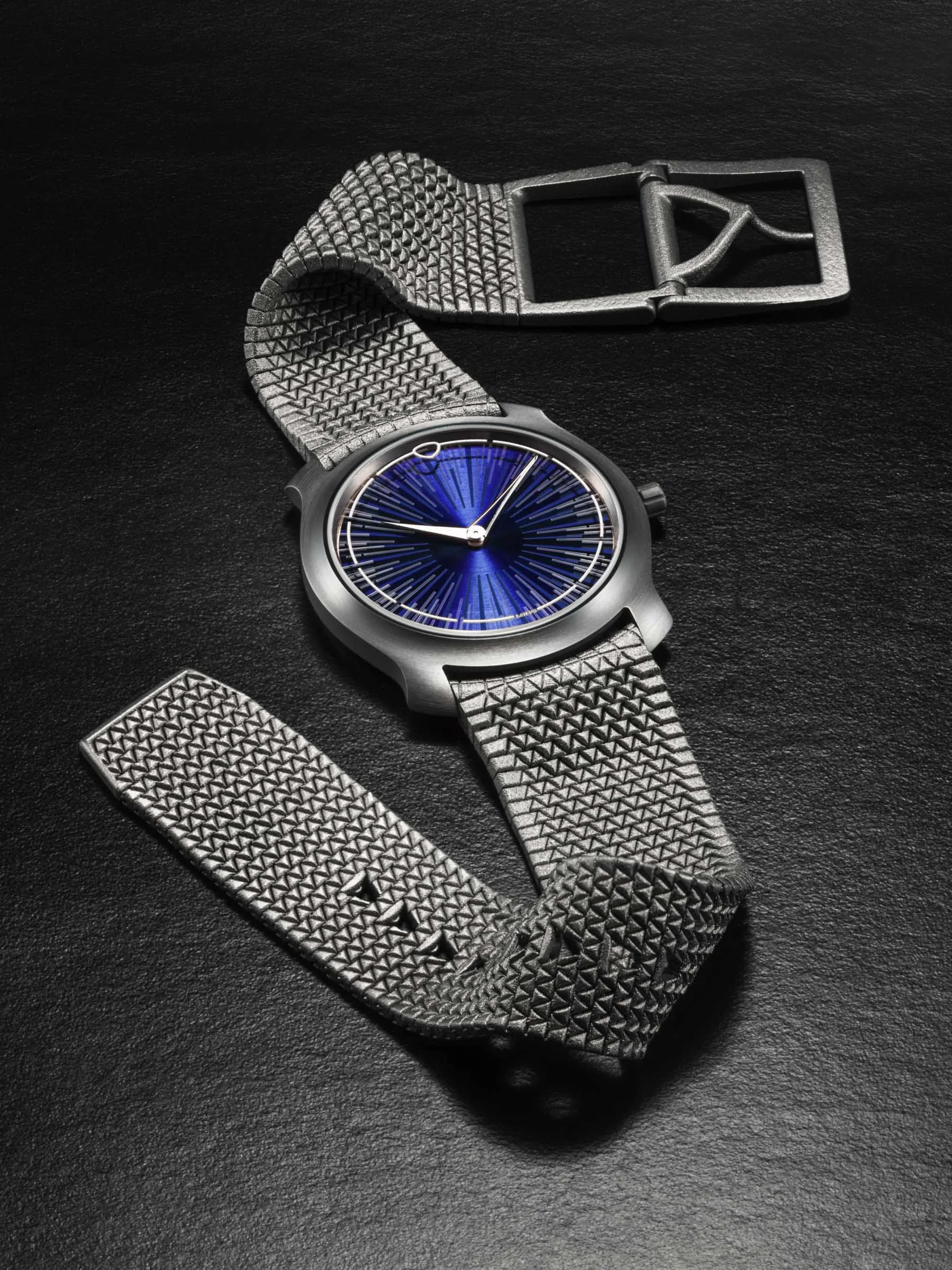
The original curved Polymesh consists of 1,693 interconnected elements, including the buckle. Those components are produced simultaneously and already connected to one another.
It effectively emerges from the additive manufacturing process as a flexible titanium object.
MING calls it a bracelet-strap hybrid, which makes sense. It is entirely metal, but the huge number of tiny articulated components allows it to flex more like fabric.
Production requires more than a thousand layers of titanium powder, joined through laser sintering.
The tolerances between moving components can reach roughly 30 microns.
Too close and they fuse together.
Too far apart and the structure loses the fluid movement that makes the whole idea work.
At the time, the curved Polymesh cost around CHF 1,500.
That is obviously not cheap for a bracelet.
But by MING standards, it was weirdly attainable.
And more importantly, it is exactly the sort of engineering experiment that makes MING interesting.
I desperately want to know what one feels like in the hand.
Official website: MING
https://www.ming.watch/
Vietnam: OAN.GIO and the edge of independent watchmaking
Vietnam takes that awkward microbrand-versus-independent question even further.
Because OAN.GIO is doing things that bear very little resemblance to what most people picture when they hear the word microbrand.
The company was started by Nghia Nguyen Dai, a French-born Vietnamese watch enthusiast who had already spent more than six years overseeing production and innovation for a French watch brand.
His brother, a product designer and 3D artist, had previously worked for Rolex.
The concept behind OAN.GIO is to collaborate with craftspeople around the world and effectively give them a watch dial as their canvas.
Across the catalogue that has meant Vietnamese lacquer, hand engraving, guilloché, damascene, enamelling, natural stone and other decorative techniques.
Then there is Raden.
And this is where OAN.GIO completely got me.
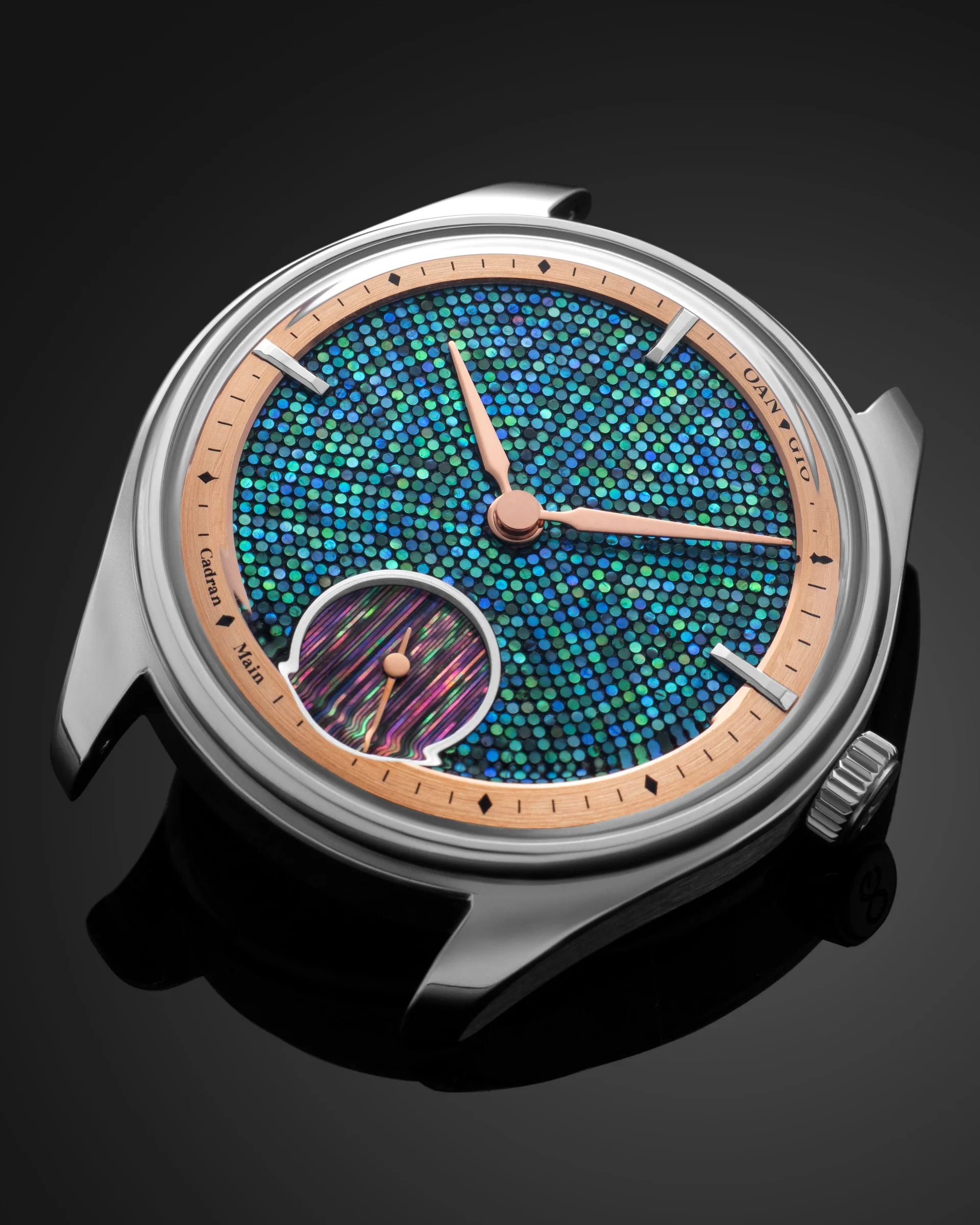
The Raden collection was created with Japanese lacquer artist Keisuke Sano.
Raden is a traditional Japanese decorative technique in which tiny pieces of shell are inlaid into lacquer. Here, Sano works with abalone shell, Urushi lacquer and Maki-e.
These are not printed approximations.
The shell is selected, cut into individual pieces and placed onto the dial by hand.
One completed dial can contain approximately 490 individual pieces.
The four designs look less like conventional watch dials and more like somebody managed to trap a galaxy underneath the crystal.
Fragments of iridescent abalone sit against black Urushi lacquer alongside tiny gold details. Because every piece catches light differently, the entire surface changes as the watch moves.
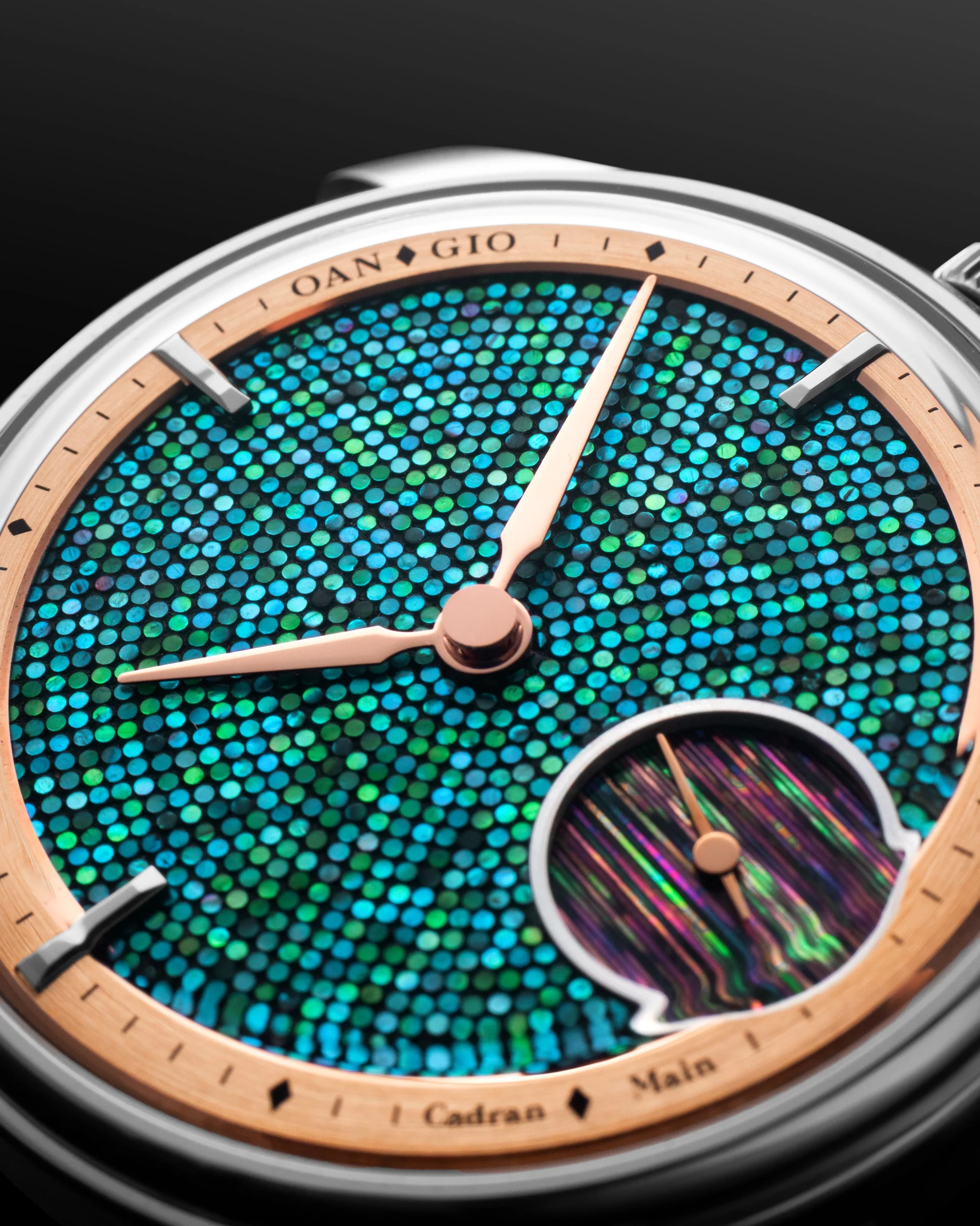
Every piece of shell and gold has been positioned individually.
Every dial is therefore inherently a little different.
Turn the watch over and OAN.GIO has not simply attached a standard movement behind all that dial work either.
The Raden watches use the brand's Prestige V2, based on the ETA 6498-2.
But there is a custom three-quarter bridge, custom mainplate and balance bridge before the movement is sent to a specialist partner in Glashütte for a substantial overhaul and decorative finishing.
The bridges are bevelled and polished, the movement receives contrasting decorative finishes, and suddenly we are a very long way from the conventional definition of a microbrand.
When available, the Raden collection was priced at US$6,490.
Which also puts us a very long way from the SIMPL Reverse where this journey started.
Official website: OAN.GIO
https://oangio.watch/
One region, five completely different ideas
That range is what makes Southeast Asia so interesting.
In one trip we have gone from a roughly $230 quartz watch that rotates its entire dial, to an Indonesian racing chronograph with brightly coloured pushers, a Filipino industrial integrated-bracelet watch, 1,693 interconnected pieces of 3D-printed titanium, and hundreds of tiny pieces of abalone individually positioned by a Japanese lacquer artist.
Trying to force all of that into one neat definition of microbrand seems increasingly pointless.
What matters more is that each of these companies has found something worth doing differently.
And we haven't even reached Singapore yet.