
Watch prices often make absolutely no sense.
A date complication can add thousands. A change of bezel material can transform the price. Precious metal seems to operate according to its own laws of economics.
And that is before comparing watches from different brands.
So perhaps the simplest way to understand luxury-watch pricing is to stay within a single catalogue.
And few catalogues make the exercise more interesting than Rolex.
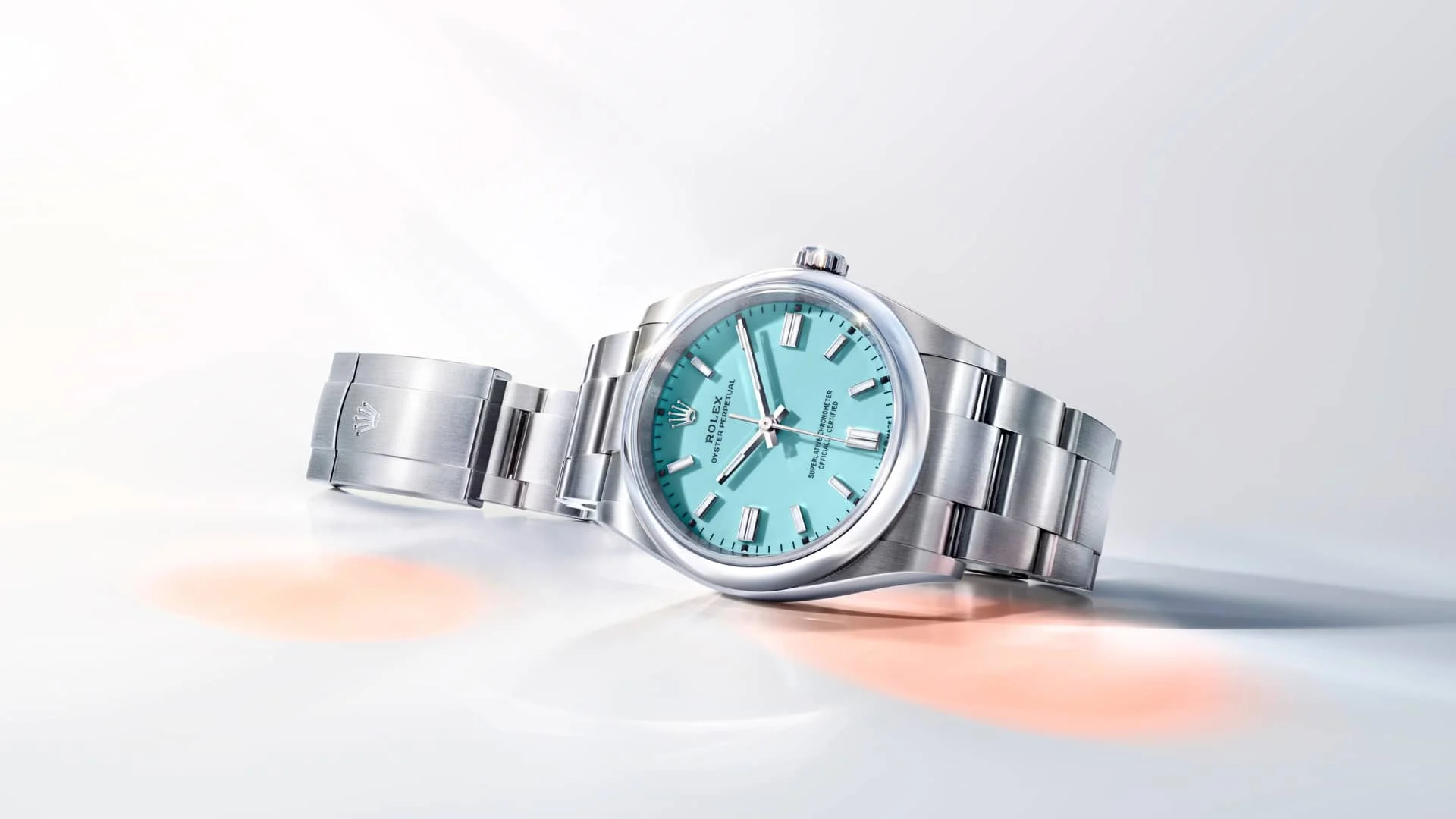
At the bottom sits the Oyster Perpetual: a simple, exceptionally well-made steel watch.
At the other end, the Day-Date arrives exclusively in precious metal, carrying one of the most recognisable status symbols in watches.
Between them sit divers, GMTs, chronographs, annual calendars, extreme depth-rated watches and some surprisingly strange pieces.
The question is simple:
As you climb the Rolex price ladder, does more money actually get you more watch?
The answer is less straightforward.
The Oyster Perpetual sets the baseline
At the time of the original comparison, the 41 mm Oyster Perpetual started at A$11,750.
That is obviously not inexpensive.
But inside the Rolex universe, it provides a useful benchmark.
You get the core Rolex formula: Oystersteel, sapphire crystal, 100 metres of water resistance, a modern automatic movement and the sort of build quality that has helped make Rolex Rolex.
There is no date. No rotating bezel. No GMT hand. No chronograph.
It is simply a very good three-hand watch.
Everything higher in the catalogue therefore has to answer a basic question:
What are you giving me for the extra money?
And quite early on, the answer gets murky.
Sometimes you are paying for identity
The Air-King and Explorer are good examples.
Both cost more than the Oyster Perpetual while remaining fundamentally time-only steel watches built around the same basic movement architecture.
There are meaningful differences.
The Air-King has its distinctive dial, crown guards, Mercedes hand and more overt Professional-model personality.
The Explorer brings one of the most recognisable dial layouts in watch history and decades of brand mythology.
But if you reduce everything to functionality, neither suddenly tells the time in a fundamentally more sophisticated way.
This is where mechanical-watch pricing stops behaving like consumer electronics.
You are no longer simply paying for features.
You are paying for identity. History. Design. Association.
And whether that is worth the premium cannot really be answered on a specification sheet.
The Datejust makes the ladder easier to understand
The Datejust is where the proposition becomes clearer.
Compared with the Oyster Perpetual, the additional money buys an actual complication: the date.
You also get a dressier execution and access to some of the design cues most strongly associated with Rolex, particularly the fluted bezel and Jubilee bracelet.
That makes the Datejust an interesting point on the ladder.
The watch is still recognisably built around the everyday Rolex formula, but there is now something tangible being added.
It also demonstrates one of the stranger parts of Rolex pricing.
A Jubilee bracelet upgrade can seem relatively modest.
A precious-metal fluted bezel can add thousands.
Luxury pricing is not a linear calculation of manufacturing cost.
Desirability is part of the equation.
Then the Submariner starts buying engineering
The Submariner is one of the places where spending more begins to feel easier to explain.
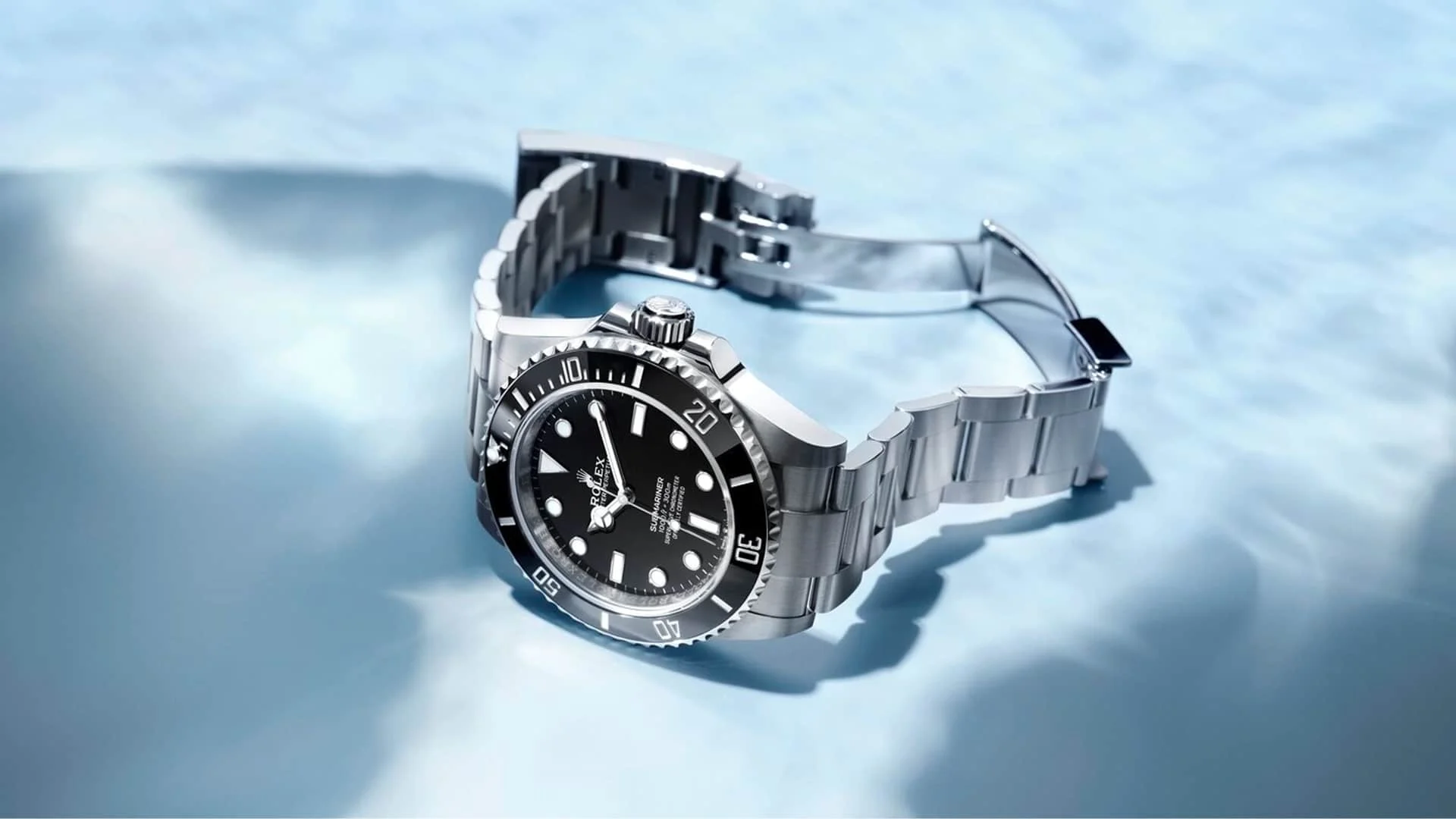
The time-only Submariner takes the familiar Rolex base and turns it into a serious dive watch.
Water resistance rises to 300 metres.
The clasp gains Rolex's Glidelock adjustment system.
The crown moves to the Triplock system.
You get crown guards and one of the best-known rotating dive bezels in the industry.
Most owners will never need to test a Submariner anywhere near its engineering limits.
That does not mean the engineering is imaginary.
A watch designed to reliably operate at 300 metres is fundamentally being asked to do more than an Oyster Perpetual.
The Submariner Date makes the comparison even more interesting.
Here, Rolex charged roughly A$2,100 more at the time for the date complication and the movement required to provide it.
That is particularly revealing when compared with the premiums elsewhere in the catalogue for changes that provide little or no additional functionality.
Sometimes Rolex pricing feels arbitrary.
Here, it feels fairly easy to follow.
And then Rolex goes completely overboard
After the Submariner come the Sea-Dweller and Deepsea.
This is where practical necessity essentially leaves the conversation.
The Sea-Dweller offers 1,220 metres of water resistance.
The Deepsea pushes that to 3,900 metres.
Then the Deepsea Challenge takes the concept into absurd territory with a huge titanium case and a depth rating of 11,000 metres.
No normal buyer needs this.
That is almost irrelevant.
These watches are Rolex demonstrating how far it can push the idea of a mechanical dive watch.
The value proposition changes accordingly.
You are paying for engineering that exists largely because Rolex can do it.
And, strangely, that makes more sense than paying thousands simply for a slightly different dial.
The Explorer II might be the sweet spot
If the question is where the Rolex catalogue offers the strongest functional return for the money, the Explorer II makes a surprisingly good case.
At the time of the comparison, it cost A$17,750.
That placed it only modestly above the time-only Submariner while giving you both a date and a true GMT complication.
Yes, you lose the Submariner's extreme water resistance and rotating bezel.
But for most people, a second time zone is considerably more useful than the ability to descend hundreds of metres underwater.
The Explorer II is also unusually straightforward for Rolex.
Steel. Fixed bezel. Two dial colours. No endless precious-metal permutations.
It does a specific job and gets on with it.
Of the watches in the catalogue, it may be one of the clearest examples of paying more and receiving something genuinely useful in return.
The GMT-Master II is where hype enters the bill
The GMT-Master II uses the same broad GMT functionality but wraps it in one of Rolex's most recognisable packages.
The rotating two-colour Cerachrom bezel matters.
So does the Jubilee option.
So does the design history.
And, whether enthusiasts like admitting it or not, so does the extraordinary demand surrounding the model.
Functionally, the leap from Explorer II to GMT-Master II is not enormous.
Emotionally, it is.
That is a recurring theme throughout the Rolex catalogue.
Two watches can perform essentially the same function while occupying completely different positions in the imagination of buyers.
At that point, asking which offers "better value" becomes almost meaningless.
One is transportation.
The other is the destination.
The Yacht-Master shows how strange luxury pricing can become
The Yacht-Master complicates things further.
It looks superficially related to the Submariner but offers only 100 metres of water resistance in its standard form.
What distinguishes it instead is material and execution.
The Rolesium version pairs a steel case and bracelet with a platinum bezel.
So while the Submariner's bezel exists as part of a professional diving package, the Yacht-Master's most important upgrade is luxury.
That is not necessarily bad.
It simply shows that "more watch" can mean very different things.
Sometimes it means more capability.
Sometimes it means more expensive material.
The Yacht-Master is largely the latter.
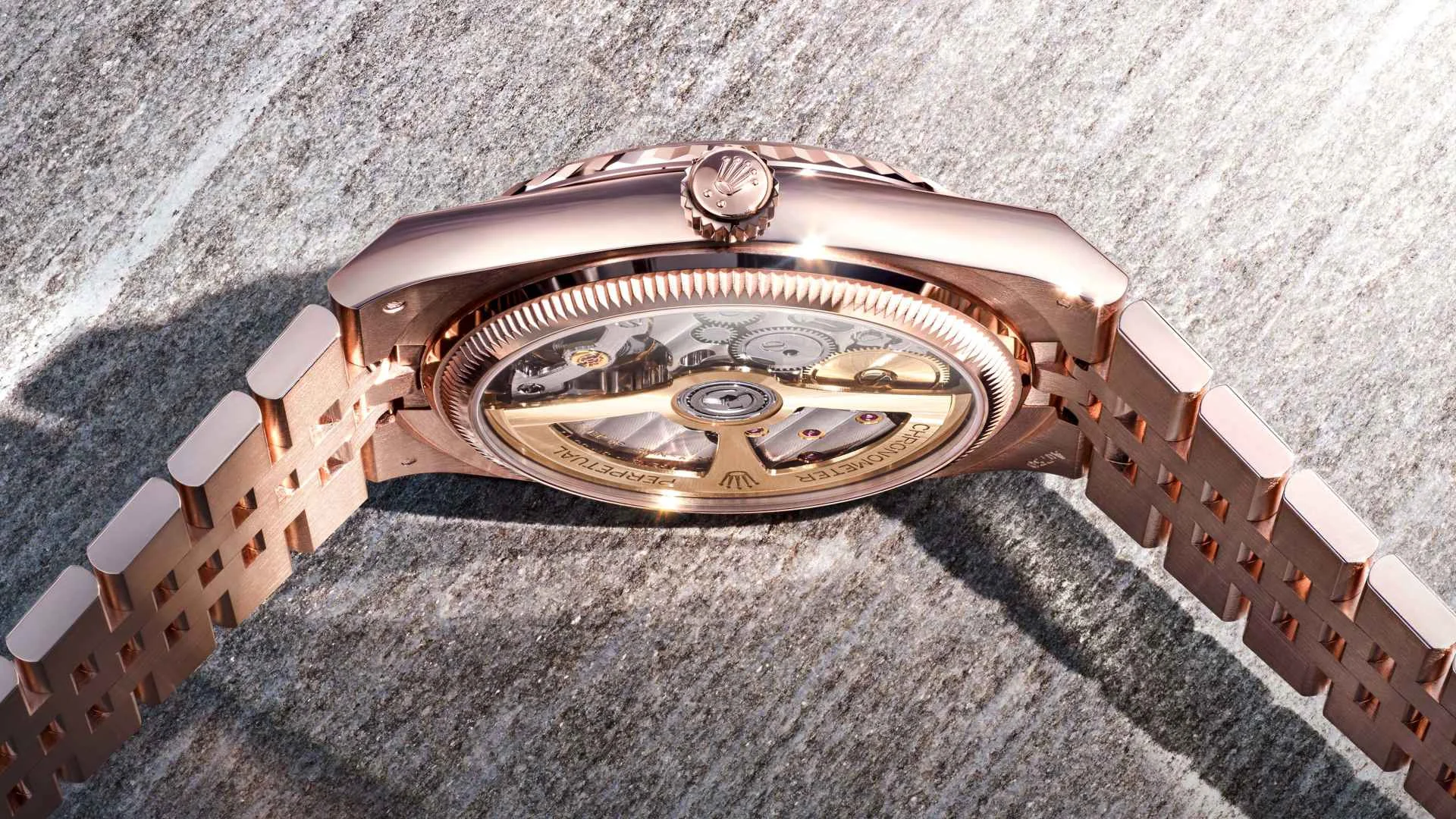
The Land-Dweller actually feels new
The Land-Dweller is one of the more interesting stops because the premium buys something genuinely different.
This is not just another Oyster case with a new dial.
You get an integrated bracelet.
A different overall architecture.
A display caseback.
A new movement.
A higher-frequency calibre incorporating Rolex's new Dynapulse escapement and more extensive use of modern materials.
Whether you like the design is another question.
But in terms of the original premise, this is one of the easiest jumps to defend.
More money clearly buys more watchmaking.
For a company often criticised for slow, evolutionary change, that matters.
The Daytona might make more sense than expected
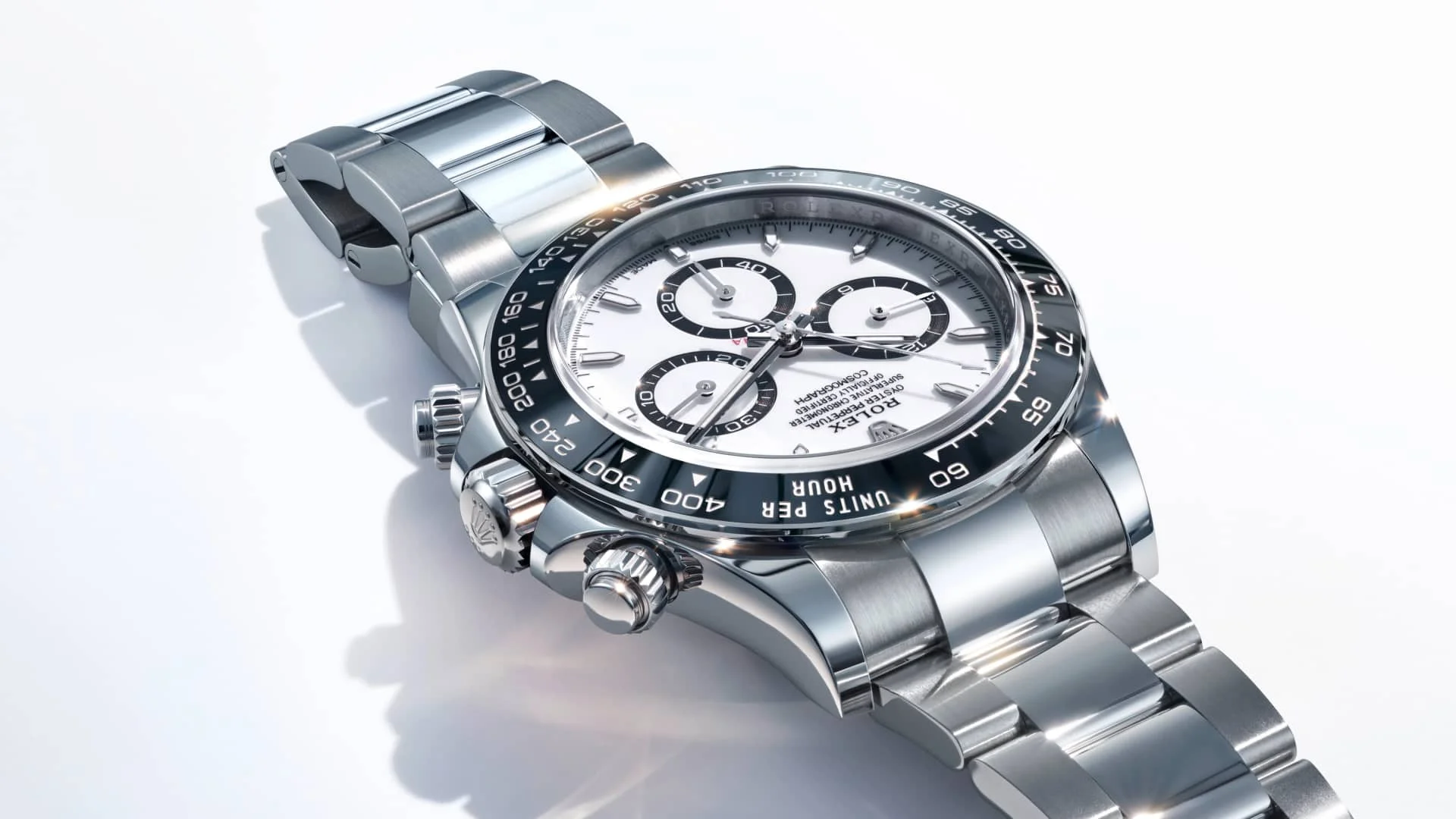
The Cosmograph Daytona is one of the most desirable watches in the world, which makes its actual retail positioning surprisingly interesting.
Inside the Rolex catalogue, the jump is relatively easy to understand.
You get a purpose-built mechanical chronograph movement.
A tachymeter bezel.
One of the strongest designs in the brand's history.
And a remarkably compact automatic chronograph package.
The Daytona is expensive.
But unlike some lower rungs of the ladder, you do not need to squint to work out what changed.
There is substantially more mechanical complexity here.
The irony, of course, is that retail price is not really the main problem.
Availability is.
The Sky-Dweller might be Rolex's best technical argument
If the question is purely about complication, the Sky-Dweller is difficult to ignore.
It combines a date, second time zone and annual calendar.
The month is displayed discreetly around the hour markers, and the annual-calendar system only requires manual correction once each year, assuming the watch keeps running.
Then there is the Ring Command bezel.
Instead of simply decorating the watch, the bezel forms part of the control interface, allowing the wearer to select which function is being adjusted.
This is a very Rolex solution.
Complex underneath. Simple to operate.
And unlike some of the catalogue's more cosmetic price jumps, the Sky-Dweller gives you a straightforward technical explanation for why it costs more.
You are buying complication.
Rolex can still be wonderfully weird
Then there is the Yacht-Master II.
A regatta countdown chronograph is among the most absurdly specific complications a mass-market luxury-watch company could possibly build.
That is what makes it fun.
It has a unique movement and exists to time the countdown before yacht races.
Most owners will never use it for that.
Most people do not participate in yacht races.
None of this stopped Rolex building an entire watch around the idea.
Whether it represents good value is debatable.
But at least the money clearly went somewhere.
Rolex built something genuinely strange.
That deserves some credit.
At the top, value stops being the point
Eventually you reach watches such as the 1908 and the Day-Date, where conventional value becomes increasingly irrelevant.
The 1908 is fascinating because, functionally, it almost returns to the simplicity of the Oyster Perpetual.
Time. Small seconds. No date.
But now the case is precious metal, the movement is displayed through the back and the entire proposition is centred on traditional dress-watch refinement rather than everyday practicality.
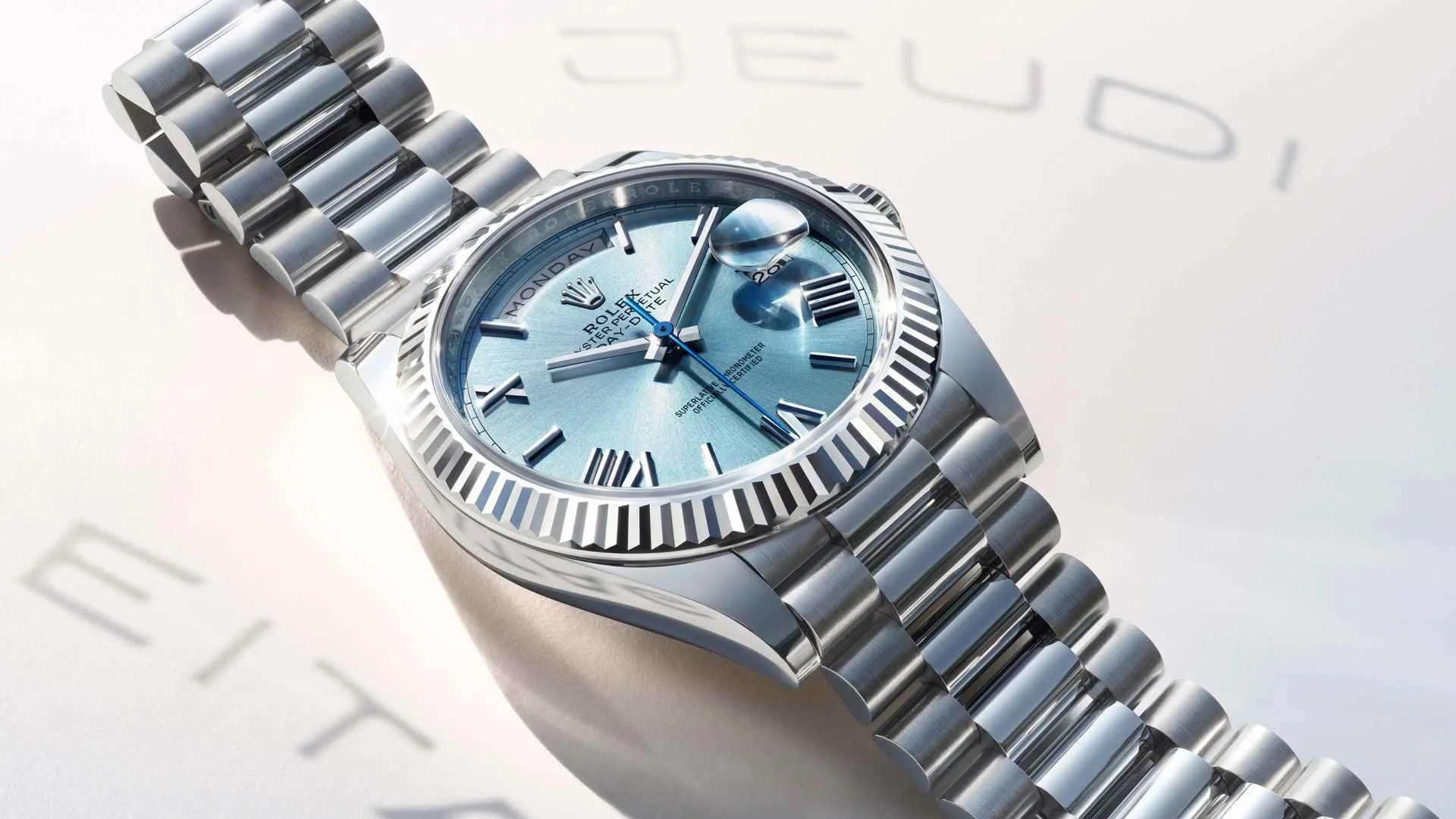
Then you reach the Day-Date.
This is the top of the normal Rolex ladder.
Precious metal is standard.
You get the President bracelet, fluted bezel, date and the day written in full across the dial.
But the Day-Date is not really sold on mechanical complexity.
It is sold on meaning.
This is the Rolex associated with presidents, executives, celebrities and fictional mob bosses.
It is a status object in the most literal sense.
Does that make it good value?
Of course not.
But more money unquestionably gets you more Rolex.
And perhaps that distinction is the entire point.
So, does more money really get you more watch?
Sometimes.
The early stages of the Rolex ladder can be difficult to justify rationally.
An Air-King or Explorer may cost considerably more than an Oyster Perpetual without fundamentally changing what the watch does.
Move higher, though, and things become more interesting.
The Explorer II introduces genuinely useful GMT functionality.
The Submariner adds serious dive-watch engineering.
The Daytona adds a mechanical chronograph.
The Land-Dweller introduces new architecture and movement technology.
The Sky-Dweller brings Rolex's most substantial regular-production complication package.
At those points, the extra money increasingly buys something tangible.
But Rolex has never been purely in the business of selling features.
It sells icons. History. Materials. Design. Recognition. And status.
So no, more money does not always mean more watch.
But it usually means more Rolex.
And whether that is brilliant or ridiculous probably depends on which rung of the ladder you are standing on.