
Watch collecting is an expensive hobby.
And once you move into luxury territory, relatively small percentage differences can suddenly mean thousands of dollars.
That raises an obvious question.
If you could buy the exact same watch anywhere in the world, where would it actually be cheapest?
Switzerland, the traditional home of luxury watchmaking?
Japan, long considered a paradise for collectors?
Hong Kong?
The United States?
Or simply your local authorised dealer?
To test it, I compared three popular luxury watches across a selection of major markets, first at normal retail price and then again after accounting for tourist tax-refund schemes.
The result was not what I expected.
The three-watch test
To make the comparison reasonably broad, I used three very different watches.
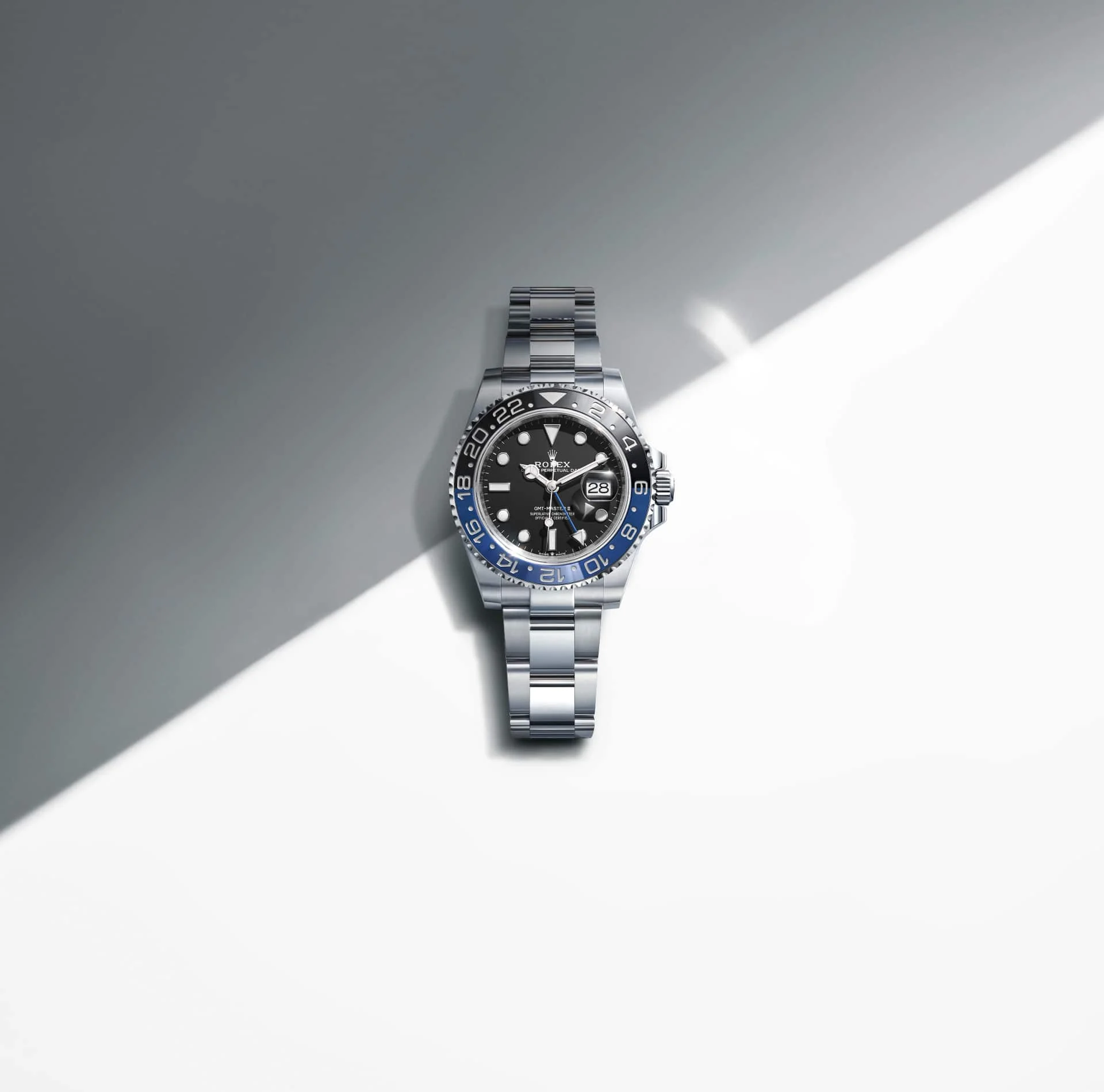
The first was the Rolex GMT-Master II.
Availability is obviously another matter entirely, but the official retail price still gives us a useful benchmark.
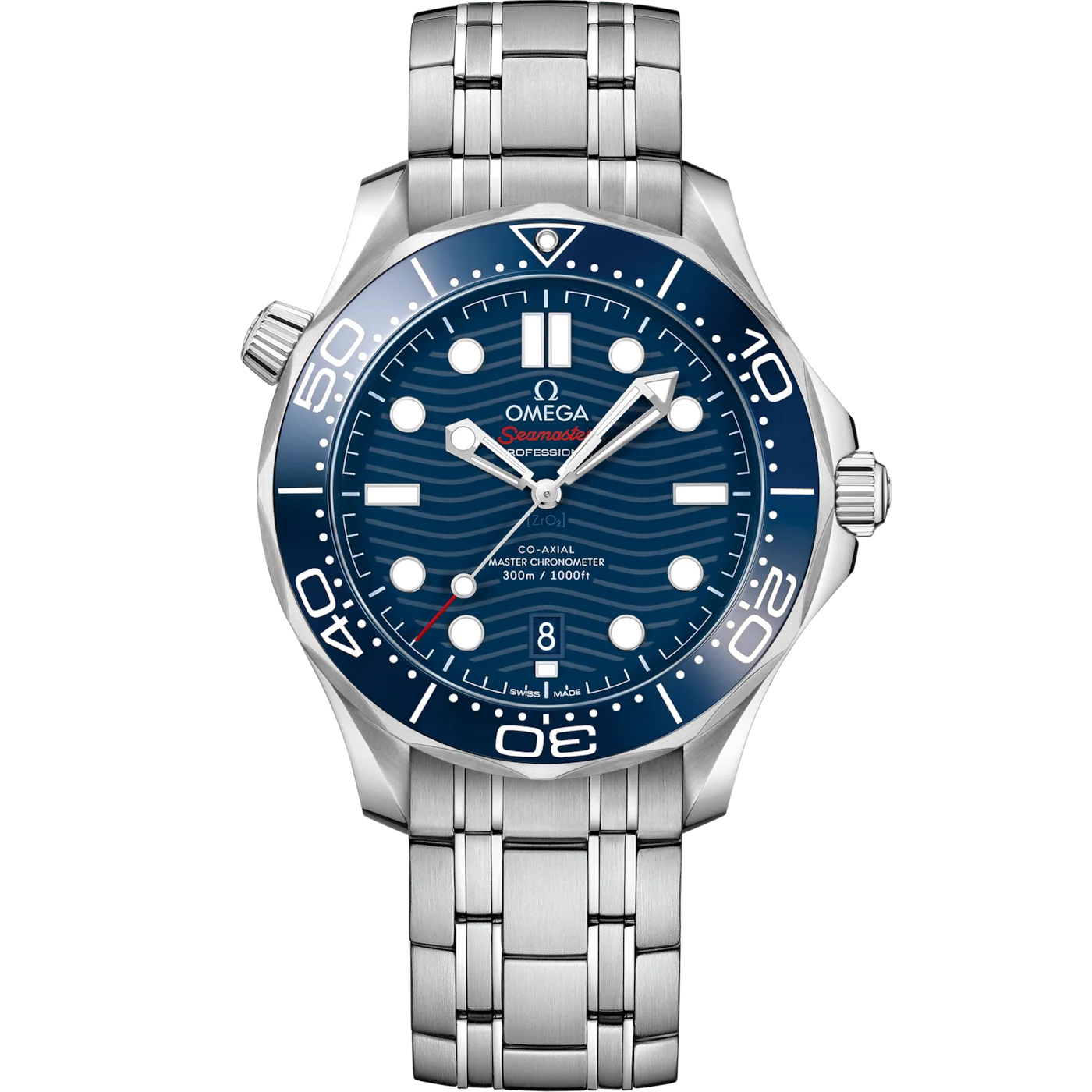
The second was the Omega Seamaster Diver 300M First Light.
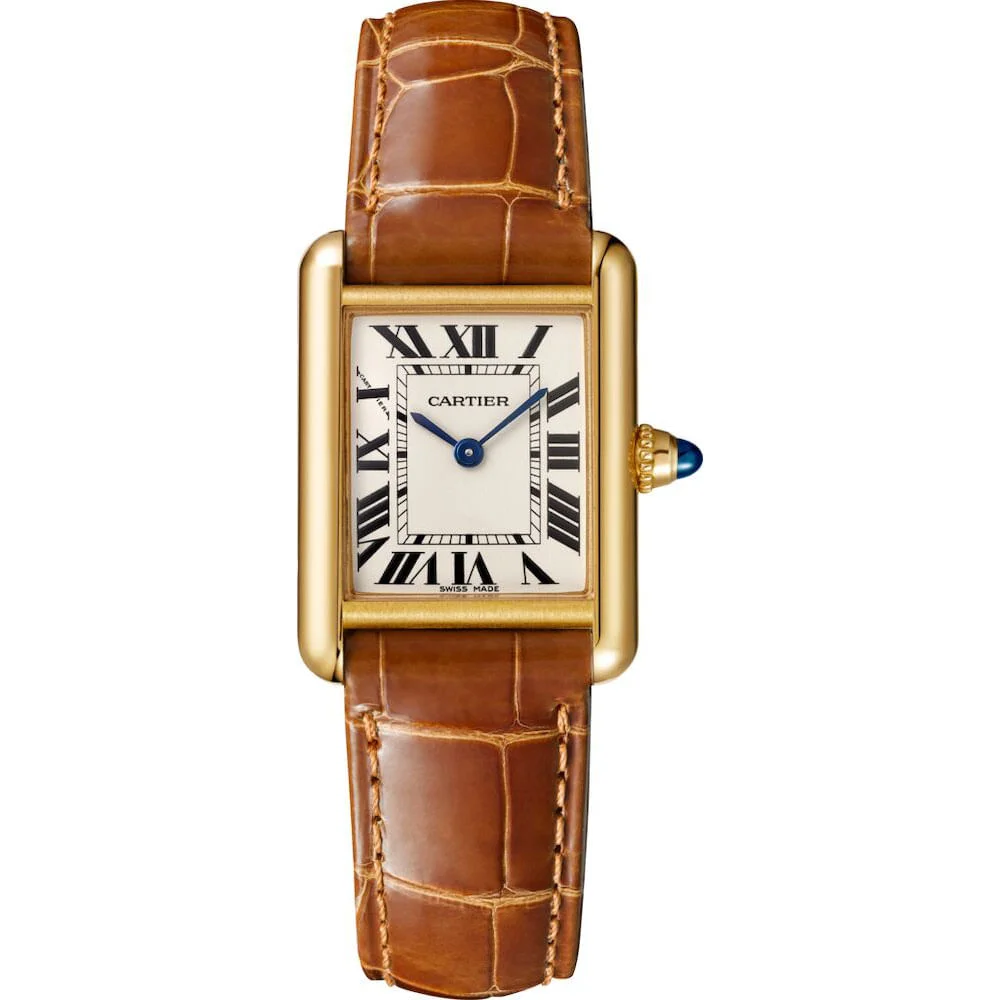
And finally, because every comparison deserves something a little dressier, the Cartier Tank Louis in yellow gold.
The aim was not to declare one country permanently cheapest forever.
Foreign-exchange rates move.
Brands adjust regional pricing.
Tax rules change.
For that reason, the figures used for the original comparison were taken on 22 June 2026.
Think of this as a snapshot of how dramatically location can affect the final price of the same watch.
The United States is really several markets
The United States makes international price comparisons slightly awkward because there is no single national sales-tax rate.
Brands generally publish one US retail price, but the amount you actually pay depends on the state and locality.
At one extreme is somewhere like Oregon, where there is no state sales tax.
At the other, combined state and local taxes can climb above 10%.
That means two customers buying the exact same watch in the United States can end up paying more than a thousand dollars apart without changing the watch at all.
For the original comparison, the US therefore provided both a low-tax and high-tax benchmark.
It also demonstrates one of the most important lessons when comparing watch prices internationally:
The sticker price is not always the price that matters.
Hong Kong wins before tourist refunds
Looking purely at normal local retail pricing, one market came out on top.
Hong Kong.
That surprised me.
I expected Japan to dominate.
Instead, Hong Kong produced the lowest average basket price across the three watches.
Interestingly, it was not because Rolex was dramatically cheaper there.
Other markets, including Japan and the United Kingdom, could compete or beat Hong Kong on the GMT-Master II.
Hong Kong made up the difference through particularly competitive Omega and Cartier pricing.
That consistency was enough to give it the overall retail win.
And there is another advantage.
Hong Kong does not rely on a tourist VAT-refund scheme to make those prices attractive.
There is no complicated airport rebate required to reach the number.
The price is simply competitive from the beginning.
That makes Hong Kong one of the easiest luxury-watch markets to understand.
Japan is consistently strong
Japan did not quite win the initial retail-price comparison, but it was probably the most consistently competitive country in the group.
It offered the lowest Rolex pricing by a comfortable margin, was extremely strong on Omega and remained competitive on Cartier.
That makes Japan interesting even before considering tourism incentives.
If you are shopping across several brands rather than chasing one particular reference, Japan gives you a strong chance of encountering attractive pricing.
Then the tax system enters the equation.
And that changes everything.
Switzerland is surprisingly expensive
The biggest surprise was Switzerland.
This is the home of Rolex.
The home of Omega.
The country most naturally associated with Swiss watchmaking.
You might reasonably assume that buying a Swiss watch in Switzerland would remove some invisible layer of distribution cost and leave you with a bargain.
The comparison suggested almost the opposite.
Switzerland finished at or near the bottom across the basket and was particularly expensive for the Rolex and Omega.
Even Cartier, while technically a French maison, produces its watches in Switzerland.
Yet buying there offered no obvious home-market advantage.
There is something wonderfully strange about travelling to the country where many of these watches are made and potentially paying more for them than you would on the other side of the world.
Australia does not cover itself in glory either
Australia performed about as well as Australian watch buyers probably expected.
Not the worst.
Not especially good.
Local luxury-watch pricing often carries a noticeable premium against some overseas markets, although the extent changes with exchange rates and brand adjustments.
Australia does at least have one useful advantage for departing travellers.
The Tourist Refund Scheme can allow eligible visitors to reclaim GST on qualifying goods taken out of the country.
That improves the calculation.
It just does not transform it.
The tax refund changes the ranking
Looking only at retail prices tells only half the story.
Several countries allow eligible foreign visitors to recover some or all of the consumption tax included in the purchase price.
And when the watch costs five figures, that percentage becomes meaningful very quickly.
Japan
Japan was already competitive.
Eligible foreign visitors can potentially purchase qualifying goods tax-free, effectively removing the country's consumption tax.
There are conditions.
Retailers must participate.
Purchases must qualify.
Rules can change.
But when the system applies, the discount can materially change an already attractive luxury-watch price.
Germany
Germany is almost the opposite.
Its original sticker prices were not especially compelling in the comparison.
But German VAT is substantial.
For eligible tourists, recovering part of that tax can move the effective purchase price significantly.
You generally will not receive every cent of the headline VAT rate once administration and refund-provider fees are considered.
Even so, the difference can be large.
Switzerland
Switzerland also offers VAT refunds to eligible visitors.
The problem is that Swiss VAT is relatively low.
So while the refund helps, there is simply less tax available to recover than in a market such as Germany.
Australia
Australia's GST refund can also help eligible departing travellers.
Again, it improves the equation without completely rewriting it.
Hong Kong, the UK and United States
Hong Kong needs no tourist refund because its tax structure is already reflected in the attractive retail pricing.
The United Kingdom no longer offers the broad tourist retail VAT-refund advantage many travellers once associated with shopping there.
And the United States generally does not operate a nationwide tourist sales-tax refund system.
In those markets, the amount paid at the retailer is effectively the amount that matters.
After tax refunds, Japan runs away with it
Once tourist tax treatment was incorporated into the original comparison, the ranking changed dramatically.
Japan moved from being highly competitive to the clear standout.
Across the Rolex, Omega and Cartier examples, the effective tourist pricing pushed Japan into first place on all three watches.
That is the sort of difference that can make international shopping genuinely relevant rather than merely interesting trivia.
On a relatively normal luxury-watch purchase, the saving may simply offset part of a holiday.
Move into genuinely expensive pieces and the gap can become large enough that the travel costs start to look increasingly insignificant.
Which creates the amusing conclusion that one of the most attractive places to buy Swiss watches may be thousands of kilometres away from Switzerland.
Germany becomes the surprise second choice
Germany also changes dramatically once tourist refunds are considered.
Initially, it looked relatively expensive.
After accounting for VAT recovery, it moved near the top.
That illustrates why international watch-price comparisons based purely on website retail numbers can be misleading.
A market can look expensive to locals but considerably more attractive to foreign visitors.
Conversely, somewhere that appears reasonably priced at first glance might offer no tourist tax advantage at all.
Hong Kong remains the easy option
Hong Kong falls slightly once other countries receive tourist-tax adjustments, but its core advantage remains intact.
It is simple.
There is no rebate required to create the attractive price.
No airport paperwork.
No waiting for a refund.
No concern about how much of the theoretical tax rebate disappears in processing costs.
The retail number is already competitive.
So while Japan may offer the strongest effective price in the comparison, Hong Kong makes a very strong case for being the easiest place to shop.
Does it make sense to travel for a watch?
This is where the exercise becomes more practical.
Buying a plane ticket purely to save a few hundred dollars on a watch clearly makes little sense.
But luxury-watch pricing scales quickly.
A 5 or 10 percent difference on a modest watch may be irrelevant.
On a five-figure watch, it is meaningful.
On several watches, it can become substantial.
And if the trip was going to happen anyway, the calculation becomes even easier.
For someone already visiting Tokyo, adding a luxury-watch purchase to the itinerary can be materially cheaper than buying the same piece at home.
That does not mean you should blindly buy overseas.
There are several other factors to consider:
- exchange-rate movements
- credit-card foreign transaction fees
- local customs and import obligations when returning home
- warranty arrangements
- retailer participation in tax-refund programs
- availability
- changing regional retail prices
The cheapest sticker price is not always the cheapest final transaction.
So where should you buy?
Based on the snapshot used for this comparison, the answer was fairly clear.
For the lowest effective tourist price, Japan was the standout.
For the simplest strong retail pricing, Hong Kong made an extremely compelling case.
And Switzerland, perhaps most surprisingly, proved that buying a Swiss watch in Switzerland does not automatically mean you are getting the best deal.
That is the larger lesson.
Luxury-watch pricing is not globally rational.
Brand positioning, local taxes, currency movements and regional pricing strategies can create surprisingly large gaps between markets.
If you are spending serious money on a watch, it is worth checking more than one country.
You may discover that the best place to buy your Swiss watch is nowhere near Switzerland.