
Lately, I have been going through something of a square-watch phase.
The Cartier Tank. The TAG Heuer Monaco. Proper icons.
Unfortunately, those watches and my bank account were not entirely aligned, so I found myself looking at another square icon instead.
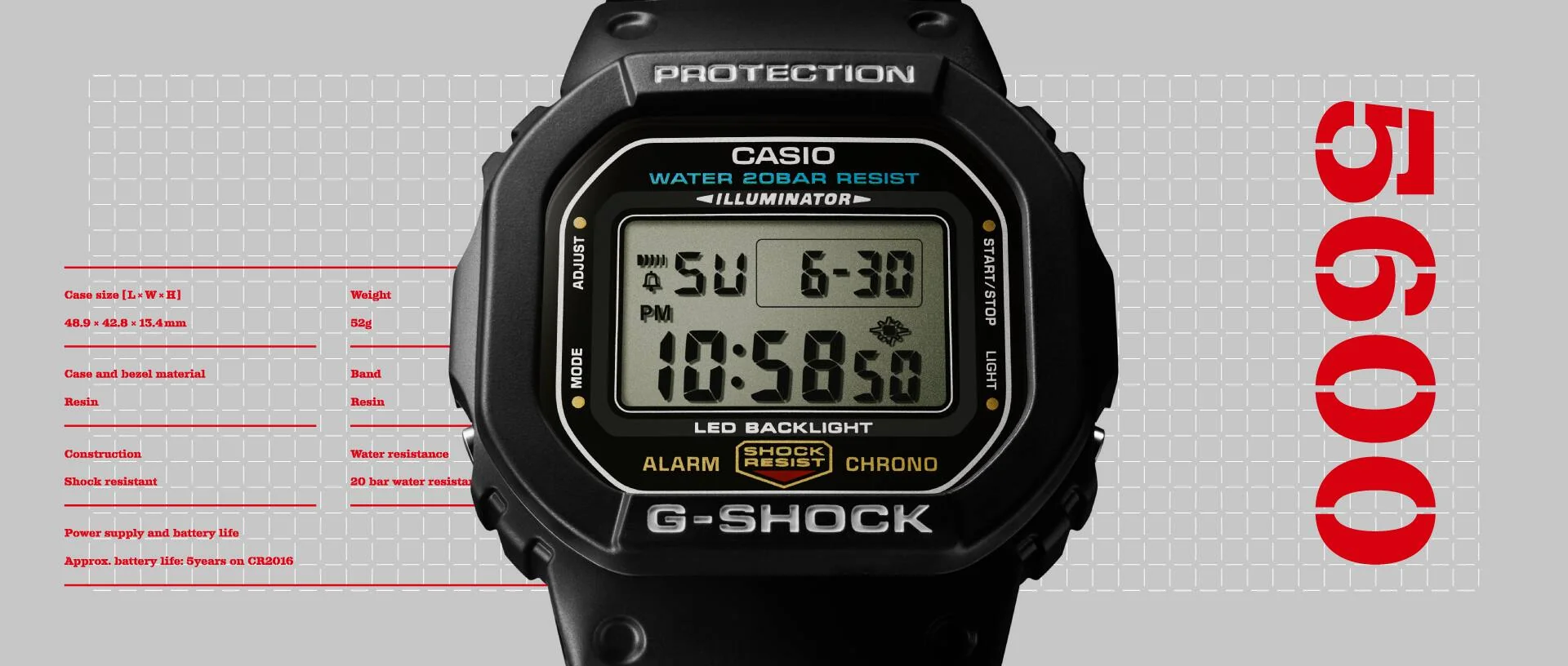
The G-Shock.
I figured I would buy a particularly nice one. Tough Solar. Bluetooth. Full metal, perhaps. Something that felt like the ultimate version of the classic 5000-series square.
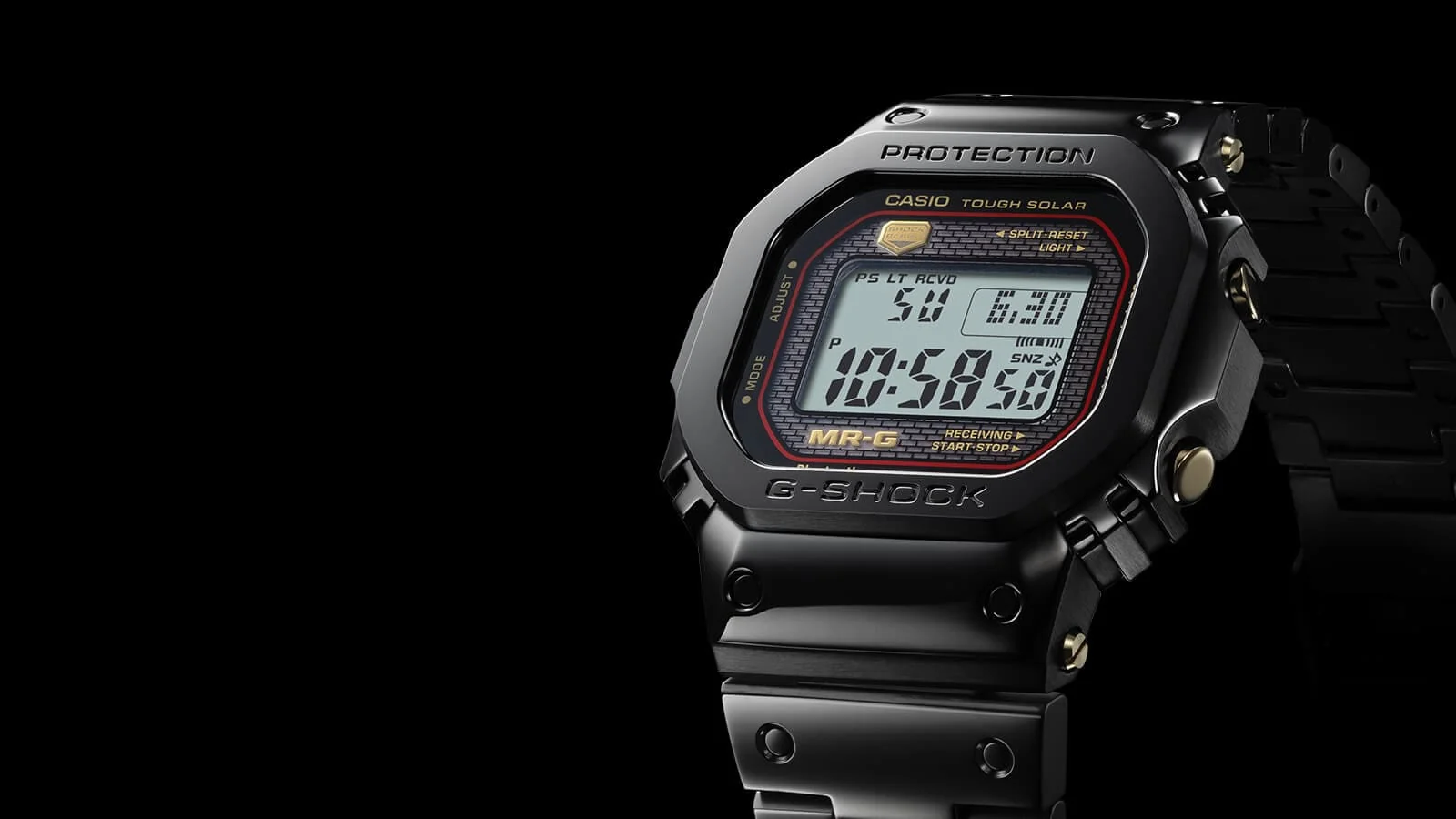
Then I discovered the MR-G B5000.
At the time of writing, this recognisably digital G-Shock square cost A$5,999.
That is not expensive for a Casio.
That is simply expensive.
And it raises a surprisingly difficult question:
Can a digital quartz G-Shock actually be a luxury watch?
The same G-Shock, taken completely seriously
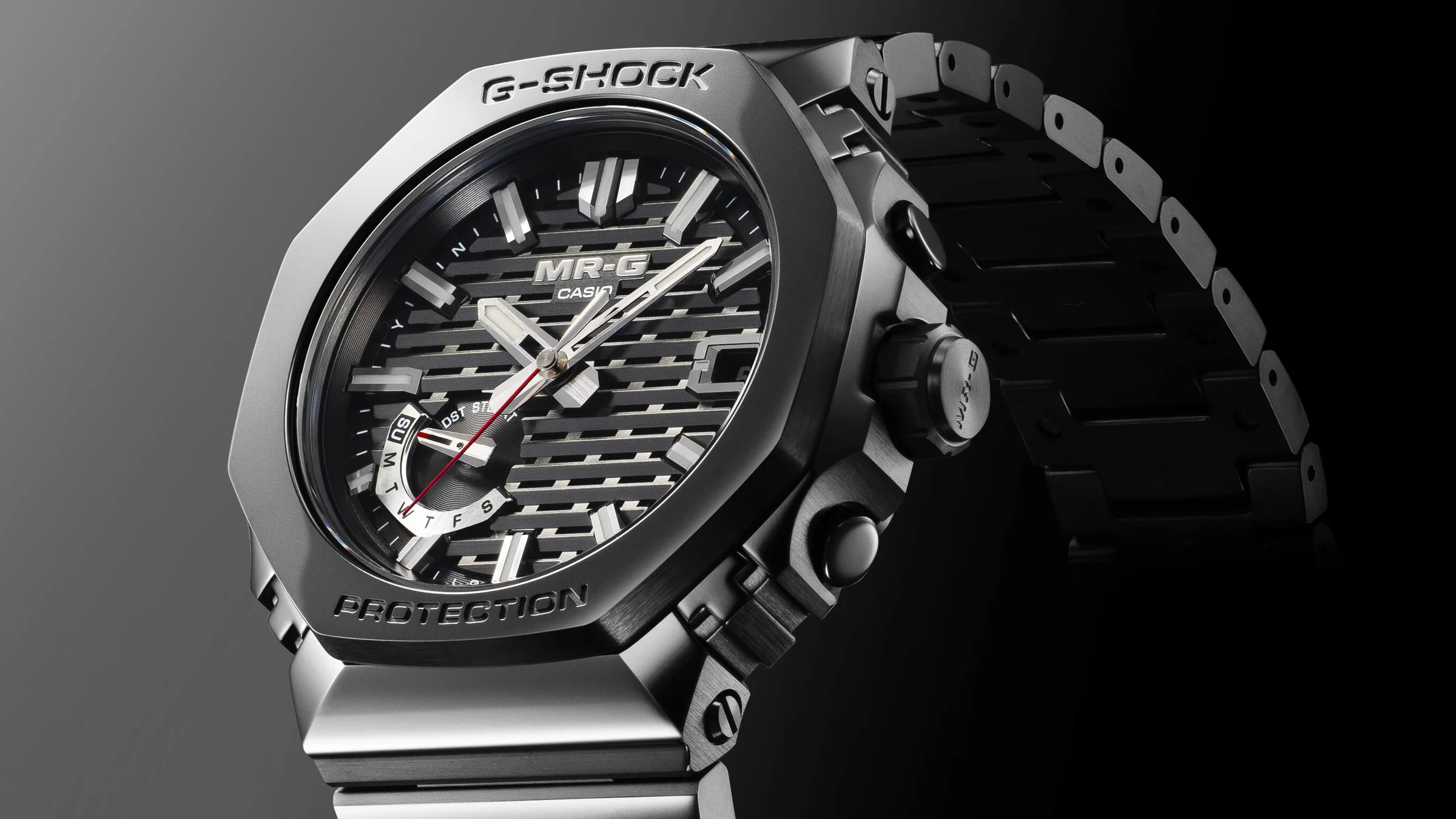
At first glance, the MR-G B5000 is unmistakably a G-Shock.
Square display.
Four buttons.
Brick-pattern detailing.
The same general 5000-series silhouette Casio has been producing for decades.
That is part of what makes the price so strange.
Underneath all of the exotic metal and obsessive finishing, this is still recognisably related to the resin G-Shocks you can buy for a tiny fraction of the price.
It is still digital.
Still quartz.
Still equipped with familiar Casio functions such as alarms, a stopwatch and countdown timer.
Casio has not taken the G-Shock and transformed it into something traditionally luxurious.
Instead, it has taken the basic idea of a G-Shock and asked what happens if virtually every physical component is executed without the usual cost constraints.
That distinction is what makes MR-G interesting.
How Casio gets from F-91W to MR-G
Casio's watch catalogue has an extraordinary amount of range.
At one end sit the classics.
F-91Ws. Calculator watches. World Times. Small digital watches that cost little, weigh almost nothing and seem determined to outlive their owners.
Then the catalogue starts branching out.
Edifice adds metal cases, motorsport styling and considerably more visual complexity.
Pro Trek builds watches around outdoor functionality.
Oceanus, particularly in Japan, shows Casio behaving much more like a conventional premium watchmaker, using titanium, polished surfaces and more refined designs.
Then there is G-Shock.
The affordable resin watches remain at the bottom of the range, but start climbing through solar charging, radio synchronisation, Bluetooth, steel cases and full-metal construction.
Above that sits MT-G, where Casio combines elaborate metal structures, carbon and more sophisticated finishing.
And then, at the top, there is MR-G.
This is Casio asking how far G-Shock can go.
A 25-piece solution to a one-piece problem
The normal G-Shock square has a relatively straightforward protective bezel.
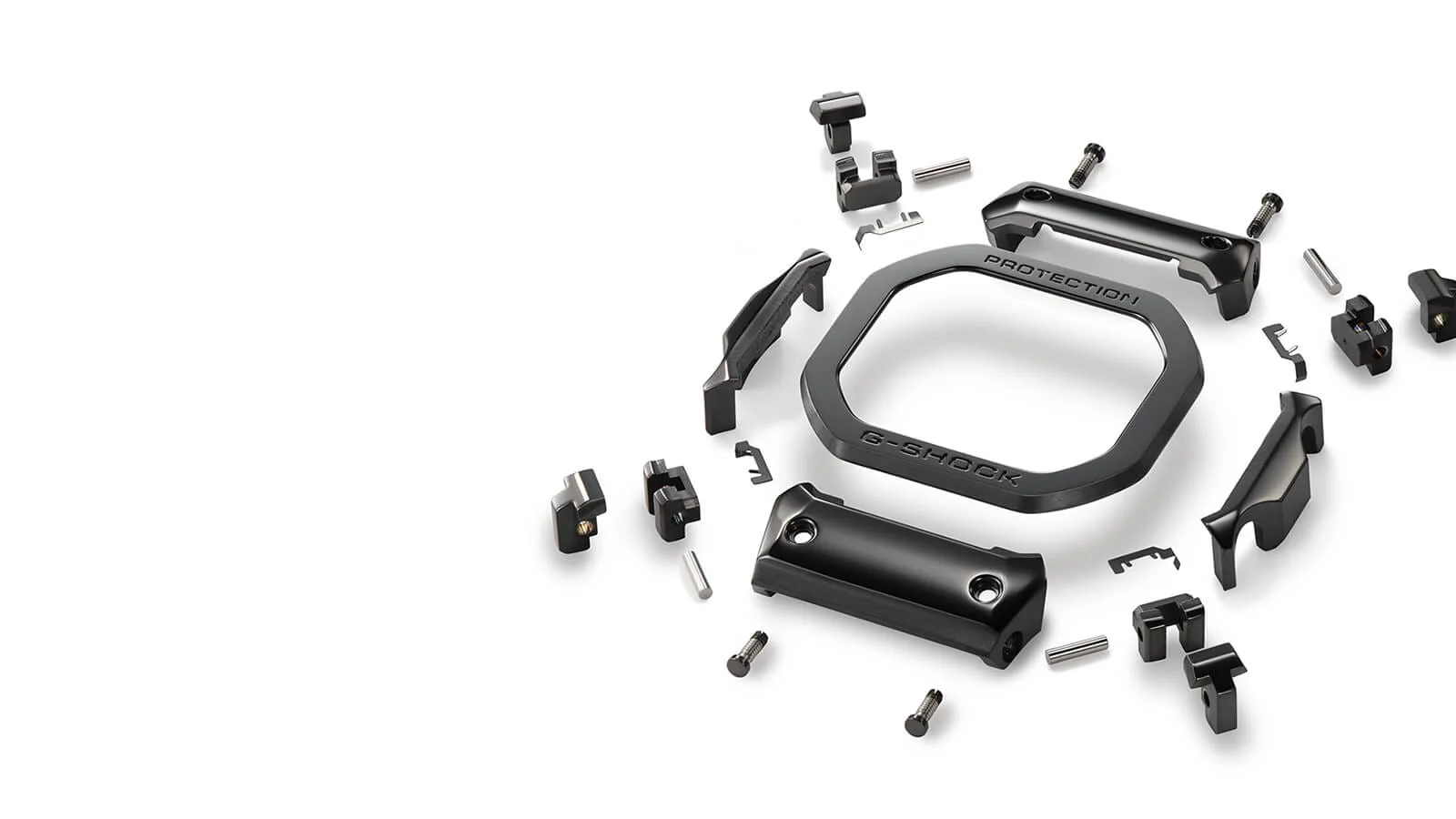
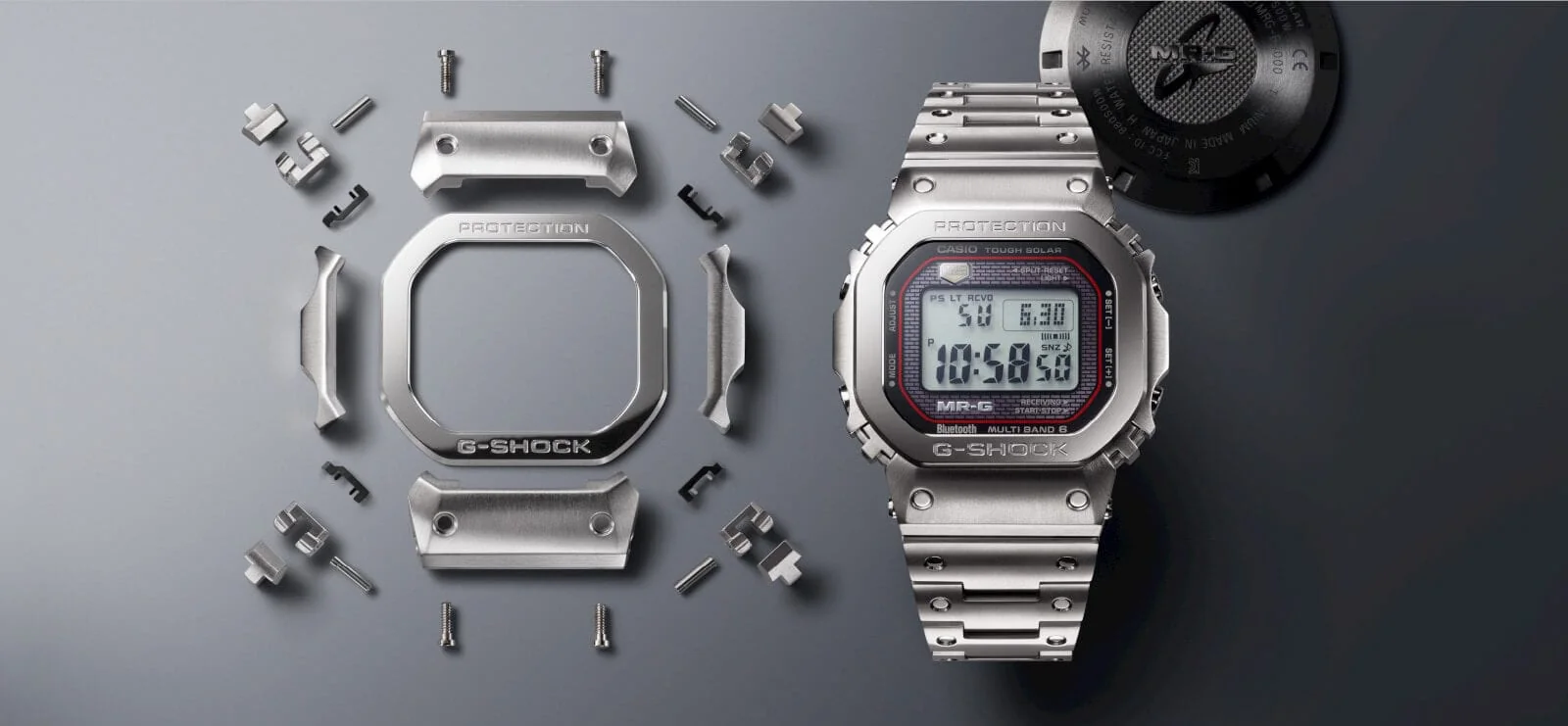
On the MR-G B5000, the bezel alone is divided into 25 separate components.
Twenty-five.
Casio has taken a shape it has been moulding successfully for decades and made it dramatically more complicated.
Initially that sounds like engineering for engineering's sake.
There is, however, a reason.
The G-Shock square contains recessed surfaces, sharp edges and awkward transitions that are difficult to finish properly as a single piece.
Breaking the exterior into individual components means those surfaces can be polished and brushed separately before assembly.
And Casio has not gone to all this effort merely to put the pieces through an ordinary polishing process.
The MR-G uses Sallaz polishing to achieve flat, distortion-free mirrored surfaces.
If that word sounds strangely familiar, there is a reason.
Sallaz is the name that evolved into the Japanese pronunciation we now know as Zaratsu, the polishing technique that has become almost inseparable from the conversation around Grand Seiko.
Suddenly, describing this thing as a "Grand Casio" starts sounding slightly less ridiculous.
But a G-Shock still has to survive being a G-Shock
There is an obvious problem with turning the protective shell of a famously durable watch into a beautifully finished assembly of tiny components.
Those components still have to survive impacts.
A resin shell is extremely good at absorbing punishment.
Twenty-five carefully polished metal components sound considerably less reassuring.
Casio's answer is what it calls the Multi-Guard Structure.
Flat springs and silicone buffers sit between the individual components, allowing the exterior to absorb impact without turning those beautifully finished sections into expensive projectiles.
The complexity is not simply decorative.
Casio has had to preserve the basic premise of G-Shock while completely changing how the exterior is constructed.
It is essentially luxury finishing forced to coexist with tool-watch engineering.
Exotic metal everywhere
Normal titanium apparently was not enough either.
Different parts of the watch use different specialist alloys.
The case and buttons use Ti64, already a premium titanium alloy.
The bracelet uses DAT55G, an alloy considerably harder than pure titanium while remaining workable enough for Casio's complex component construction.
Then there is the bezel.
That uses Cobarion, a Japanese cobalt-chromium alloy that can be polished to an extremely bright finish and offers far greater hardness than pure titanium.
All of this is assembled on Casio's Premium Production Line at Yamagata in Japan.
This is not an inexpensive watch wearing a fancy coating.
The exterior really has been engineered and finished like a high-end product.
The cleverest part is that it still looks like a G-Shock
Perhaps the easiest way for Casio to justify the price would have been to make MR-G look obviously luxurious.
Tone down the digital aesthetic.
Hide the G-Shock branding.
Make something elegant enough that nobody could mistake it for the affordable watch.
Casio did the opposite.
The brick pattern remains.
The red detailing remains.
The exposed screws remain.
The buttons still look like G-Shock buttons.
The bezel still says G-SHOCK.
The watch is not embarrassed about where it came from.
That may be its greatest strength.
MR-G does not pretend its digital display is really a piece of haute horlogerie.
It simply takes one of Casio's most recognisable designs and gives virtually every exterior component the executive treatment.
The difficult bit is still the module
The luxury argument becomes harder once you get underneath all that metal.
The MR-G does not literally use the same module as an entry-level G-Shock.
Its dedicated module incorporates touches such as a gold-plated retainer plate, and the watch gets the premium Casio package of Tough Solar, Bluetooth connectivity, Multi Band 6, world time, stopwatch, countdown timer, five alarms and a perpetual calendar.
It is phenomenally capable.
But capability is not really what you are paying for.
Many of those functions appear on dramatically cheaper G-Shocks.
If all you want is solar charging, Bluetooth and excellent digital timekeeping, Casio will sell you that for hundreds rather than thousands.
The extra money buys the object surrounding those functions.
That is a very different sort of value proposition.
How high can G-Shock go?
The B5000 square is only one part of the MR-G catalogue.
There are analogue pieces, CasiOak-style models and more elaborate interpretations of other G-Shock families.
And the prices can become genuinely extraordinary.
At the time the original piece was written, the MR-G range extended all the way to a A$14,999 Frogman.
It was also listed as out of stock.
That does not necessarily prove somebody paid fifteen thousand dollars for one.
But it leaves open the entertaining possibility that somebody did.
More importantly, it demonstrates how seriously Casio takes MR-G.
This is not just an occasional expensive novelty sitting awkwardly above the normal catalogue.
It is the company's answer to the question of what a no-compromise G-Shock should be.
The value question
At around A$6,000, the MR-G B5000 lands directly in traditional luxury-watch territory.
That amount of money opens the door to serious Swiss mechanical watches, high-specification independents and watches with the sort of mechanical movements collectors usually expect at this price.
The MR-G does not compete by offering more mechanical complexity.
It does not compete with romance.
There is no hand-finished movement visible through the back.
No Geneva stripes.
No escapement to admire.
No dial inspired by sunlight hitting snow somewhere outside Nagano.
What it offers instead is obsessive industrial engineering.
Precision.
Durability.
Exotic materials.
Extreme finishing.
And an almost comical commitment to perfecting a design that was already fundamentally solved decades ago.
Maybe this is Casio's version of Grand Seiko
Grand Seiko exists partly to demonstrate the upper limit of what Seiko believes watchmaking can be.
That does not mean Grand Seiko simply takes an inexpensive Seiko and makes it more expensive.
But philosophically, MR-G performs a surprisingly similar role for Casio.
It asks:
What happens if we take our most recognisable ideas and stop worrying about what Casio is supposed to cost?
The answer is strange.
A digital G-Shock assembled from exotic alloys, protected by elaborate shock structures and polished using techniques associated with some of Japan's finest conventional watches.
Is that traditional luxury?
Probably not.
But perhaps luxury does not always need to be traditional.
A mechanical watch does not become inherently more interesting simply because it has gears instead of electronics.
MR-G takes the things Casio has always been good at, durability, precision, industrial design and practical technology, and pushes them to an almost absurd extreme.
Would I spend A$6,000 on one?
Probably not.
But I am glad somebody at Casio asked the question.
Because watches are considerably more interesting when companies are willing to build something this weird.